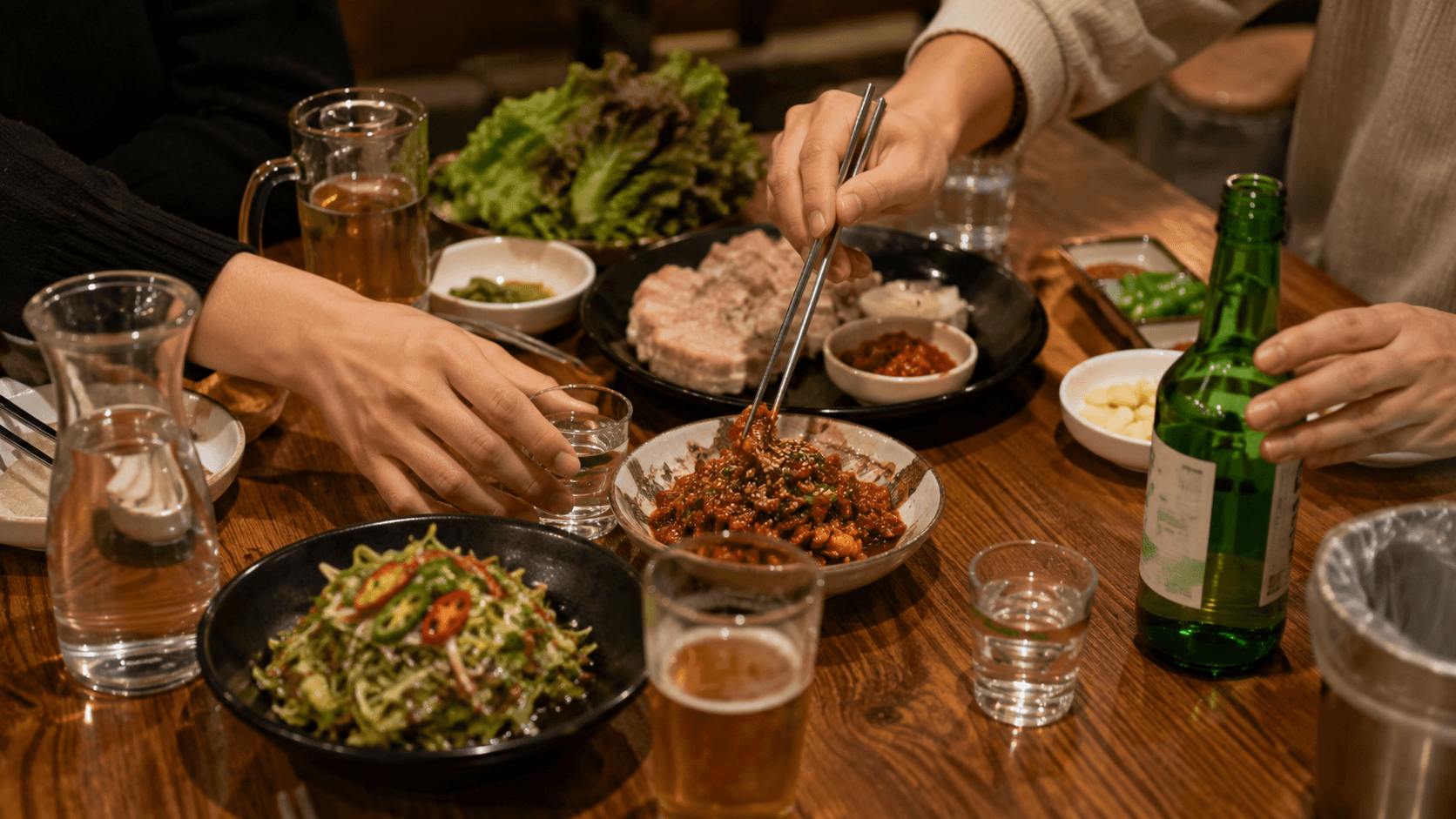
Drinking in South Korea is often a shared social activity built around food, conversation, and group rituals. You may encounter traditional etiquette such as pouring with two hands, but customs vary considerably by age, setting, and friendship group. You do not have to drink, finish a shot, or match anyone else's pace to participate politely.
At a glance
- Alcohol is commonly ordered with food rather than consumed by itself.
- The Korean word for food served with alcohol is anju (안주).
- Using two hands to pour or receive a drink is a respectful default, especially with someone older or in a formal setting.
- Geonbae (건배) means "cheers."
- Drinking a shot in one go is optional, not a requirement.
- It is increasingly normal to decline alcohol or choose a non-alcoholic drink.
- Check the alcohol-by-volume figure on the label. Products within the same category can differ substantially in strength.
- Never drive after drinking. Korea's drink-driving threshold is strict.
Legal and safety details in this guide were verified on June 11, 2026.
Why drinking can feel different in Korea
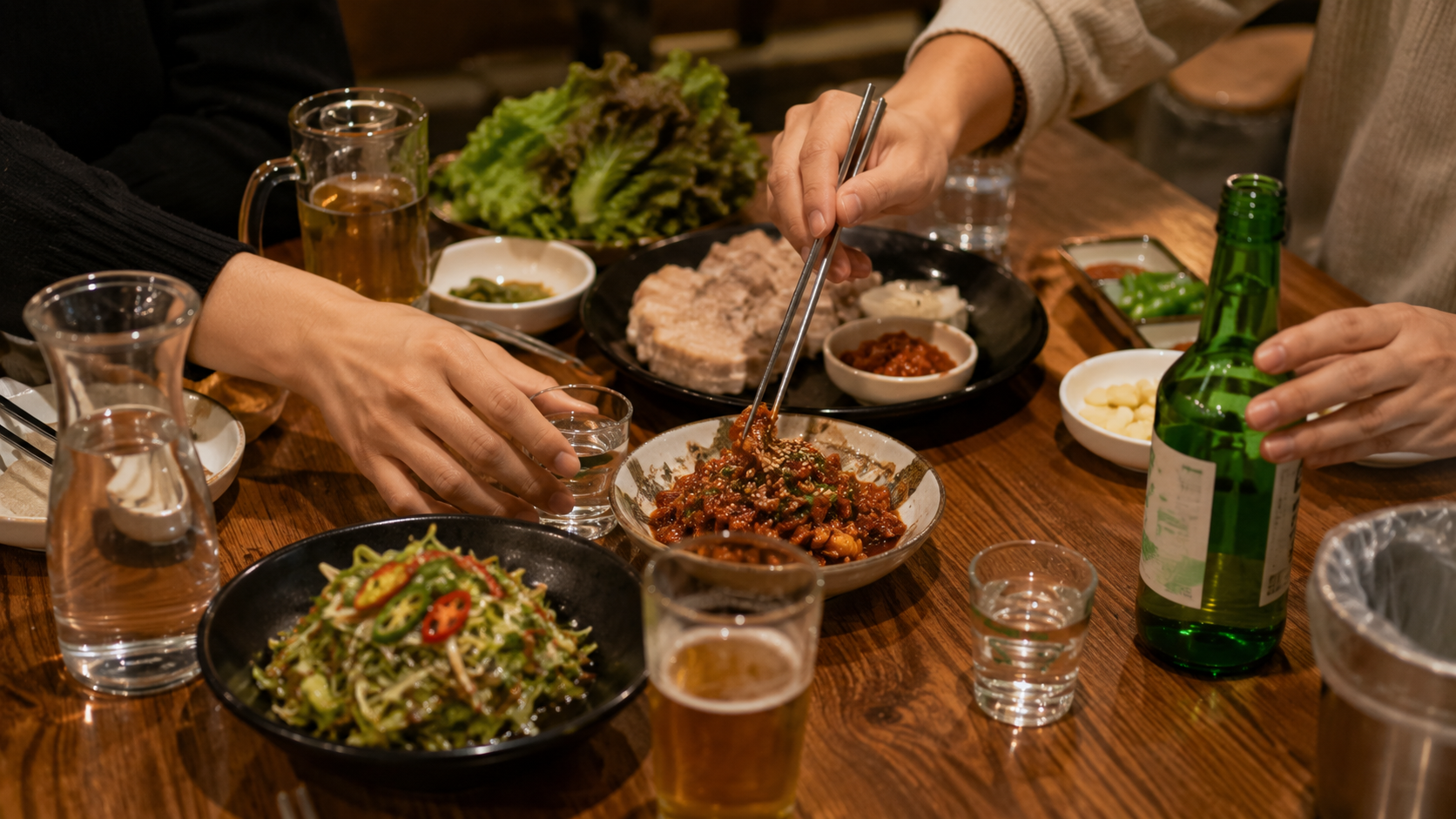
A Korean drinking occasion frequently focuses on the group rather than each person's individual order. People may share bottles, refill one another's glasses, order several communal dishes, and move together to another venue later in the evening.
This does not mean that every Korean gathering follows a rigid code. A formal dinner with senior colleagues may involve more ceremony than drinks with university friends. Younger groups may pour their own drinks, order cocktails individually, or ignore traditional rules entirely.
The safest approach for a newcomer is to observe the table, use two hands when uncertain, and avoid treating customs seen in television dramas as compulsory.
Essential Korean drinking vocabulary
| Korean term | Meaning | Practical use |
|---|---|---|
| Sul (술) | Alcohol or an alcoholic drink | A general term, not a specific beverage |
| Anju (안주) | Food eaten with alcohol | Usually shared by the table |
| Geonbae (건배) | Cheers | Used during a toast |
| Hoesik (회식) | A work-related group meal or gathering | May include alcohol, but drinking is not automatically mandatory |
| Il-cha (1차) | First round or first venue | Usually dinner |
| I-cha (2차) | Second round or venue | Could be another bar, a pub, or karaoke |
| Noraebang (노래방) | Private-room karaoke | A common later stop, though not necessarily a drinking venue |
| Somaek (소맥) | A mixture of soju and beer | The name combines soju and maekju, the Korean word for beer |
| Jjan (짠) | Informal "cheers" | Common among friends |
Common drinks you will see
Soju
Soju (소주) is usually served in a small glass and shared from a bottle. Familiar green-bottle varieties are generally clear, mildly sweet spirits, while distilled and craft soju can taste more complex and may be much stronger.
Do not assume that every bottle has the same alcohol content. Check the percentage printed beside 알코올 or 도수 on the label. Flavored products can taste softer than they are.
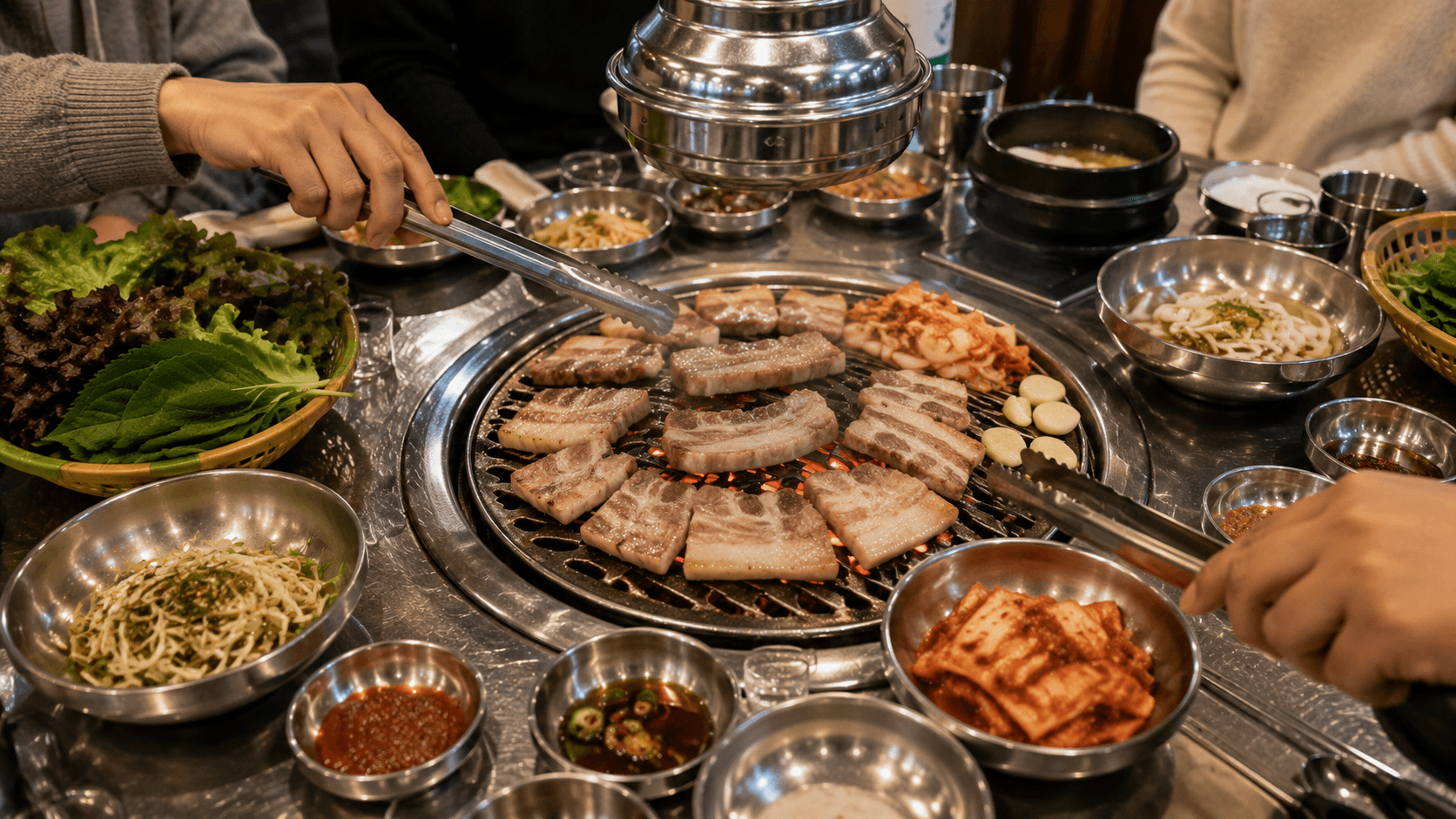
Soju is often paired with grilled meat, stews, sashimi, or spicy dishes. A restaurant may place small shot glasses on the table automatically, but their presence does not oblige you to order alcohol.
Beer
Beer is maekju (맥주) in Korean. Restaurants commonly sell bottles, cans, or draft beer, written as saengmaekju (생맥주). Korean fried chicken and beer are popularly called chimaek (치맥), a combination of chicken and maekju.
Makgeolli
Makgeolli (막걸리) is a cloudy fermented rice drink, often sweet, tart, and lightly sparkling. It is traditionally poured into small bowls or cups and commonly paired with savory pancakes called jeon (전).
Sediment naturally settles in many bottles. Follow the product's instructions before opening: gentle mixing may be appropriate, but vigorous shaking can cause a carbonated bottle to overflow. Refrigeration requirements and alcohol strength also vary, so check the label.
Traditional and regional alcohol
Menus at specialist bars may include distilled soju, clear rice wines, fruit wines, or regional products made with rice and nuruk (누룩), a traditional fermentation starter. These drinks can be significantly stronger and more expensive than mass-market soju. Ask about the alcohol content, serving size, and price before ordering.
Basic drinking etiquette
Pouring a drink
When pouring for someone older, senior, or newly introduced, hold the bottle in your right hand and support your right wrist or forearm lightly with your left hand. Using both hands communicates respect.
Among close friends, one-handed pouring is common. You do not need to reproduce an elaborate pose; a natural two-handed gesture is enough in an unfamiliar setting.
Traditional etiquette suggests waiting until a glass is empty before refilling it. In practice, some people top up beer or wine while others do not. Follow the table's lead or ask, "Would you like more?"
Receiving a drink
Hold the glass with both hands when receiving a drink from an older person or senior colleague. A slight nod is appropriate. You can then place the glass down, take a sip, or explain that you are not drinking.
Receiving a poured drink does not require you to finish it. If you want to avoid repeated refills, leave some in the glass and clearly say that you have had enough.
Toasting
During a toast, raise your glass and say geonbae. In a formal group, people sometimes hold their glass slightly lower than that of the most senior person. This is a minor courtesy, not something visitors need to execute perfectly.
Television scenes often show everyone draining a soju glass in one shot. Real groups vary. Taking a small sip is acceptable, particularly if the evening is long or the drink is strong.
Turning away to drink
A younger person may turn their head slightly away from an older or senior person while taking a drink, sometimes covering the glass with the free hand. This traditional gesture still appears at formal tables, but it is less common in casual groups.
You can follow it if others do. It is unlikely to cause offense if an international visitor simply drinks normally and respectfully.
Pouring your own drink
The traditional pattern is to pour for other people rather than yourself. Modern practice is flexible, especially at casual pubs, cocktail bars, and mixed international gatherings. Before reaching across a crowded table to refill everyone, notice whether drinks are being shared or ordered individually.
How to refuse alcohol politely
You can decline alcohol without giving a detailed explanation. Clear language is more effective than repeatedly accepting a glass and leaving it untouched.
Useful phrases include:
- Jeoneun sul an masyeoyo (저는 술 안 마셔요): "I don't drink."
- Oneureun sul an masilgeyo (오늘은 술 안 마실게요): "I won't drink today."
- Alkool mot masyeoyo (알코올 못 마셔요): "I can't drink alcohol."
- Gwaenchanayo (괜찮아요): "No, thank you" or "I'm fine."
- Mul juseyo (물 주세요): "Water, please."
- Non-alcoholic isseoyo? (논알코올 있어요?): "Do you have anything non-alcoholic?"
Holding water, soda, or a non-alcoholic beer during a toast can reduce further offers. If someone continues to pressure you, repeat the refusal without apologizing. Medical conditions, religion, pregnancy, medication, recovery, personal preference, and an early morning are all valid reasons, but you are not required to disclose one.
Hoesik: drinking with colleagues
A hoesik is a workplace gathering, usually involving a shared meal. Some include substantial drinking and several venues; others are short dinners, lunches, or alcohol-free activities. Workplace culture differs sharply between employers and teams.
Before the gathering
Ask three practical questions:
- Is this dinner only, or are additional rounds planned?
- Is attendance expected for the whole evening?
- How will the bill and transport be handled?
Employers commonly pay for an official team dinner, but this is not guaranteed. Confirm instead of assuming.
During the meal
Wait briefly for the host or senior person to begin, particularly at a formal event. Participate in conversation, share food, and join the toast with any drink. These actions generally matter more than consuming alcohol.
If you plan to leave after dinner, state it early: "I can join the first round, but I need to leave afterward." This is clearer than disappearing when the group begins moving to a second venue.
When hierarchy matters
Age and job title can influence seating, serving, and toasting, but foreign colleagues are not expected to understand every unspoken rule. Be attentive without becoming anxious about minor mistakes.
Pressure to drink should not be treated as an unavoidable part of Korean employment. If repeated pressure becomes a workplace problem, document what happened and seek guidance from an appropriate manager, human-resources contact, or labor authority rather than relying on cultural assumptions.
Rounds, shared bills, and ordering
A Korean evening may progress through several cha (차), meaning rounds or stages:
- First round: Dinner and drinks.
- Second round: A pub, bar, or additional food venue.
- Later round: Karaoke or another late-night activity.
You can leave after any stage. Check the last public transport departure before the evening begins, as late-night service differs by route and day.
At casual gatherings, one person may pay and receive transfers afterward, or different people may pay at successive venues. Some restaurants may not divide a table's bill across numerous cards. Ask how the group is paying before the bill arrives.
Menus usually show prices in KRW. Confirm whether a listed price is for one bottle, one glass, or a set. At clubs and some bars, minimum orders, table charges, or entrance fees may apply; check before sitting down or opening a bottle.
Legal age and identification
Under Korea's Youth Protection Act, alcoholic beverages are youth-harmful substances and businesses cannot sell or provide them to a legally defined youth. The Act generally defines a youth as someone under 19, but excludes a person from January 1 of the calendar year in which they turn 19.
For 2026, this means a person born in 2007 or earlier is outside that youth definition for alcohol-sale purposes from January 1, 2026. This calendar-year rule is different from simply waiting for a 19th birthday. The rule was verified against the Korean Law Information Center's current Youth Protection Act on June 11, 2026.
Businesses may request identification and can refuse a sale when age cannot be confirmed. International visitors should carry an original passport or another government-issued photo ID accepted by the establishment. A photograph or photocopy may be rejected.
This is general information, not legal advice. Check the current statute or ask the relevant Korean authority if your situation is unusual.
Public drinking and local restrictions
Do not assume that seeing people drinking outdoors means alcohol is permitted everywhere. Korea's National Health Promotion Act allows local governments to designate public places as no-drinking zones, and individual parks, beaches, festivals, campuses, transport facilities, and accommodation properties can have their own restrictions.
Look for signs containing 금주구역, meaning "no-drinking zone," or 음주금지, meaning "drinking prohibited." Local rules can change, so check the managing authority's current notice before planning an outdoor gathering. Do not leave bottles, cans, food containers, or delivery packaging behind.
Drink-driving rules
Korea's Road Traffic Act prohibits driving with a blood alcohol concentration of 0.03% or higher. Penalties and administrative consequences become more serious at higher concentrations and for repeat offenses. The threshold was verified using the Korean Law Information Center's current Road Traffic Act on June 11, 2026.
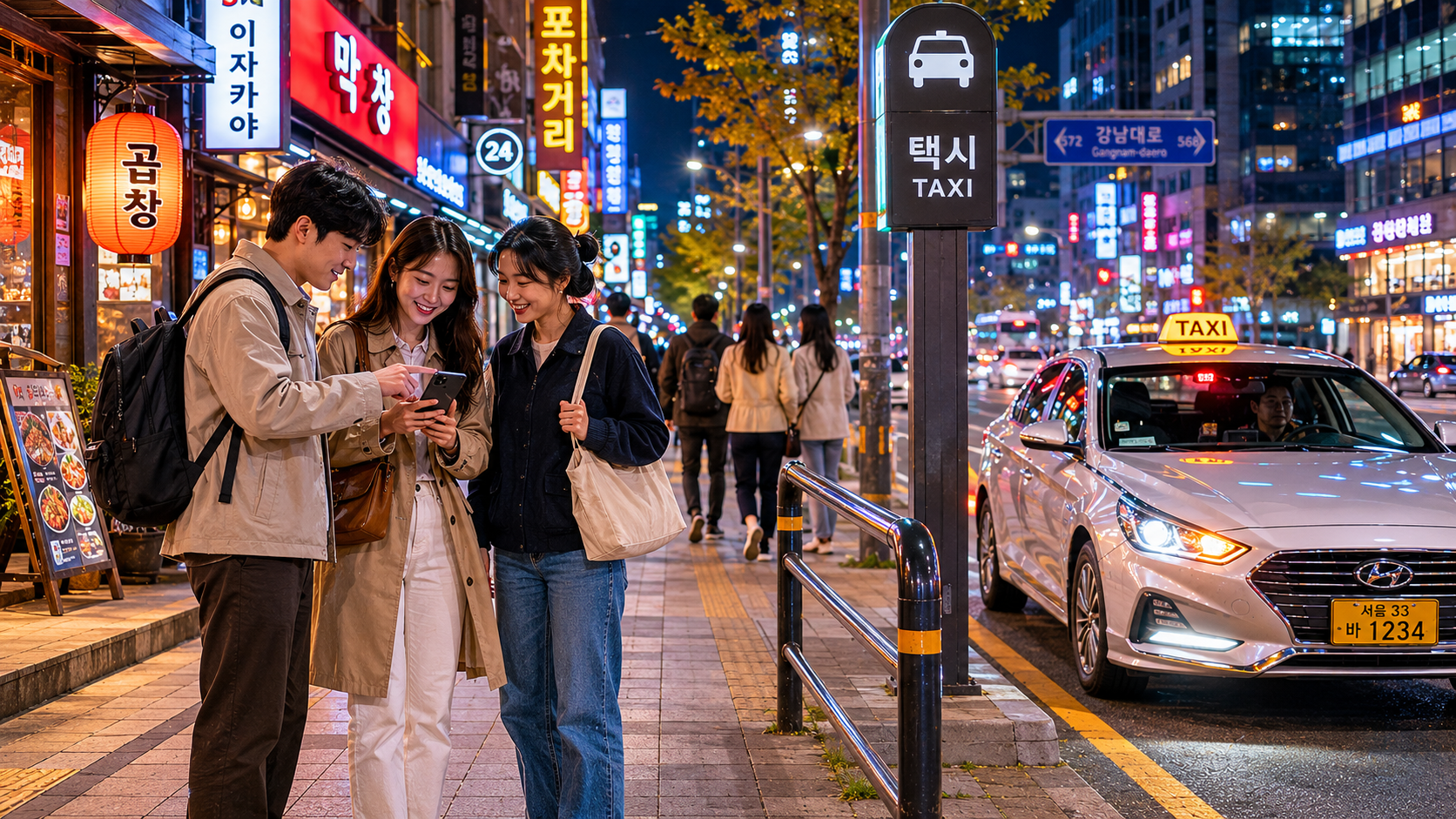
Do not try to calculate whether you are below the threshold. Food, coffee, sleep, or a shower cannot provide reliable confirmation that it is safe or legal to drive. Use public transport, a taxi, or a designated-driver service called daeri unjeon (대리운전), in which a driver takes you home in your own car.
The same practical rule should be applied to motorcycles and scooters: do not operate them after drinking.
Staying safe on a night out
- Eat before and while drinking.
- Check the label and keep track of what has been poured, especially in mixed drinks.
- Alternate alcoholic drinks with water.
- Do not leave your drink unattended or accept an opened drink from a stranger.
- Keep your accommodation address saved in Korean for a taxi driver.
- Check the final subway or bus before going out.
- Leave with a trusted person if anyone is disoriented, unusually drowsy, or unable to travel safely.
- Do not leave a severely intoxicated person alone to "sleep it off."
Call 112 for police assistance and 119 for an ambulance or fire emergency. The official Korea Travel Hotline 1330 can provide travel information and language assistance, but it is not a replacement for emergency services.
Common mistakes to avoid
Treating every drink as a shot
Small glasses do not make one-shot drinking compulsory. Sip at a pace you can manage.
Assuming soju is weak
Its neutral or sweet flavor can hide its strength. Read the label and remember that a shared bottle can be refilled into your glass without an obvious measure.
Believing refusal is automatically rude
A polite refusal is acceptable. Joining the meal and conversation is not the same as agreeing to drink alcohol.
Copying ceremonial etiquette too dramatically
Two hands and basic attentiveness are sufficient. Exaggerated bows or rigid movements can make an otherwise casual gathering uncomfortable.
Forgetting that makgeolli can build pressure
Some bottles continue to produce carbonation. Keep them cold, follow the label, and open them slowly.
Planning transport only after the last round
Late-night routes and availability vary. Save your destination in Korean and decide how you will return before drinking.
What to check before you go
- Carry acceptable physical photo identification.
- Confirm whether the event is formal, casual, or work-related.
- Tell the organizer in advance if you do not drink or have dietary restrictions.
- Check each product's alcohol content rather than relying on the drink category.
- Confirm menu prices and any table, entrance, or minimum-order charge.
- Check the last train or bus for your exact route.
- Look for local no-drinking signs in outdoor spaces.
- Save your accommodation address in Korean.
- Keep 112 and 119 available for emergencies.
Sources
- Korean Law Information Center: Youth Protection Act
- Korean Law Information Center: Road Traffic Act
- Korean Law Information Center: National Health Promotion Act
- Korea Tourism Organization: Korea Travel Hotline 1330
Before attending your first drinking occasion, learn one refusal phrase, check your route home, and decide your limit in advance. That preparation is more useful than memorizing every traditional rule.