South Korea has festivals throughout the year, but the strongest seasons are spring and autumn. Flower festivals dominate March and April, outdoor cultural events fill September and October, and winter brings ice, snow, and light displays. Festival dates can shift because of weather, lunar-calendar traditions, safety decisions, or local scheduling, so treat the monthly windows below as planning guidance rather than fixed annual dates.
Schedule status: Information and official festival websites were checked on June 11, 2026. Confirmed 2026 dates are identified below. Where an organizer had not published a current schedule, no exact date is stated.
At a glance
| Month | Typical festival themes | Notable examples |
|---|---|---|
| January | Ice, snow, winter food | Hwacheon Sancheoneo Ice Festival |
| February | Snow events, Lunar New Year culture | Daegwallyeong Snow Festival, Seollal programs |
| March | Plum, cornelian cherry, early spring | Gwangyang Maehwa Festival, Gurye Sansuyu Festival |
| April | Cherry blossoms, historic culture | Jinhae Gunhangje, Goryeong Daegaya Festival |
| May | Lanterns, tea, street arts | Yeondeunghoe, Boseong Tea Festival |
| June | Traditional rites and folk performance | Gangneung Danoje |
| July | Beaches and water activities | Boryeong Mud Festival |
| August | Coastal and evening events | Busan Sea Festival |
| September | Ecology and mask culture | Muju Firefly Festival, Andong Maskdance Festival |
| October | Lanterns, film, heritage events | Jinju Namgang Yudeung Festival, Busan International Film Festival |
| November | Fireworks, late-autumn culture | Busan Fireworks Festival and regional food festivals |
| December | Lanterns and city light displays | Seoul Lantern Festival |
January: Ice fishing in Hwacheon
The Hwacheon Sancheoneo Ice Festival is held in Hwacheon, Gangwon Province, when conditions allow the local stream to freeze safely. Sancheoneo (산천어) is mountain trout. Programs commonly include ice fishing, bare-hand fishing sessions, sledding, and winter play areas, but the available activities depend on weather and ice inspections.
Fishing zones and selected activities may require paid tickets or reservations. Wear insulated, waterproof footwear rather than ordinary trainers: visitors spend long periods standing on ice, and melted snow can make paths wet. Weekend buses and roads into central Hwacheon can become congested.
If a natural-ice event is central to your trip, do not book non-refundable transport until the organizer confirms operating dates and ice conditions.
February: Snow and Seollal traditions
February remains cold in Gangwon Province, where snow festivals such as the Daegwallyeong Snow Festival may feature large snow sculptures and family activities. The exact timing and scale vary with temperatures, so check the current listing through the Korea Tourism Organization’s VISITKOREA service.
Seollal (설날), Korean Lunar New Year, sometimes falls in January and sometimes in February. Palaces, museums, and folk villages frequently offer traditional games or performances around the holiday. These are cultural holiday programs rather than one single national festival.
Intercity transport is heavily used during the Seollal holiday period. Train and express-bus tickets can sell quickly, while some independent restaurants and shops close or shorten their hours. Verify the year’s public-holiday dates before building an itinerary around Seollal.
March: Plum and cornelian cherry blossoms
Spring flower events begin in southern Korea before Seoul’s main cherry blossom season. The Gwangyang Maehwa Festival in South Jeolla Province focuses on maehwa (매화), or plum blossoms, around Seomjin River villages. Gurye’s Sansuyu Festival celebrates the yellow flowers of the cornelian cherry tree.
These festivals are highly weather-dependent. A warm spell can bring peak bloom forward, while cold rain can delay or shorten it. Organizers may keep the event dates even when the flowers peak earlier or later.
Public transport into rural blossom villages can be limited. Temporary shuttle buses may operate during festival periods, but visitors should verify the boarding point, last departure, and whether payment requires a transport card or cash.
April: Cherry blossoms and ancient kingdoms
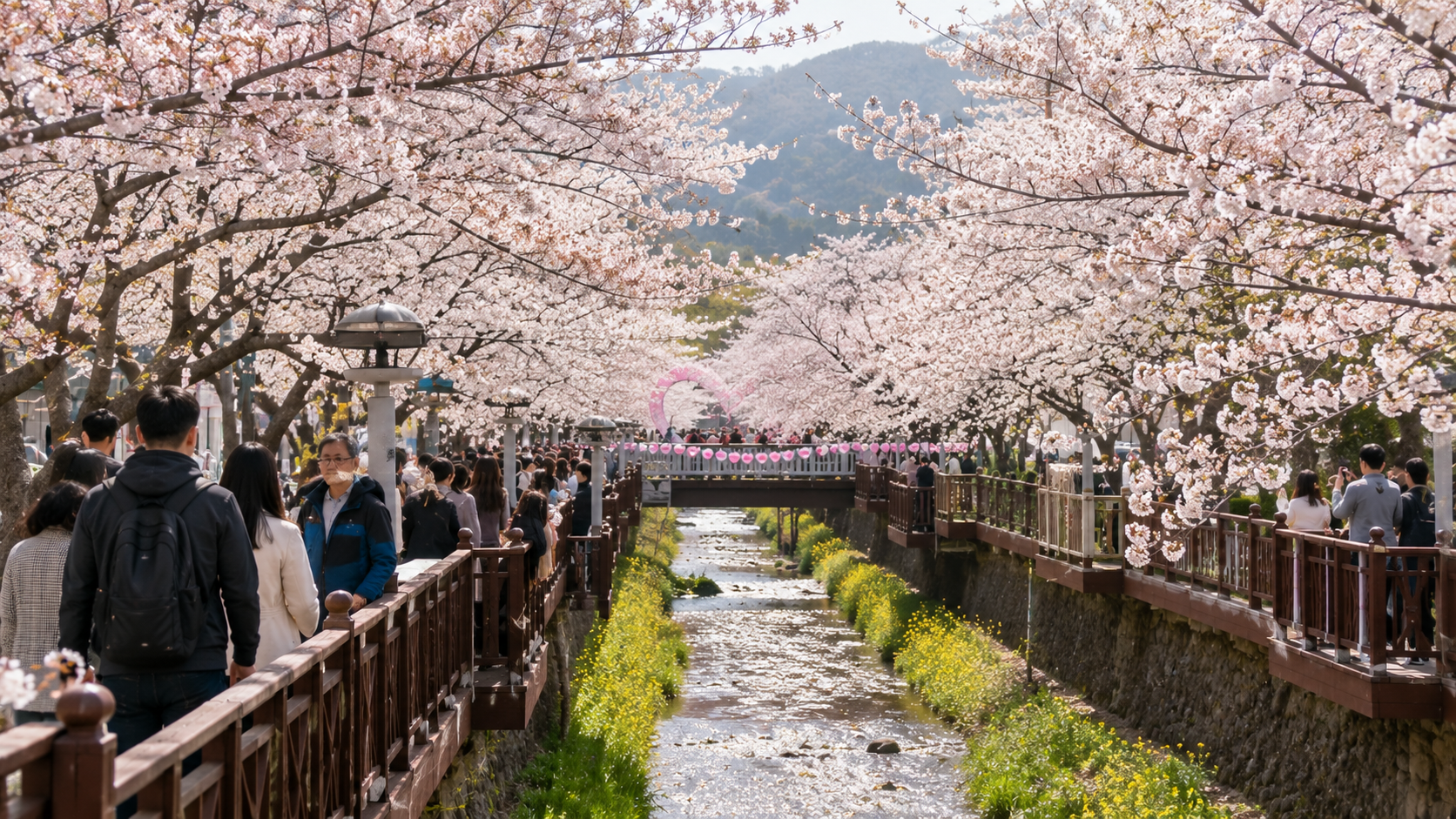
Jinhae Gunhangje (진해군항제) in Changwon is Korea’s most prominent cherry blossom festival. The best-known viewing areas include Yeojwacheon Stream and the former Gyeonghwa Station railway area. Expect substantial crowds, temporary traffic controls, and slow movement near major photo locations.
Flowering dates are not guaranteed by the festival schedule. Check both the organizer’s announcement and a recent bloom report shortly before departure. On peak weekends, staying in Changwon, Masan, or Busan may be more practical than attempting a rushed day trip from Seoul.
Goryeong’s Daegaya Festival is a useful alternative for travelers more interested in history than flowers. Programs interpret Daegaya, one of the states of the ancient Gaya confederacy, through performances, exhibitions, and family activities around local heritage sites.
May: Lotus lanterns and tea fields
Yeondeunghoe (연등회), the Lotus Lantern Festival, is associated with Buddha’s Birthday, which follows the lunar calendar. Major Seoul programs traditionally include lantern displays, cultural activities, and a large procession. The route, access rules, and program times should be checked each year because road closures affect central Seoul buses and traffic.
The Boseong Tea Festival in South Jeolla Province usually combines tea culture with programs around Boseong’s green-tea-growing area. Some activities may require advance registration or separate fees even when entry to the wider festival grounds is free.
May weekends are popular for domestic travel. Reserve accommodation early for rural festivals, particularly where the nearest town has a limited number of hotels.
June: Gangneung Danoje
Gangneung Danoje (강릉단오제) is one of Korea’s most important traditional festivals, combining ritual ceremonies, shamanic performances, folk games, markets, and the Gwanno Mask Drama. It is not simply a staged historical show: several rites retain active meaning for the local community.
The official Gangneung Danoje program lists the main 2026 events from June 17 to June 22, 2026, including processions, ritual performances, mask drama, competitions, and a closing-night fireworks program. These details were verified on June 11, 2026.
The principal festival area is around Danojang in Gangneung. KTX trains connect Seoul and Gangneung, but seats can become limited around major weekends. Individual performances have their own times, so consult the daily schedule rather than arriving without a plan.
July: Boryeong Mud Festival
The Boryeong Mud Festival takes place around Daecheon Beach in Chungcheongnam Province. Its signature areas involve mud pools, slides, games, and performances. General beach access and controlled experience zones are not necessarily the same: major activity areas may require timed or paid admission.
Bring swimwear, a towel, sun protection, and footwear that will stay attached to your feet. Use a waterproof case for your phone and avoid carrying valuables into activity zones. Shower and changing facilities can have queues during busy periods.
Daecheon Station is the main rail gateway, followed by local transport to the beach. Check the last train or bus before attending an evening performance; staying near Daecheon Beach removes the risk of missing the final connection.
August: Coastal festivals in peak summer
The Busan Sea Festival usually spreads programs across several city beaches rather than operating as one compact site. Music, water activities, and evening events can vary by beach and year. Verify the exact venue before traveling: Haeundae, Gwangalli, Dadaepo, and Songjeong are in different parts of Busan.
August is hot, humid, and within Korea’s rainy and typhoon season. Outdoor schedules may change at short notice because of high waves, lightning, extreme heat, or storm forecasts. Carry water, use sunscreen, and keep an indoor alternative available.
Beachfront accommodation is expensive during summer weekends. Busan’s metro makes it practical to stay away from the waterfront, provided you check the final train time after late events.
September: Fireflies and mask dance
The Muju Firefly Festival is confirmed for September 4-13, 2026, according to the organizer’s website as checked on June 11, 2026. Firefly observation and ecological programs may require advance reservations and controlled group entry. Follow instructions on lights, noise, and photography because artificial light can disrupt the viewing environment.
The Andong International Maskdance Festival presents Korean and international mask performances, parades, and cultural programs. Some editions use venues in central Andong as well as the Hahoe Folk Village area, so check the program location carefully. Hahoe is outside the city center and requires additional bus or taxi travel.
September can overlap with Chuseok (추석), Korea’s major autumn holiday, depending on the lunar calendar. In 2026, the Chuseok holiday period falls in late September. Transport demand increases sharply, and some local businesses close.
October: Korea’s busiest festival month
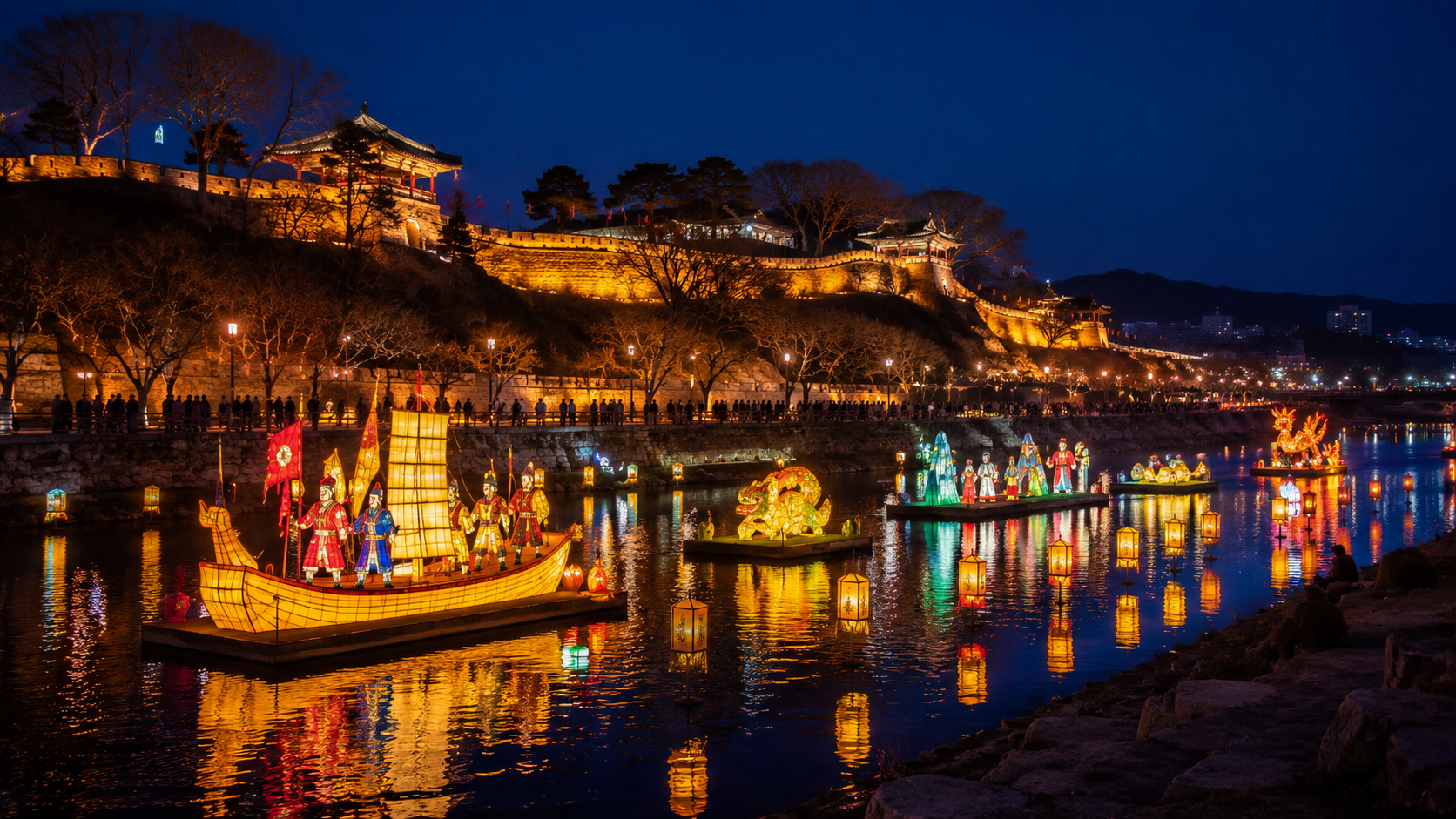
October offers comfortable weather and a dense national festival calendar. The Jinju Namgang Yudeung Festival illuminates the Nam River and Jinju Fortress area with yudeung (유등), or floating and decorative lanterns. The official festival website was still displaying its 2025 program when checked on June 11, 2026, so the 2026 dates and operating hours were not yet confirmed.
The Busan International Film Festival is confirmed for October 6-15, 2026. Screenings require individual tickets, and popular premieres or guest events may sell out quickly. Create an account and read the ticketing instructions before sales open rather than waiting until arrival in Busan.
October also brings heritage festivals, food events, and fireworks displays around the country. Avoid trying to combine distant cities on the same evening: festival traffic can add considerable travel time around venues.
November: Fireworks and late-autumn events
November programming changes substantially from year to year. The Busan Fireworks Festival is commonly staged around Gwangalli Beach, but the date, viewing controls, and paid seating arrangements must be confirmed for the relevant edition.
Free waterfront viewpoints can become extremely crowded. Subway stations may use temporary entry controls, roads may close, and mobile data can slow when large crowds gather. Choose a meeting point in advance and do not rely on finding a taxi immediately after the show.
Smaller regional festivals during this period often focus on chrysanthemums, seafood, kimchi, or the autumn harvest. Check whether a listing describes a public festival, a commercial market, or a short local event before making a long journey.
December: Seoul lanterns and winter lights
The Seoul Lantern Festival has recently operated as a winter light event around central Seoul, with locations that may include Gwanghwamun Square, Cheonggyecheon, or nearby public spaces. The official Seoul Lantern Festival website was still showing the 2025 edition when checked on June 11, 2026; the 2026 dates, route, and operating hours were not yet available.
Outdoor light festivals are easiest to visit after sunset on a weekday. Dress for temperatures below freezing, particularly near waterways and open plazas. Displays may be free, while workshops, markets, or associated activities can charge separately.
How to plan a festival visit
- Confirm the year, not just the festival name. Old schedules often remain visible in search results.
- Check the Korean-language page. It is frequently updated before the English version. Browser translation is adequate for dates, reservation notices, and transport maps.
- Reserve transport first for rural events. Intercity trains and buses may sell out before festival admission does.
- Identify the exact venue. A citywide festival may use several sites separated by long bus or metro journeys.
- Check admission by zone. Entry to the festival may be free while performances, activities, bridges, or reserved seats require tickets.
- Record the final return service. Late-night programs often finish after local buses become infrequent.
- Prepare for weather changes. Blossom, ice, firefly, beach, and fireworks events are particularly vulnerable to environmental conditions.
Accessibility and luggage
Large urban festivals usually provide the easiest step-free access, but temporary stages, cables, gravel paths, riverbanks, and dense crowds can create barriers. Contact the organizer for wheelchair routes, accessible toilets, and designated viewing areas rather than assuming the entire site is accessible.
Do not bring large luggage to a festival. Station lockers fill quickly during major events, and small rural stations may have few or none. Leave bags at your accommodation or use a confirmed luggage-storage service before traveling to the venue.
What to check before you go
- Current-year dates and cancellation notices
- Opening, closing, and last-admission times
- Free versus ticketed areas
- Online reservation requirements
- Exact venue name in Korean for map searches
- Last train, metro, shuttle, or intercity bus
- Road closures and temporary station controls
- Weather, bloom, ice, wave, or air-quality conditions
- Rules for food, tripods, pets, and large bags
- Accessibility routes and available toilets
For festivals without confirmed dates, begin with the VISITKOREA travel portal, then follow its listing to the current organizer or local-government announcement. Recheck everything during the week before departure.