Korean night markets are evening food and shopping areas, usually attached to traditional markets. Some operate regularly, while others open only on selected days or during a seasonal event. Check the current schedule before making a special trip: operating days can change because of weather, public holidays, maintenance, or local event planning.
Information in this guide was verified on June 11, 2026. Where an official source did not provide a dependable current schedule, no fixed hours are stated.
At a glance
| Market | City | Main reason to visit | Schedule status |
|---|---|---|---|
| Seomun Market Night Market | Daegu | Large selection of food stalls and evening entertainment | Official hours published |
| Bupyeong Kkangtong Market | Busan | Street food near Nampo-dong and Jagalchi | Confirm the night-market schedule before visiting |
| Jeonju Nambu Market | Jeonju | Convenient addition to Jeonju Hanok Village | Confirm current operating nights |
| Dongmun Traditional Market | Jeju City | Jeju seafood, produce, gifts, and evening food stalls | Confirm current night-market hours |
Most visitors should allow 60 to 90 minutes for a market visit. Add more time if you plan to eat a full meal, browse the daytime market first, or combine the market with nearby attractions.
What counts as a night market in Korea?
The Korean term is yasijang (야시장), meaning night market. It can describe several different arrangements:
- A dedicated row of evening food stalls inside or beside a traditional market
- A market that remains active after ordinary retail shops close
- A weekend program with temporary vendors and performances
- A seasonal riverside, plaza, or festival market
This distinction matters. A traditional market may remain open during the day even when its special night-market stalls are closed. Conversely, restaurants around a market may operate late despite the official market having finished for the evening.
Korea does not have one national night-market calendar. Local governments, market associations, and event organizers set their own dates. Old blog posts may therefore show stalls or schedules that no longer apply.
Major Korean night markets
Seomun Market Night Market, Daegu
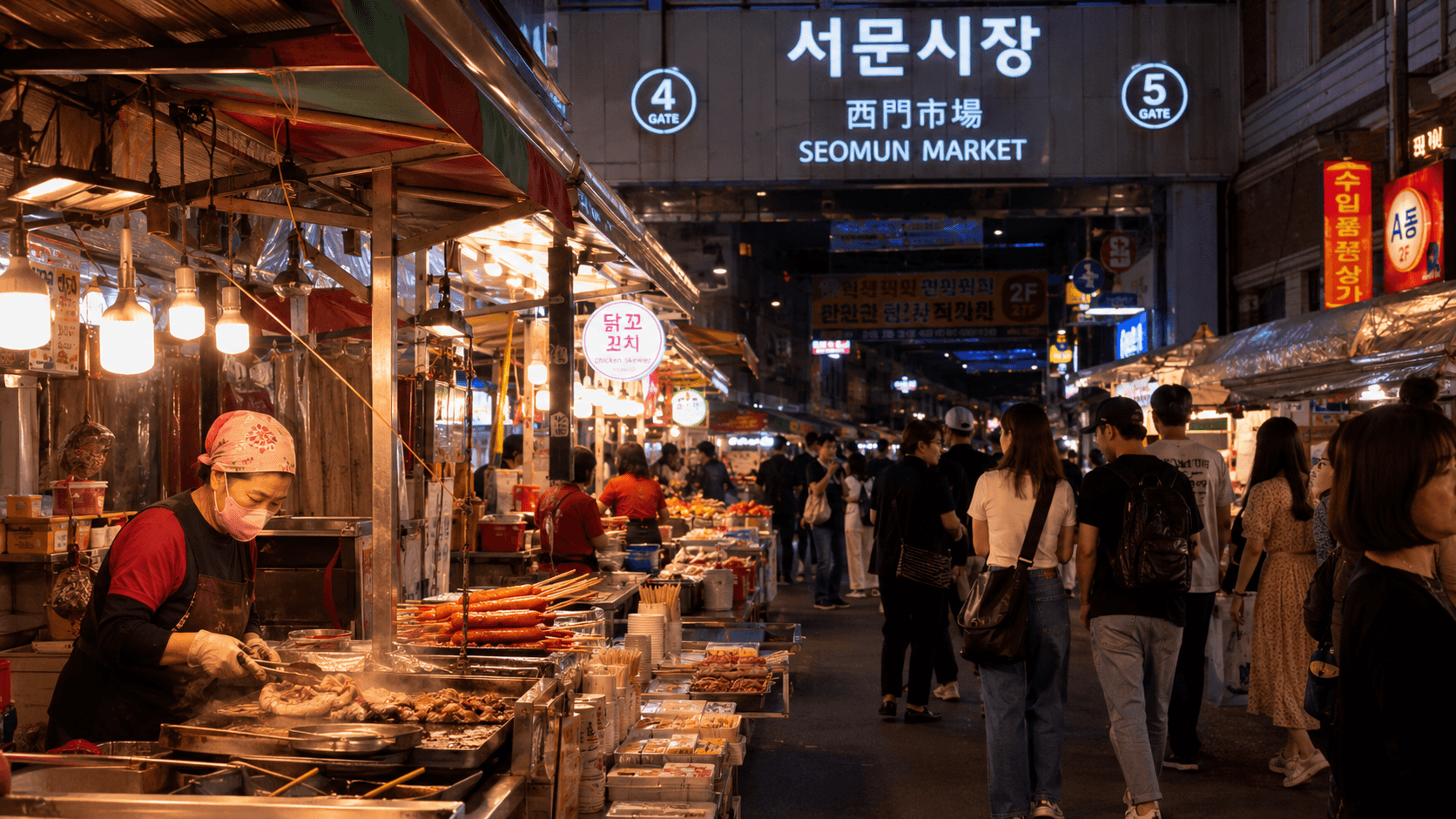
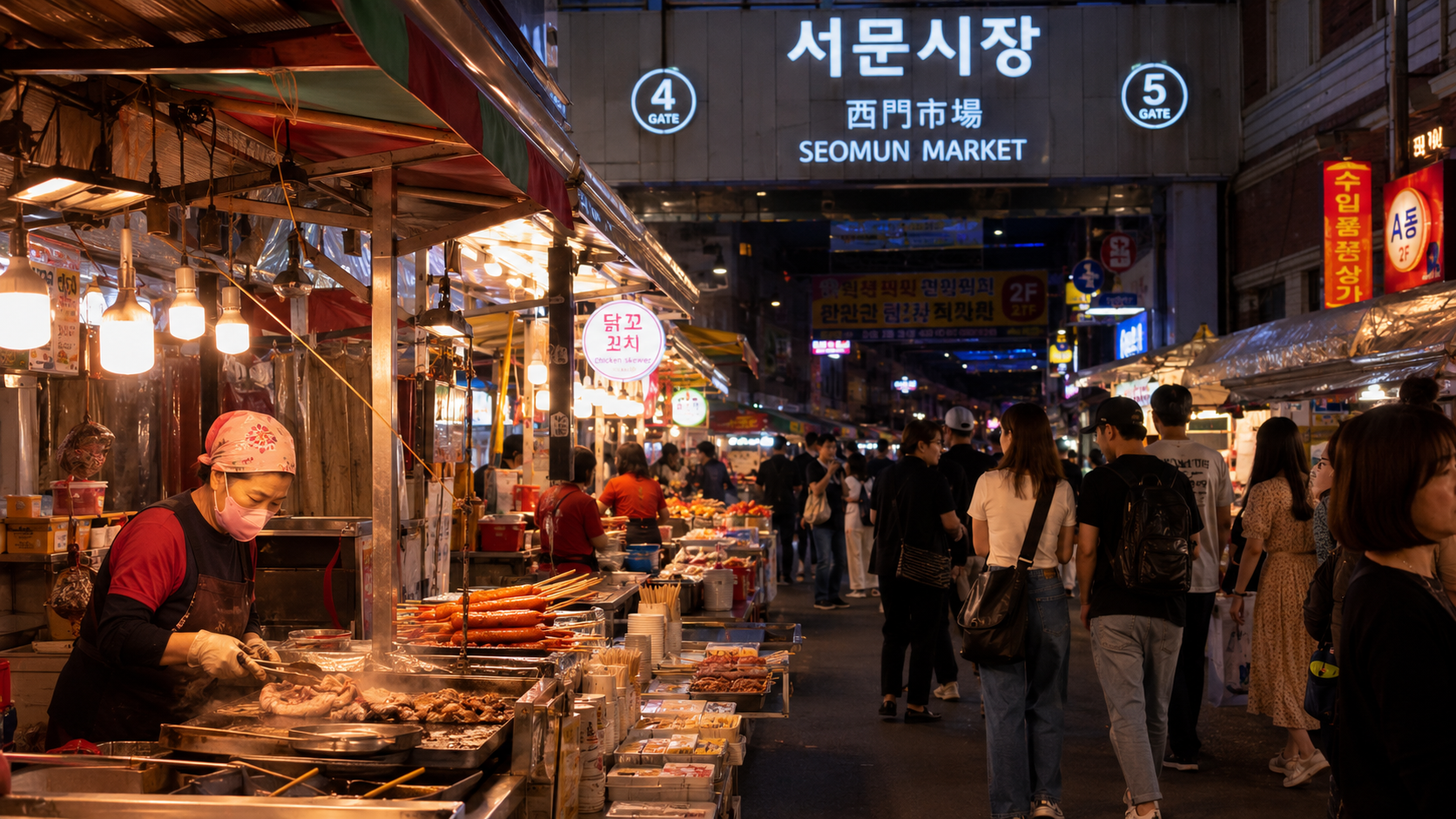
Seomun Market Night Market (서문시장 야시장) is the easiest option in this guide to plan around because Daegu Metropolitan City publishes detailed operating information.
As verified on June 11, 2026, the official Daegu tourism listing for Seomun Market Night Market states:
- Hours: 17:30 to 24:00, extended to 24:30 on Friday and Saturday
- Regular closure: First and third Sunday of each month
- Address: 45 Keunjang-ro 26-gil, Jung-gu, Daegu
- Market association telephone: 053-256-6341
- Parking: Available for a fee
The city describes food stalls, product stalls, performances, events, and media displays. The night market begins after much of the ordinary daytime market winds down, so arriving around 17:30 to 18:00 lets you see the transition.
For public transport, search for Seomun Market Station (서문시장역) on Daegu Metro Line 3. The market is large, and a navigation app may direct you to a daytime-market entrance rather than the night-stall area. Look for signs containing 야시장 after arrival.
Practical plan: Visit the regular market in late afternoon, have dinner at the night stalls, and then continue to Daegu’s Modern Culture Alley or another central Daegu evening attraction. Check the Daegu tourism night-attractions page for additional ideas.
Bupyeong Kkangtong Market, Busan
Bupyeong Kkangtong Market (부평깡통시장) is in Busan’s old downtown area, close to Gukje Market, BIFF Square, Nampo-dong, and Jagalchi Market. This concentration makes it practical even if the dedicated night-market program is smaller than expected on the day you visit.
The market is known for prepared food and imported goods. In the surrounding lanes, visitors may encounter Korean market snacks, fried foods, skewers, noodles, dumplings, and dishes influenced by the port city’s international trading history. Vendor participation and menus change, so treat specific online food lists as examples rather than guarantees.
A dependable 2026 night-market timetable could not be confirmed from an accessible official English listing on June 11, 2026. Check Visit Busan, ask your accommodation, or call the Busan tourist-information service before traveling solely for the evening stalls. Visit Busan lists 051-120 and the 1330 travel hotline as visitor-information contacts.
How to combine the area: Start at Jagalchi Market or the waterfront, walk through BIFF Square and Gukje Market, and finish around Bupyeong Kkangtong Market. These places are close enough to explore on foot, although the lanes can be confusing after dark.
Jeonju Nambu Market, Jeonju
Jeonju Nambu Market (전주남부시장) stands beside Pungnammun Gate and within walking distance of Jeonju Hanok Village. It is therefore a convenient evening stop for visitors already staying in the historic center.
The traditional market operates independently of its special night-market program. You may still find permanent shops and restaurants open even when temporary night vendors are not operating. The upper level also contains Cheongnyeon Mall (청년몰), commonly translated as Youth Mall, although individual businesses keep their own schedules.
No reliable official English timetable for the 2026 night-market program could be confirmed on June 11, 2026. Do not plan around older claims that it always opens on Friday and Saturday. Check announcements through the official Jeonju tourism website or ask a Jeonju tourist-information center on the day of your visit.
A sensible route is Jeonju Hanok Village in the afternoon, Pungnammun around sunset, and Nambu Market for dinner. This avoids an unnecessary cross-city journey if the temporary stalls are not operating.
Dongmun Traditional Market, Jeju City
Dongmun Traditional Market (동문재래시장) is a covered market in central Jeju City selling seafood, meat, fruit, snacks, and souvenirs. Evening food stalls are often promoted as Dongmun Night Market (동문야시장), but the night section is only one part of the larger market.
The market is useful for travelers staying near old Jeju City or spending a final evening near Jeju International Airport. Popular purchases include packaged snacks, seafood products, and Jeju citrus goods. Check airline and destination-country restrictions before buying fresh produce, meat, or seafood to carry overseas.
A dependable current closing time for the night stalls was not confirmed through the official English tourism material reviewed on June 11, 2026. Check the official Visit Jeju website or contact the Jeju Tourist Information Center listed there before making a special late-night journey. Arriving earlier in the evening is safer than assuming stalls will remain open until midnight.
Traffic around the market can be slow, and parking demand rises at dinner time. A taxi or local bus is often simpler than driving unless your accommodation provides clear parking advice.
What to eat
Night-market menus change frequently, but these terms will help you recognize common categories:
- Tteokbokki (떡볶이): Rice cakes in a spicy red sauce
- Eomuk (어묵): Fish cake, often served on skewers with broth
- Mandu (만두): Dumplings with meat, vegetable, or other fillings
- Jeon (전): Pan-fried savory pancakes
- Dakgangjeong (닭강정): Sweet or spicy glazed fried chicken
- Gimbap (김밥): Rice and fillings rolled in seaweed
- Hotteok (호떡): Fried or griddled filled pancake, usually sweet but sometimes savory
- Sundae (순대): Korean blood sausage, unrelated to ice cream
Ask about ingredients if you have allergies or dietary restrictions. A useful phrase is igeo mwo-ga deureogayo? (이거 뭐가 들어가요?), meaning “What is in this?” Translation apps can help, but they may not identify hidden ingredients in sauces, broth, or cooking oil.
Vegetarian-looking dishes may contain fish cake, anchovy broth, meat stock, or seafood seasoning. Halal certification is uncommon at ordinary night-market stalls unless clearly displayed. Travelers with strict dietary requirements should use the market for browsing and choose a restaurant that can explain its ingredients more reliably.
Prices, payment, and ordering
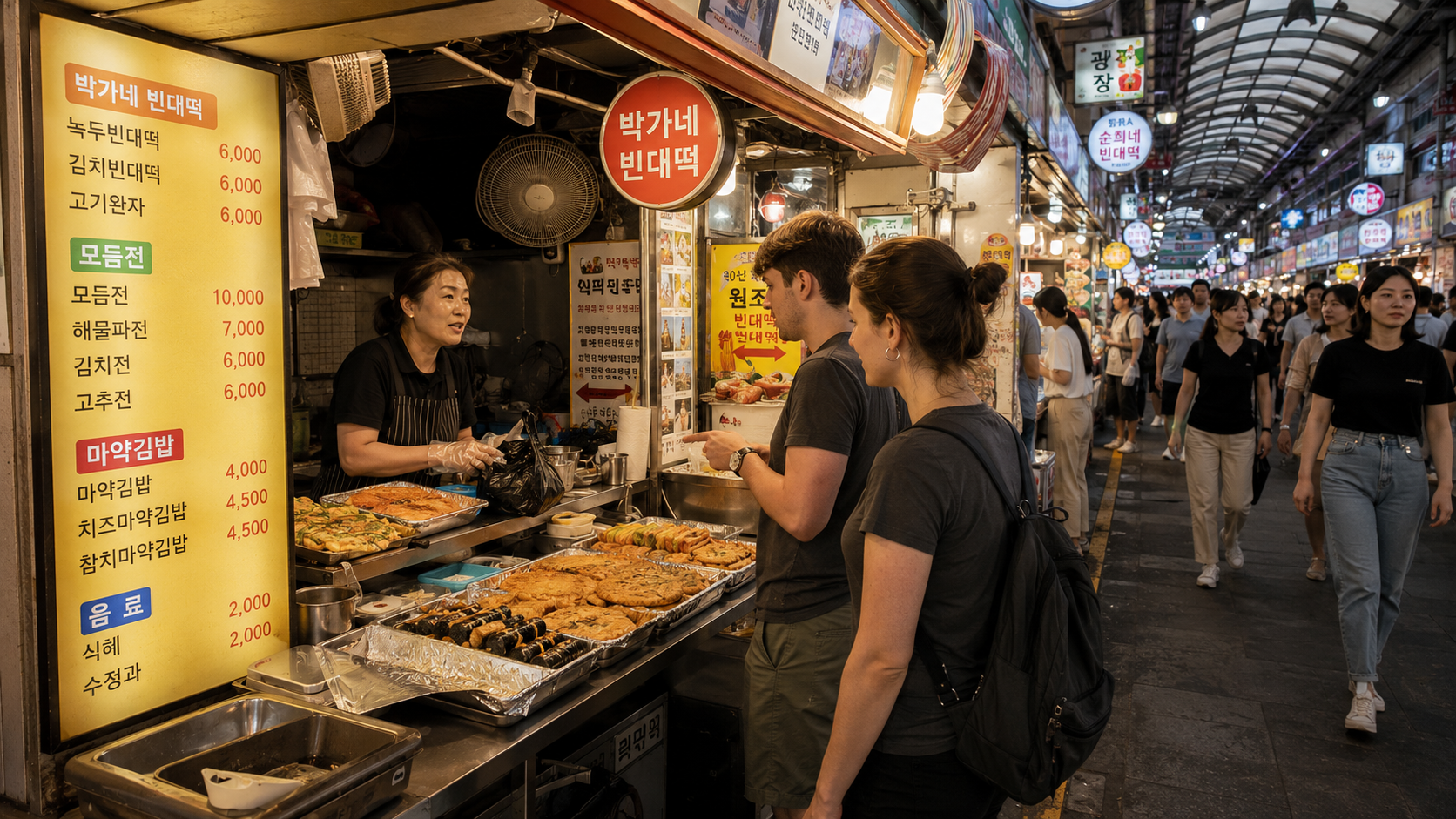
There is no standard price list across Korean night markets. As a planning suggestion rather than a quoted market tariff, allow about KRW 15,000 to KRW 30,000 per person for several shared snacks. Seafood, large meat portions, alcohol, and souvenir purchases can raise the total.
Card acceptance has improved, but it is not universal. Some temporary stalls accept Korean cards or mobile transfers while having difficulty with foreign-issued cards. Carrying KRW cash in small denominations is the safest backup. Do not expect every vendor to accept foreign mobile-payment services.
At a busy stall:
- Check whether orders are taken at the front or side.
- Point to the menu item or show its Korean name on your phone.
- Confirm the quantity before paying.
- Wait near the stall without blocking the queue.
- Return trays, bowls, or skewers where directed.
Prices should normally be displayed. If they are not, ask eolmayeyo? (얼마예요?), meaning “How much is it?”, before ordering.
When to arrive
For a confirmed market such as Seomun, arriving within the first hour provides more space and a better chance of finding the full menu. The busiest period is generally around dinner time.
Late arrival carries several risks: popular dishes may sell out, vendors may begin cleaning before the published closing time, and your final subway or bus may leave earlier than expected. Market closing time is not the same as the last public-transport departure.
Rain may reduce outdoor stall participation even when a covered traditional market remains open. Summer evenings can be hot and humid, while winter stalls may close early in severe weather.
Luggage and accessibility
Large suitcases are difficult to manage in narrow market aisles. Leave baggage at your hotel or use lockers at a major railway or bus station. Do not assume the market itself has staffed luggage storage.
Accessibility varies considerably. Covered markets may have level main aisles, but temporary stalls, crowds, drainage channels, steep approaches, and tightly spaced tables can create obstacles. Accessible toilets may not be close to the night-stall zone.
Travelers using wheelchairs or mobility aids should contact the local tourist-information center for entrance and toilet details. Visiting near opening time usually provides more room than arriving at the dinner peak.
Common mistakes to avoid
- Assuming every market opens nightly: Some night programs operate only on selected days or seasons.
- Confusing daytime and night-market hours: The main market and temporary evening stalls may have separate schedules.
- Trusting an old blog timetable: Confirm dates through an official tourism office or market association.
- Arriving just before closing: Vendors may sell out or stop accepting orders early.
- Relying on one foreign card: Carry some KRW cash.
- Taking a large suitcase: Crowded aisles leave little room for luggage.
- Ordering without checking spice or ingredients: Red sauce usually indicates heat, but mild-looking broth may still contain seafood or meat.
- Forgetting the trip back: Check the last subway, bus, or intercity connection before ordering dinner.
What to check before you go
Use this checklist on the day of your visit:
- Confirm that the night-market section is operating, not only the daytime market
- Check opening and closing times for the exact date
- Look for weather-related cancellation notices
- Confirm the Korean market name and entrance on Naver Map or KakaoMap
- Check the last subway or bus to your accommodation
- Carry a charged phone and a small amount of KRW cash
- Leave large luggage elsewhere
- Note dietary restrictions in Korean on your phone
- Check whether permanent restaurants provide a backup option
For help in English, the Korea Tourism Organization’s VISITKOREA website provides access to the 1330 Korea Travel Helpline and live chat. Ask specifically whether the yasijang stalls are operating on your intended date.
Frequently asked questions
Are Korean night markets open every day?
No. Some have regular evening schedules, while others operate only on weekends, selected dates, or during a particular season. The traditional market may still open when the night stalls do not.
Do I need a reservation?
Ordinary market stalls do not usually take reservations. Permanent restaurants inside or around a market may have their own policies.
Can I pay by credit card?
Often, but not always. Foreign-issued cards may fail even when a stall accepts Korean cards. Carry KRW cash as a backup.
Are night markets suitable for children?
They can be, especially near opening time. Dinner-hour crowds, hot cooking equipment, limited seating, and narrow aisles require additional care.
Which market is easiest to add to a first trip?
Choose one already near your itinerary. Bupyeong Kkangtong Market fits a Busan Nampo-dong day, Nambu Market fits Jeonju Hanok Village, Dongmun fits central Jeju City, and Seomun is a straightforward evening destination in Daegu.
Sources
- Daegu Metropolitan City: Seomun Market Night Market listing
- Daegu Metropolitan City: Night tourism information
- Visit Busan official tourism website
- Jeonju official tourism website
- Visit Jeju official tourism website
- Korea Tourism Organization: VISITKOREA and 1330 visitor assistance
Before setting out, search the market’s Hangul name in your map app and confirm that evening vendors are operating that day.