Korean noodle dishes are easier to navigate once you recognize a few key words. Guksu (국수) and myeon (면) both refer to noodles, while terms such as mul (물, broth or water), bibim (비빔, mixed), and naeng (냉, cold) tell you how a dish is served. The noodles themselves may be made from wheat, buckwheat, sweet potato starch, or a mixture of ingredients, so dishes that look similar can have very different textures.
This guide covers the noodle dishes most international visitors are likely to encounter in restaurants, markets, food courts, convenience stores, and delivery apps. Dish definitions and standardized menu terminology were checked against resources from the Korean Food Promotion Institute and the National Institute of Korean Language's Korean-English Learners' Dictionary on June 11, 2026.
At a glance
| Dish | Usually served | Main noodle or base | Typical character |
|---|---|---|---|
| Kalguksu (칼국수) | Hot, in broth | Knife-cut wheat noodles | Soft, substantial, comforting |
| Janchi-guksu (잔치국수) | Hot, in light broth | Thin wheat noodles | Light and savory |
| Naengmyeon (냉면) | Cold | Buckwheat or starch-blend noodles | Firm, slippery, and chewy |
| Makguksu (막국수) | Cold | Buckwheat-blend noodles | Nutty, tangy, often spicy |
| Milmyeon (밀면) | Cold | Wheat-based noodles | A springy Busan specialty |
| Bibim-guksu (비빔국수) | Cold or cool, mixed | Thin wheat noodles | Sweet, sour, and spicy |
| Kongguksu (콩국수) | Cold, in soybean broth | Wheat noodles | Creamy, mild, and nutty |
| Jajangmyeon (짜장면) | Hot, with sauce | Wheat noodles | Rich black-bean sauce |
| Jjamppong (짬뽕) | Hot, in spicy broth | Wheat noodles | Spicy and commonly seafood-based |
| Japchae (잡채) | Warm or room temperature | Sweet potato starch noodles | Glossy, savory, and slightly sweet |
| Ramyeon (라면) | Hot or mixed | Instant wheat noodles | Fast, salty, and highly varied |
Recipes are not standardized across all restaurants. Broths, sauces, garnishes, meat, and allergens can differ even when two restaurants use the same dish name.
Understanding Korean noodle words
Guksu and myeon
Guksu is a native Korean word associated with noodles and noodle dishes. Myeon comes from a Chinese character and appears in names such as naengmyeon, jajangmyeon, and ramyeon. For everyday ordering, the distinction is not important: both words tell you that noodles are involved.
Restaurant signs may use only Hangul, so learning the final syllables helps. Look for 국수 or 면 on menus and storefronts.
Words that explain the serving style
- Mul (물): Literally water, but on a noodle menu it usually indicates a broth-based version. Mul-naengmyeon comes in cold broth.
- Bibim (비빔): Mixed with sauce rather than served in a full bowl of broth.
- Naeng (냉): Cold.
- On (온): Warm or hot, although this appears less frequently on everyday menus.
- Maeun (매운): Spicy.
- Haemul (해물): Seafood.
- Gogi (고기): Meat. The exact meat may still need to be confirmed.
- Sari (사리): An extra portion of noodles or another add-in, often ordered for a shared pot.
Hot Korean noodle soups
Kalguksu: knife-cut wheat noodles
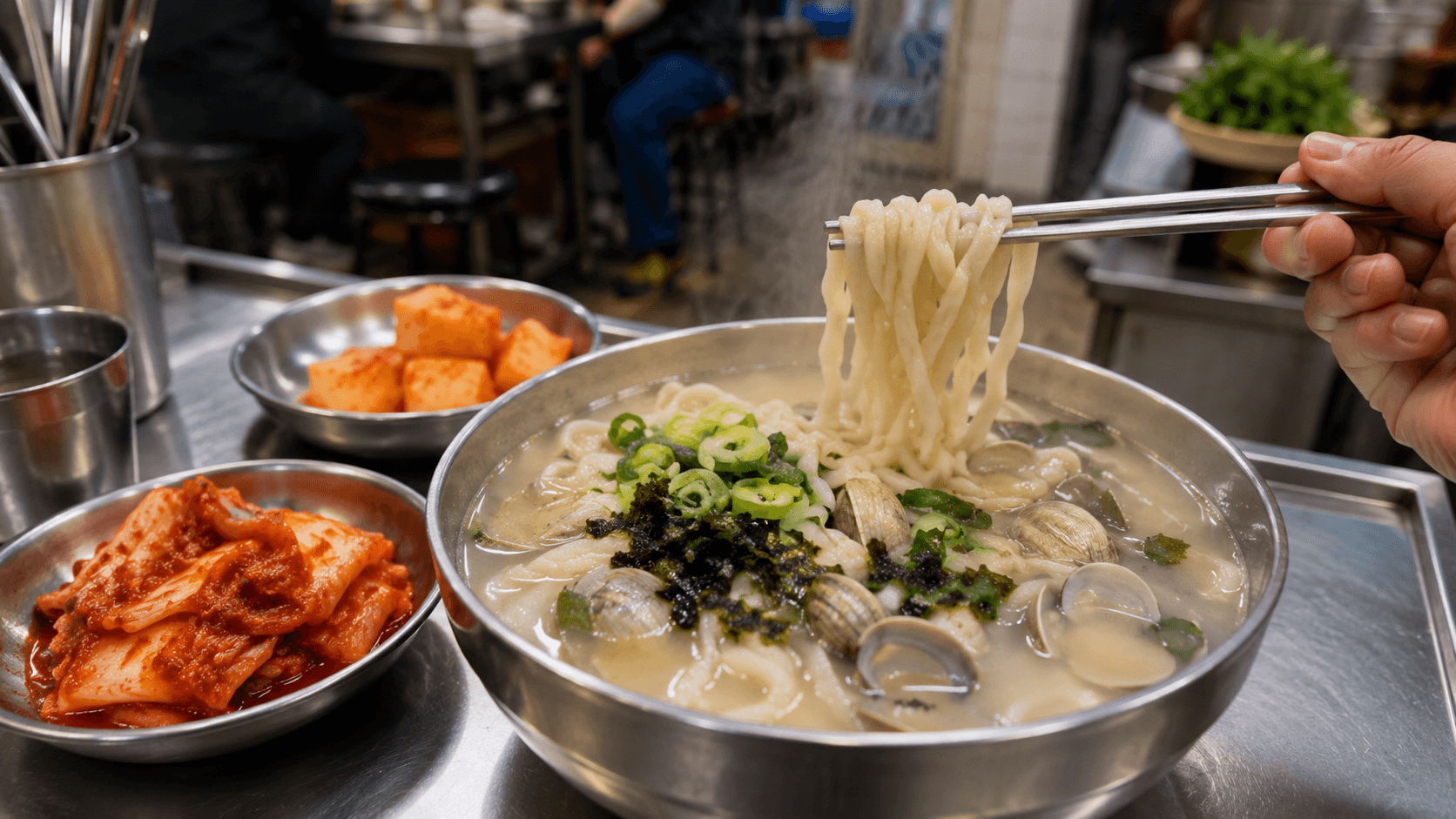
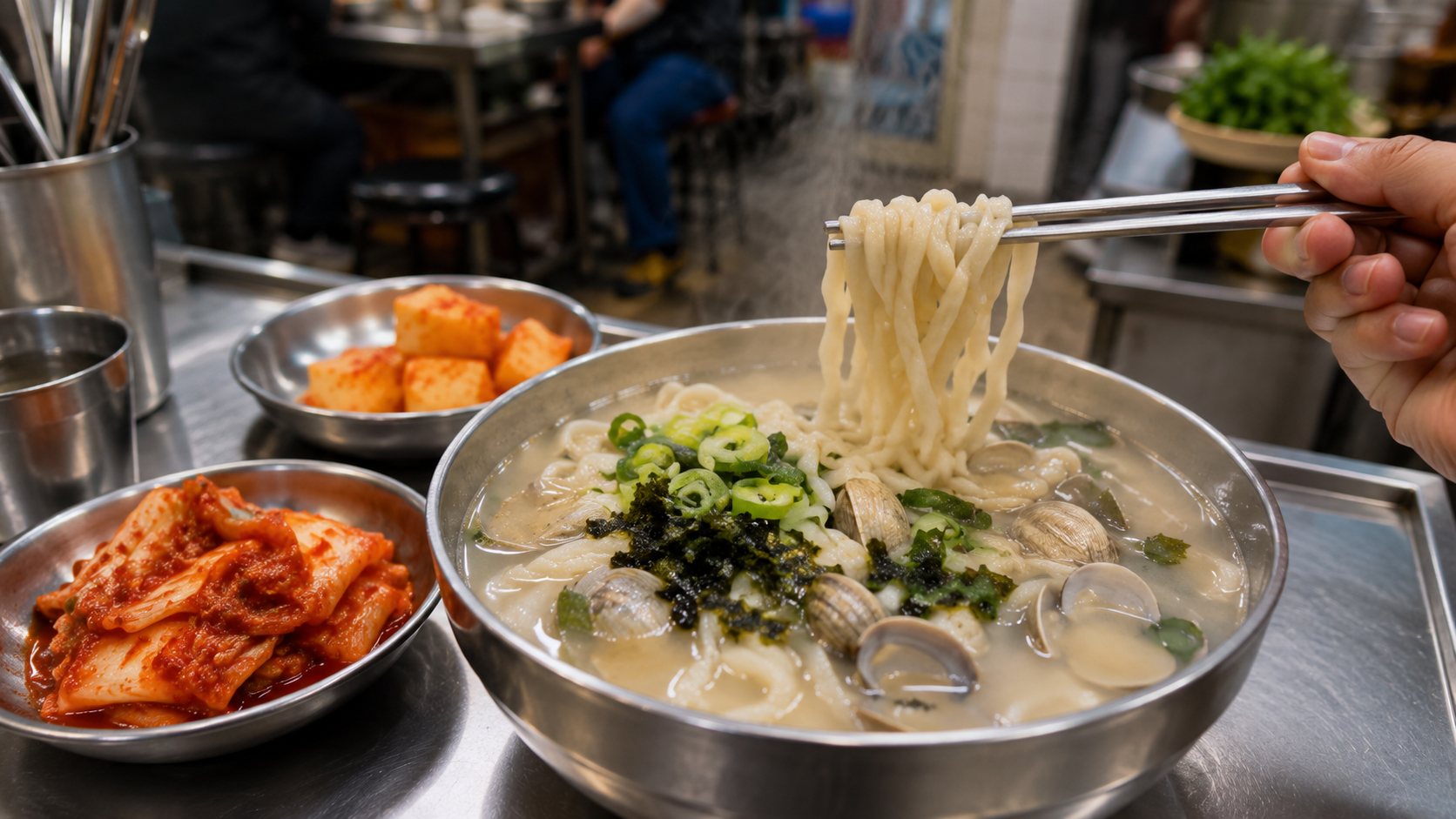
Kalguksu literally means knife noodles. The dough is rolled and cut into strips, producing noodles that are generally wider and softer than packaged ramen. They are cooked in broth, which may become slightly thick from the flour on the noodles.
The broth is not automatically vegetarian. Common restaurant versions use dried anchovy, shellfish, chicken, or beef, depending on the regional style and the restaurant. Frequently encountered varieties include:
- Bajirak-kalguksu (바지락칼국수): With small clams
- Haemul-kalguksu (해물칼국수): With mixed seafood
- Dak-kalguksu (닭칼국수): With chicken
- Deulkkae-kalguksu (들깨칼국수): With ground perilla seeds, creating a thicker, nutty broth
Kalguksu restaurants sometimes serve large portions and may specialize in only a few dishes. Kimchi is a common accompaniment and can be notably garlicky or spicy.
Janchi-guksu: thin noodles in light broth
Janchi (잔치) means a feast or celebration. Janchi-guksu consists of thin wheat noodles in a clear, light broth, usually topped with vegetables, egg, seaweed, or seasoning sauce.
It may look vegetarian, but the broth is often prepared with dried anchovies. Ask specifically about the stock rather than judging from the visible toppings.
This is a useful choice when you want something lighter than a thick stew or rich meat broth. It is common at casual restaurants, traditional markets, snack shops, and highway rest areas.
Gogi-guksu: Jeju-style pork noodles
Gogi-guksu means meat noodles, but the version strongly associated with Jeju Island normally uses sliced pork and a pork-based broth. The soup can appear pale and mild while still tasting rich.
On Jeju, restaurants may list gogi-guksu alongside bibim-guksu, allowing diners to choose between a hot pork noodle soup and cold or cool spicy mixed noodles. Confirm ingredients if you avoid pork; the word gogi alone does not identify the animal in every context.
Cold noodles: more than one kind of naengmyeon
Mul-naengmyeon and bibim-naengmyeon
Naengmyeon means cold noodles. Its long, fine noodles are commonly made with buckwheat, potato starch, sweet potato starch, or combinations that vary by style and manufacturer. They can be difficult to bite cleanly, so some restaurants provide kitchen scissors. Cutting them is optional unless the restaurant has already done so.
The two menu choices are usually:
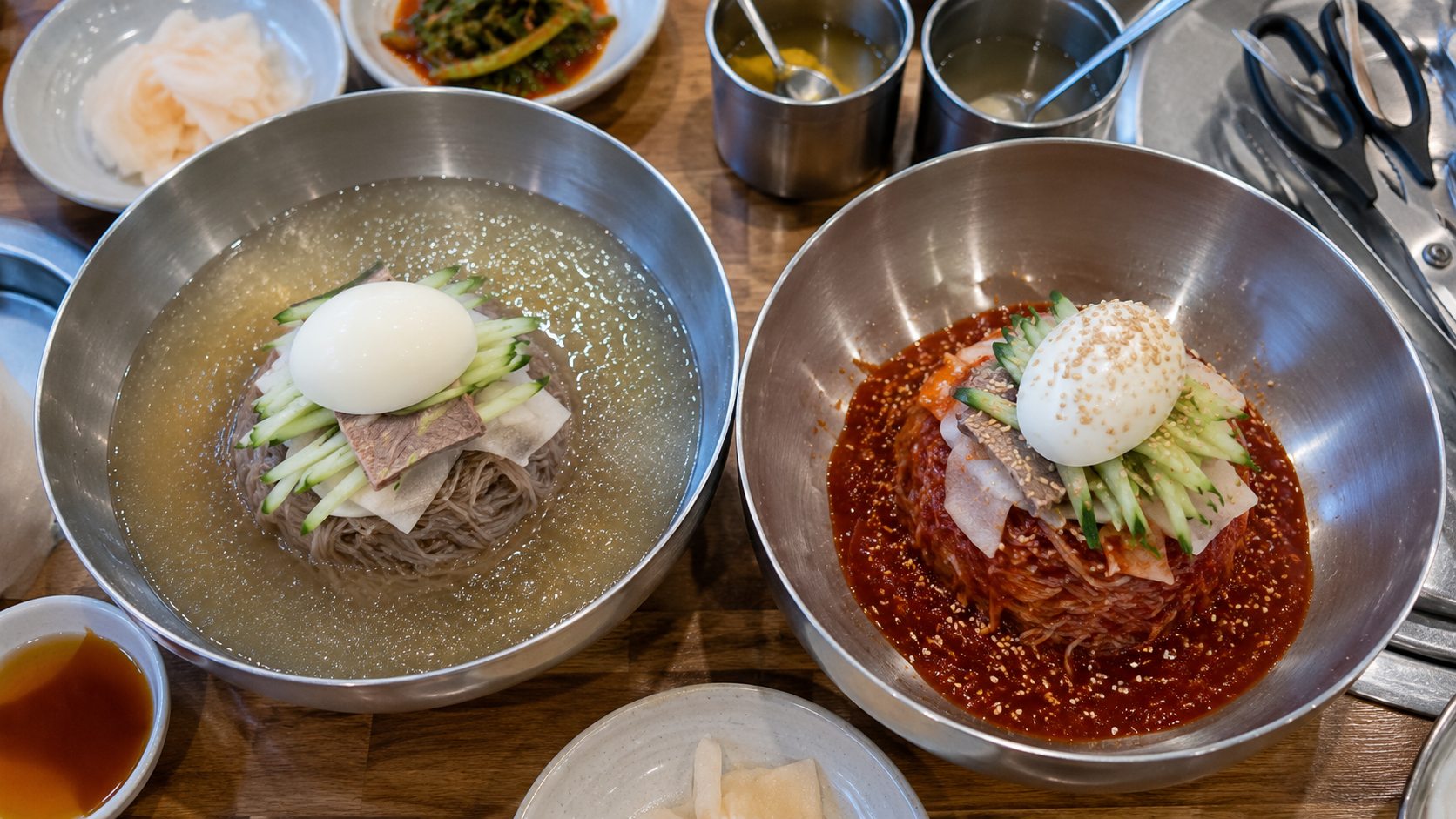
- Mul-naengmyeon (물냉면): Noodles in chilled broth, often with sliced cucumber, radish, meat, and half an egg
- Bibim-naengmyeon (비빔냉면): Noodles mixed with a red, spicy-sweet sauce and little or no broth
Vinegar and mustard may be available at the table. Taste the broth or sauce first, then add a small amount. Adding too much immediately is a common mistake because it can overwhelm the restaurant's seasoning.
Naengmyeon is popular in warm weather, but specialist restaurants may serve it throughout the year. Some barbecue restaurants also offer smaller bowls as a final course after meat.
Pyeongyang and Hamheung styles
Restaurants may identify naengmyeon with regional names connected to areas now in North Korea.
Pyeongyang-naengmyeon generally emphasizes a subtle broth and buckwheat character. First-time diners expecting a heavily seasoned soup may find it restrained. It is worth tasting before reaching for vinegar or mustard.
Hamheung-naengmyeon is commonly associated with chewier starch-based noodles and stronger seasoning, especially in mixed or spicy preparations. Restaurant interpretations vary, so the regional label is a useful guide rather than a guarantee of one exact recipe.
Makguksu: buckwheat noodles associated with Gangwon
Makguksu is particularly associated with Gangwon Province. It normally uses buckwheat-based noodles and may arrive in broth or with a spicy mixed sauce. Cucumber, sliced radish, sesame, seaweed, and egg are common additions.
Some restaurants place sauce, broth, vinegar, mustard, sugar, or oil on the table so diners can adjust the bowl. Begin with the dish as served. Buckwheat content varies, and many noodles also contain wheat or starch.
Milmyeon: Busan's wheat noodles
Milmyeon means wheat noodles and is a representative Busan dish. It resembles naengmyeon in presentation, with both broth-based mul-milmyeon and spicy mixed bibim-milmyeon commonly available. The noodles are wheat-based and tend to feel springy but easier to bite than some starch-heavy naengmyeon.
Milmyeon is a practical regional dish to look for in Busan, but recipes and operating hours differ by restaurant. Consult current listings through the official Visit Busan tourism portal rather than relying on an old blog post.
Kongguksu: noodles in cold soybean broth
Kongguksu is made with noodles in a chilled broth of ground soybeans. The broth is creamy without necessarily containing dairy. Its flavor is mild, nutty, and less acidic than most other cold noodle dishes.
Restaurants may provide salt or sugar because regional and personal preferences differ. Try the broth before seasoning it. Kongguksu is often seasonal, so it may disappear from menus outside the warmer months even at restaurants that serve other noodles year-round.
Mixed and sauced noodles
Bibim-guksu
Bibim-guksu usually combines thin wheat noodles with a red sauce made around gochujang or chili powder, vinegar, sweetness, and other seasonings. It is commonly topped with cucumber, vegetables, kimchi, seaweed, or egg.
The red color is a reliable warning that the dish may be spicy, but not a precise measure. Sweetness and heat vary significantly. Asking for the sauce separately may be possible at a flexible restaurant, but specialist kitchens and kiosks may not support modifications.
Jjolmyeon
Jjolmyeon is known for exceptionally chewy noodles served with vegetables and a sweet, sour, spicy sauce. The name is also used for the noodle type itself. Mix the bowl thoroughly so the sauce reaches the noodles at the bottom.
Raw cabbage, bean sprouts, cucumber, and boiled egg are common, making the bowl look salad-like. It should not automatically be considered vegan because sauce, garnishes, and preparation methods vary.
Japchae: glass noodles, usually without broth
Japchae is made with translucent dangmyeon (당면), most commonly produced from sweet potato starch. The noodles are combined with seasoned vegetables and often beef, mushrooms, egg, or other ingredients. The seasoning is generally based on soy sauce, sesame oil, garlic, and sweetness.
Unlike most dishes in this guide, japchae is often served as a shared side dish, buffet item, or part of a set meal rather than as a personal noodle main. It may be warm or at room temperature. The Korean Food Promotion Institute maintains an official Korean recipe collection with a noodle category, although restaurant recipes can differ.
Korean-Chinese noodle dishes
Jajangmyeon
Jajangmyeon consists of thick wheat noodles covered with a dark sauce based on chunjang, a fermented black-bean paste used in Korean-Chinese cooking. The sauce normally includes diced vegetables and commonly pork, although seafood and meat-free versions exist.
Mix it thoroughly before eating. Yellow pickled radish, called danmuji (단무지), is a usual accompaniment. Jajangmyeon is widely associated with delivery, but it is also served at sit-down Korean-Chinese restaurants and food courts.
Do not assume the black-bean sauce is vegetarian. Pork can be finely diced and difficult to see.
Jjamppong
Jjamppong is a spicy noodle soup usually made with vegetables and seafood. Some versions also contain pork or use meat stock. The red broth can splash, and the seafood may include shellfish, squid, or mussels.
A common shared order at Korean-Chinese restaurants is one jajangmyeon, one jjamppong, and a plate of tangsuyuk, or sweet-and-sour fried meat. Portion sizes and set combinations vary, so check whether a menu item is intended for one person or the table.
Ramyeon: Korean instant noodles
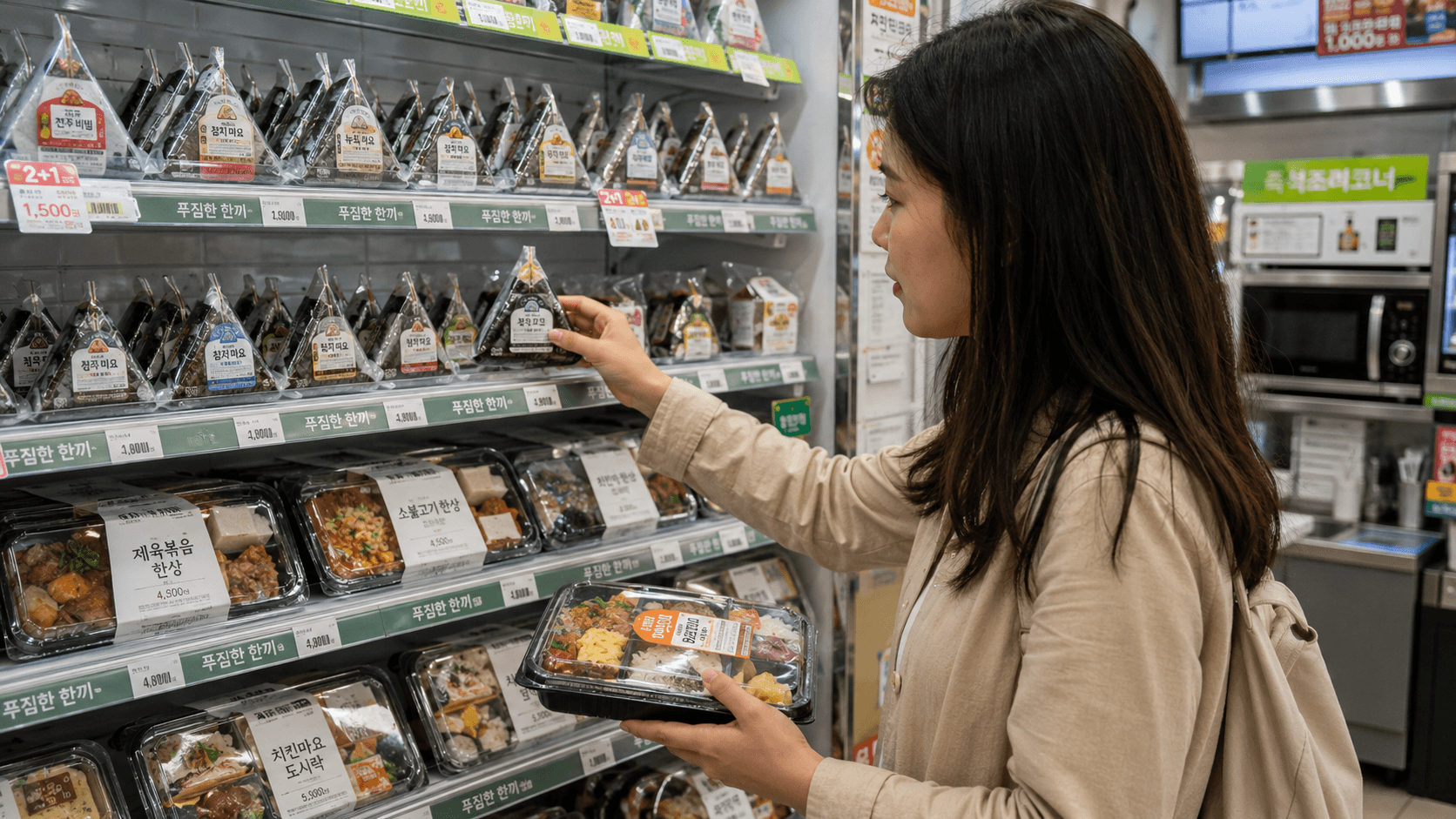
Ramyeon generally means instant noodles in Korea. Restaurants may cook them in a pot with egg, green onion, rice cake, dumplings, cheese, or other additions. Convenience stores sell both cup noodles and packets, and some locations provide hot-water dispensers or automated cooking machines.
Check the package instructions before opening everything. Cup noodles usually require hot water and a waiting period, while packets intended for a machine may use a disposable cooking container. Drain-style noodles have separate sauce packets that should be added after some or all of the water is removed.
A seafood illustration does not necessarily mean that seafood is the only animal ingredient. Soup powders can contain meat, fish, shellfish, dairy, or egg derivatives. Use the package's ingredient and allergen information rather than the front image alone.
Dietary restrictions and allergies
Noodle dishes can contain less obvious animal ingredients. Anchovy stock is common in apparently vegetable-based soups; beef or pork may be incorporated into broth or sauce; kimchi can contain fish sauce or salted seafood; and egg is a frequent garnish.
Important ingredients to ask about include:
- Wheat: Present in most guksu, kalguksu, jajangmyeon, jjamppong, milmyeon, and ramyeon
- Buckwheat: Common in naengmyeon and makguksu, sometimes blended with wheat or starch
- Soy: Found in kongguksu, soy sauce, jajang sauce, and many seasonings
- Egg: Used in noodles, toppings, or side dishes
- Shellfish and fish: Common in stocks and jjamppong
- Sesame: Used as seeds or oil in many mixed noodles and japchae
- Peanuts or other nuts: Not standard in every noodle dish, but possible in sauces or garnishes
For a serious allergy, showing the ingredient in written Korean is safer than relying only on spoken English. Ask whether it is present in the noodles, broth, sauce, garnish, and shared cooking equipment. A restaurant may be unable to prevent cross-contact. When the consequences are severe, choose food with verifiable packaging and allergen labeling or contact the restaurant in advance.
Useful phrases include:
- Does this contain buckwheat? 메밀이 들어가요? (Memiri deureogayo?)
- Does the broth contain anchovies? 육수에 멸치가 들어가요? (Yuksue myeolchiga deureogayo?)
- I cannot eat pork. 돼지고기를 먹을 수 없어요. (Dwaejigogireul meogeul su eopseoyo.)
- Please leave out the egg. 계란은 빼 주세요. (Gyeraneun ppae juseyo.)
These phrases communicate a request but do not guarantee an allergen-free meal.
How to order noodles in Korea
- Check whether ordering is at the table, counter, or kiosk. Some restaurants take orders verbally; others use a touchscreen or tablet.
- Choose broth or mixed noodles. Look for mul and bibim when both versions are offered.
- Select the portion. Botong (보통) means regular, gopbaegi (곱빼기) means a larger serving, and sari chuga (사리 추가) means adding noodles.
- Confirm optional extras. Egg, dumplings, meat, rice, or noodles may cost extra.
- Pay as directed. Payment may be taken before the meal, at the counter afterward, or through a kiosk. Do not assume the same system applies everywhere.
- Return dishes only when requested. Food courts and some self-service restaurants have designated return stations; ordinary table-service restaurants do not.
Menus, prices, payment methods, and operating hours are set by individual businesses and can change. Verify them directly with the restaurant on the day of your visit.
Common mistakes to avoid
- Assuming every clear broth is vegetarian
- Treating all cold noodles as the same dish
- Adding vinegar and mustard before tasting naengmyeon
- Expecting japchae to be a full noodle meal at every restaurant
- Assuming buckwheat noodles are gluten-free
- Ordering jjamppong without checking for shellfish
- Confusing restaurant ramyeon with Japanese-style ramen
- Pouring every instant-noodle seasoning packet into the cup without reading the cooking order
What to check before you go
- Search the Korean dish name in Hangul, not only its English spelling.
- Confirm the restaurant's current opening hours and last order time.
- Check whether the dish is seasonal, especially kongguksu.
- Ask what the broth contains if you avoid meat, fish, or shellfish.
- Confirm wheat and buckwheat content if you have an allergy or gluten restriction.
- Check whether the restaurant uses a kiosk and whether language options are available.
- Carry the Korean names of serious allergens on your phone.
- For a regional specialty, verify the exact branch rather than assuming every location serves the same menu.
A practical starting point is to choose one dish from each major style: kalguksu for hot wheat noodles, mul-naengmyeon for chilled broth, bibim-guksu for spicy mixed noodles, jajangmyeon for Korean-Chinese sauce noodles, and japchae for sweet potato glass noodles. That progression makes the differences in texture and seasoning much easier to recognize.
Sources
Information and links verified on June 11, 2026.