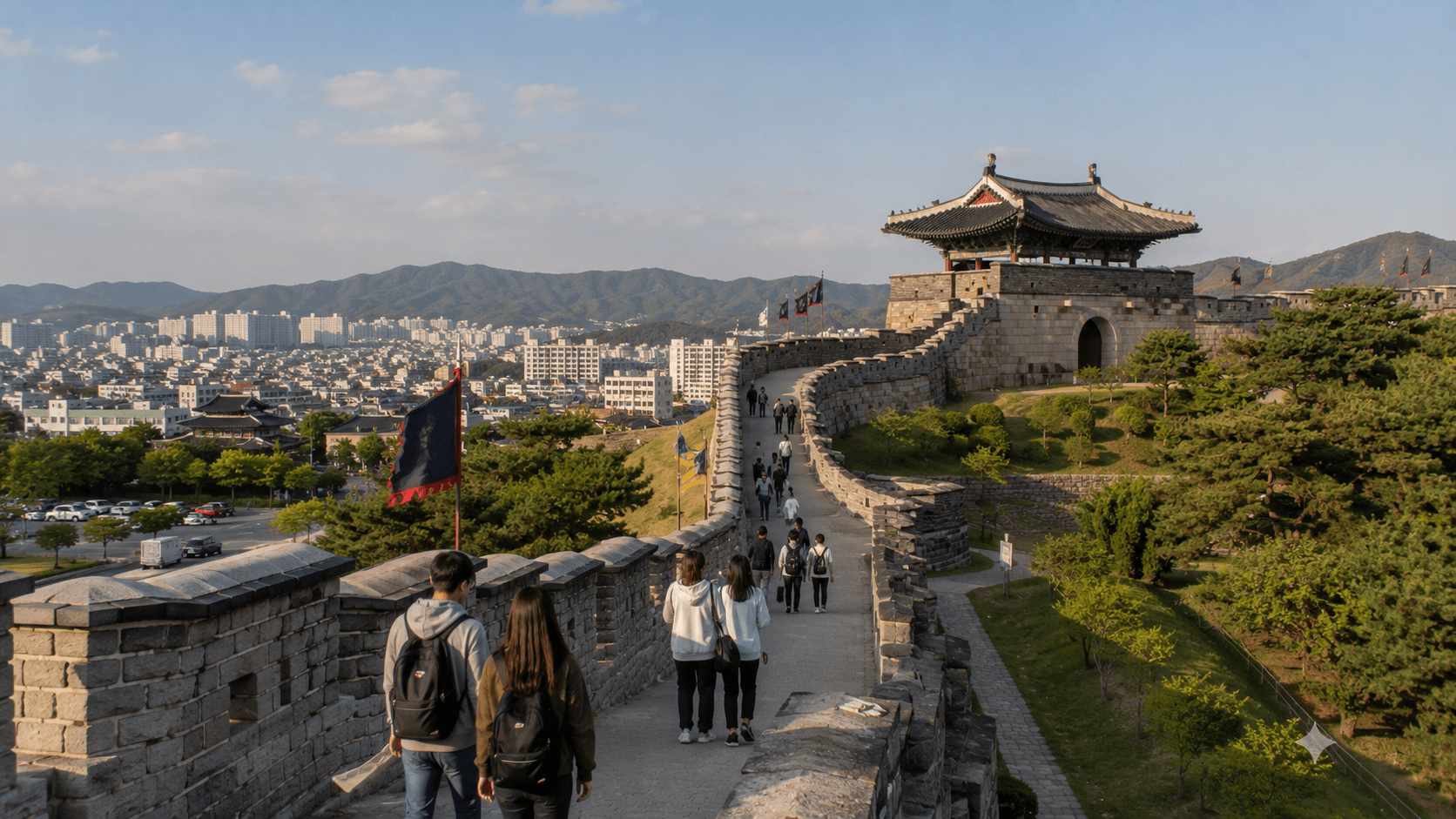
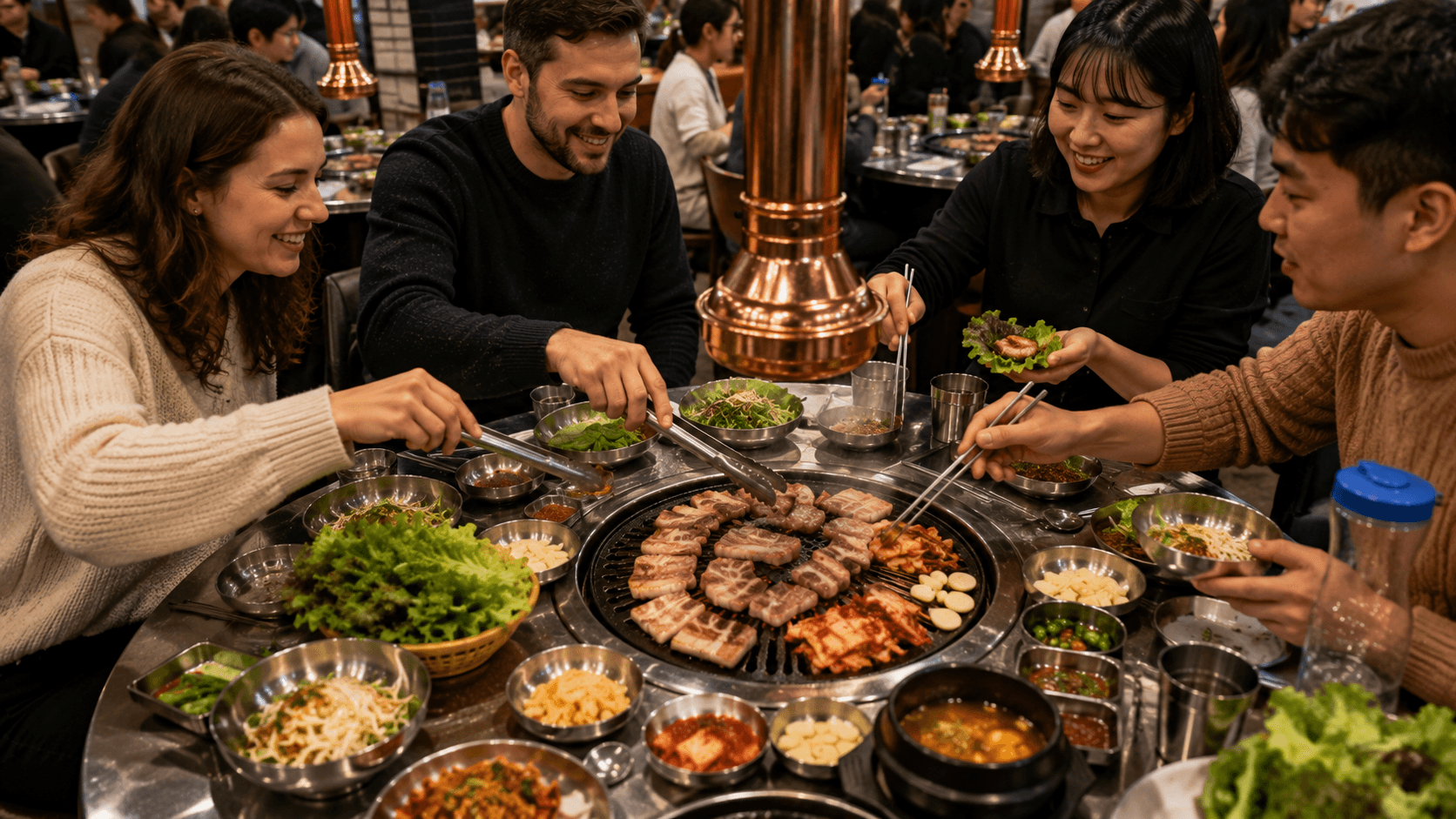
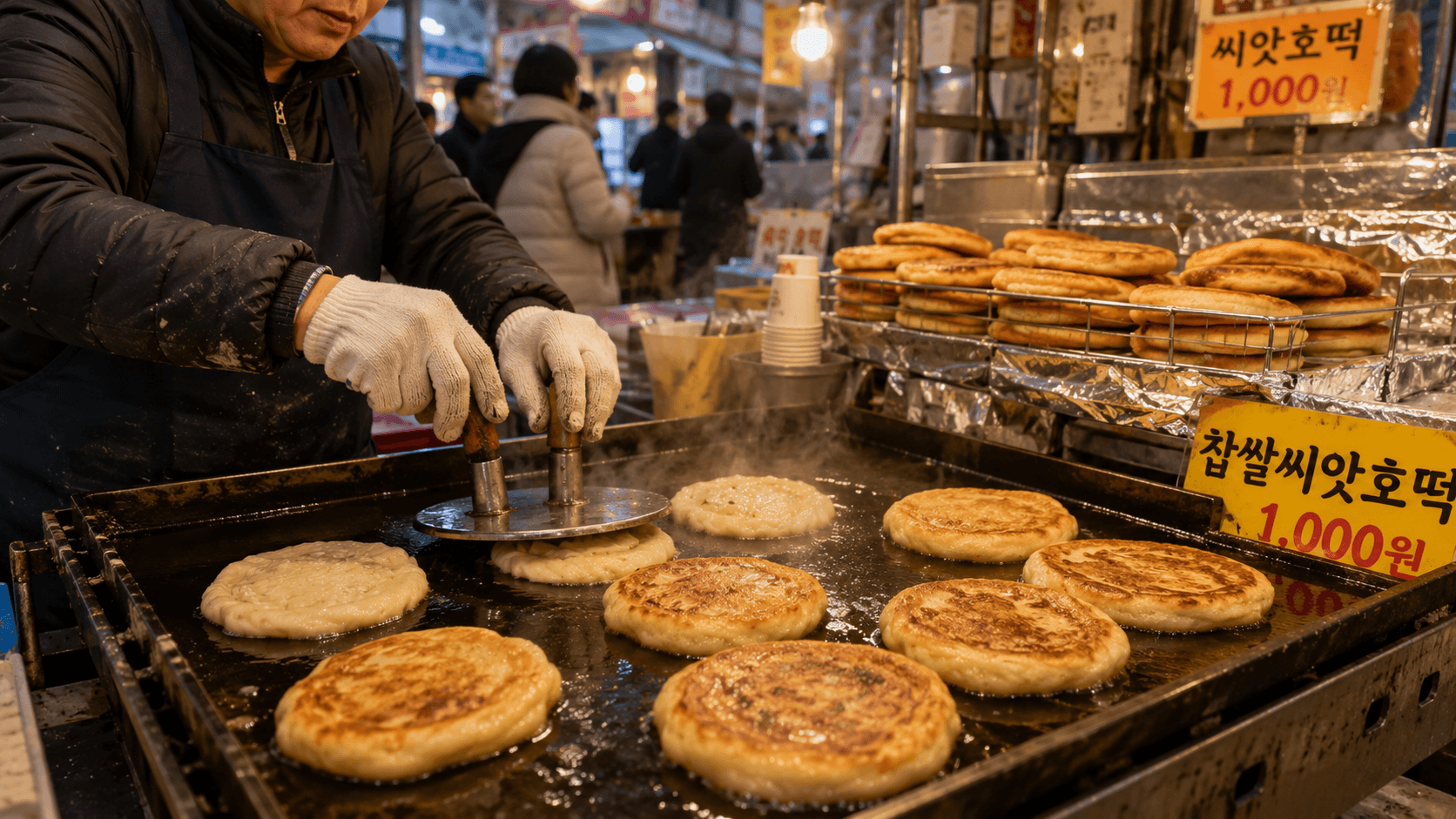
South Korea remains active on most public holidays, but opening hours and travel conditions can change significantly. The two periods requiring the most preparation are Seollal, the Korean Lunar New Year, and Chuseok, the autumn harvest holiday, when large numbers of people travel to visit family. On other holidays, urban transport and major shopping districts generally continue operating, although government offices, banks, clinics, museums, and independent businesses may close or change their hours.
Holiday rules and dates in this guide were checked on June 11, 2026. Lunar-calendar dates, substitute holidays, election days, and temporary holidays can change from year to year, so confirm the calendar for your actual travel dates.
Quick answer
- Most disruptive holidays: Seollal and Chuseok.
- Main risk: Sold-out intercity transport before and after the holiday period.
- Usually available: City buses, subways, convenience stores, and at least some restaurants.
- Often closed: Government offices, banks, schools, and some medical facilities.
- Variable: Museums, palaces, restaurants, department stores, traditional markets, and private attractions.
- Important: A public holiday does not mean that every business closes.
South Korea's main public holidays
The official framework is set out in the Korean government's Regulation on Holidays of Public Agencies. The following table covers the holidays most relevant to visitors.
| Holiday | Usual date | What travelers should expect |
|---|---|---|
| New Year's Day | January 1 | A quieter morning, some reduced hours, and possible closures at public institutions |
| Independence Movement Day | March 1 | Public ceremonies and Korean flags; generally limited disruption for tourists |
| Children's Day | May 5 | Heavy demand at theme parks, zoos, aquariums, and family attractions |
| Memorial Day | June 6 | Commemorative events and flags at half-mast; most transport continues |
| Liberation Day | August 15 | Ceremonies, flags, and possible demonstrations or traffic controls in central Seoul |
| National Foundation Day | October 3 | Public holiday with generally limited travel disruption |
| Hangul Day | October 9 | Cultural events related to the Korean alphabet, especially around museums and Gwanghwamun |
| Christmas Day | December 25 | Public holiday, but shopping, dining, and entertainment districts can remain busy |
Three additional holidays follow the lunar calendar, so their Gregorian dates change every year:
- Seollal (설날): A three-day public holiday centered on Lunar New Year's Day.
- Buddha's Birthday (부처님 오신 날): The eighth day of the fourth lunar month.
- Chuseok (추석): A three-day public holiday centered on the fifteenth day of the eighth lunar month.
South Korea may also observe public holidays for regularly scheduled national elections. The government can designate temporary holidays in particular years. Do not rely on a recurring calendar alone when booking a trip far in advance.
Substitute holidays
Some holidays receive a substitute public holiday, called da체공휴일 (대체공휴일), when their dates overlap with weekends or other qualifying holidays. The rules do not apply identically to every commemorative day.
The practical solution is to check the complete calendar for the relevant year. A Monday that appears ordinary in an international calendar may be an official substitute holiday in Korea, affecting offices and business hours.
Seollal: Korean Lunar New Year
Seollal is one of Korea's most important family holidays. Families may gather, hold ancestral memorial rites, eat tteokguk (rice cake soup), and perform sebae, a formal New Year bow to older relatives.
For tourists, the most important effect is the movement of people between Seoul and regional cities. Demand rises for KTX trains, domestic flights, and express buses before the holiday, then shifts in the opposite direction as people return home.
What may be difficult
- Reserving intercity trains or buses at convenient times
- Traveling on expressways without delays
- Finding independent restaurants open in residential neighborhoods
- Visiting government offices, banks, or university administration offices
- Arranging non-emergency medical appointments
Holiday railway tickets may be released through a special reservation process rather than the normal booking pattern. Check announcements on the official KORAIL booking website rather than assuming tickets will open on the usual schedule.
Express buses can be checked through the KOBUS intercity express bus service. Other intercity bus routes may appear on Bustago. Coverage, foreign-card acceptance, and English support can vary by route and platform.
Is Seoul empty during Seollal?
Seoul can feel quieter in office and residential areas, but it does not shut down. Major tourist districts, convenience stores, hotel restaurants, cinemas, and large shopping complexes may operate, sometimes with adjusted hours. Traditional cultural sites may organize holiday programs.
Do not assume that a famous restaurant will be open simply because its neighborhood is busy. Check the restaurant's Korean-language social media page, map listing, or telephone notice shortly before visiting.
Chuseok: Korea's autumn family holiday
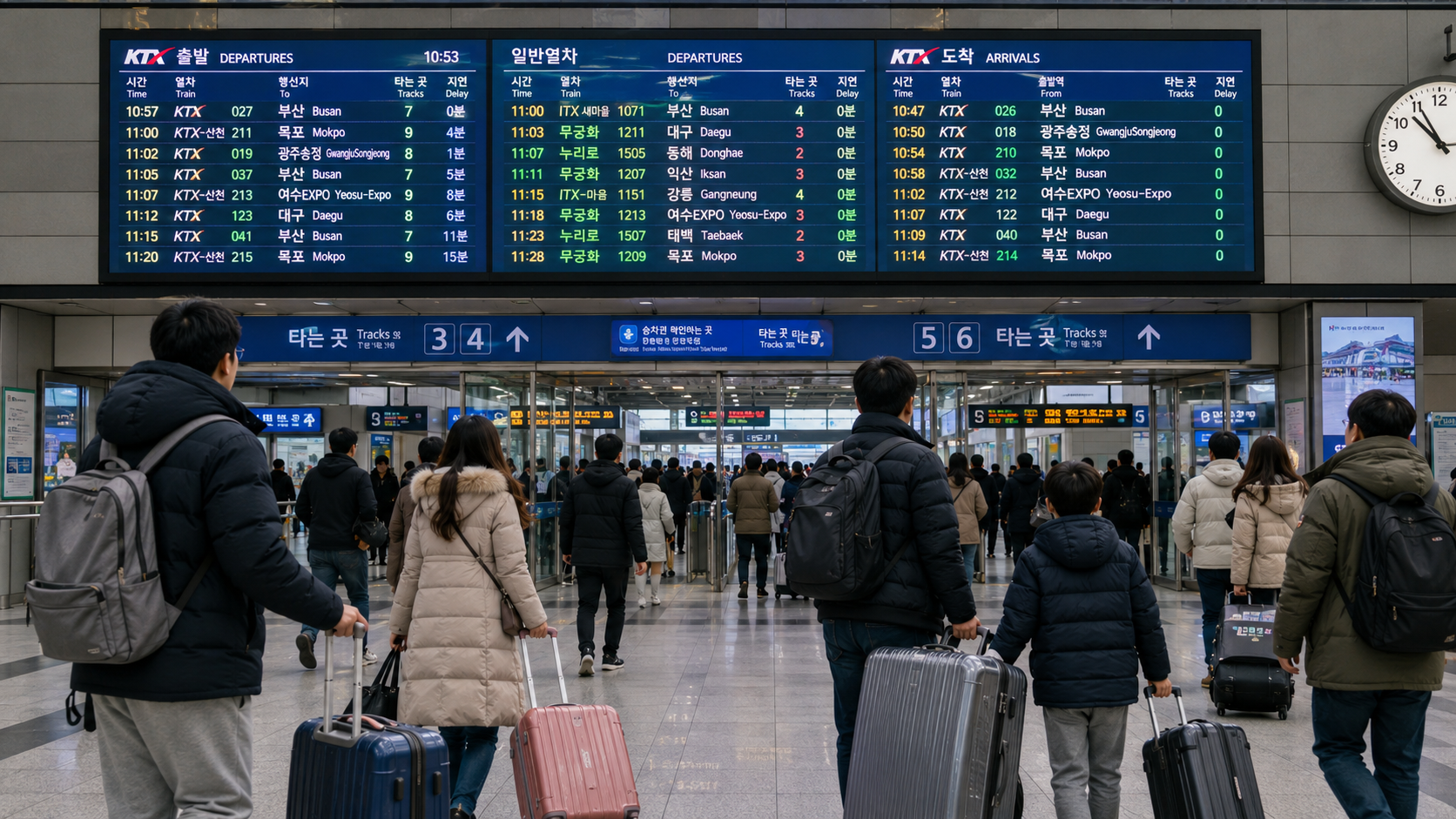
Chuseok is a harvest-season holiday associated with family gatherings, ancestral rites, visits to family graves, and foods such as songpyeon, a filled rice cake. Like Seollal, the official holiday covers three days, but the practical travel period can extend across the surrounding weekend.
Why Chuseok affects travel plans
Intercity transport is the main concern. Train seats and popular bus departures can become difficult to obtain, while highways may experience substantial congestion. Flights to destinations such as Jeju can also be in high demand.
If your itinerary requires moving between Seoul, Busan, Gyeongju, Jeonju, or another regional destination during Chuseok, avoid building the entire plan around a same-day ticket purchase. Check official booking services as soon as the holiday sales procedure is announced.
A practical alternative is to stay within one city during the main holiday period. Seoul, Busan, and other large cities still have functioning local transport and a selection of open attractions, restaurants, and shopping areas.
What can be enjoyable during Chuseok
National and municipal museums, palaces, folk villages, and cultural organizations sometimes offer traditional performances or holiday activities. These programs can be useful for visitors, but schedules are not permanent. Confirm the specific year's program through the venue or the Korea Tourism Organization's VISITKOREA website.
Children's Day and family-attraction crowds
Children's Day on May 5 is a public holiday focused on children and families. It can produce some of the year's heaviest crowds at amusement parks, zoos, aquariums, science museums, indoor play facilities, and popular parks.
Advance reservations are advisable where available. Arriving at opening time may help, but it does not guarantee short waits. Travelers without children may prefer historical sites, hiking routes, or neighborhoods that are less dependent on family entertainment.
When Children's Day connects with a weekend or substitute holiday, domestic accommodation demand may increase beyond May 5 itself.
Buddha's Birthday
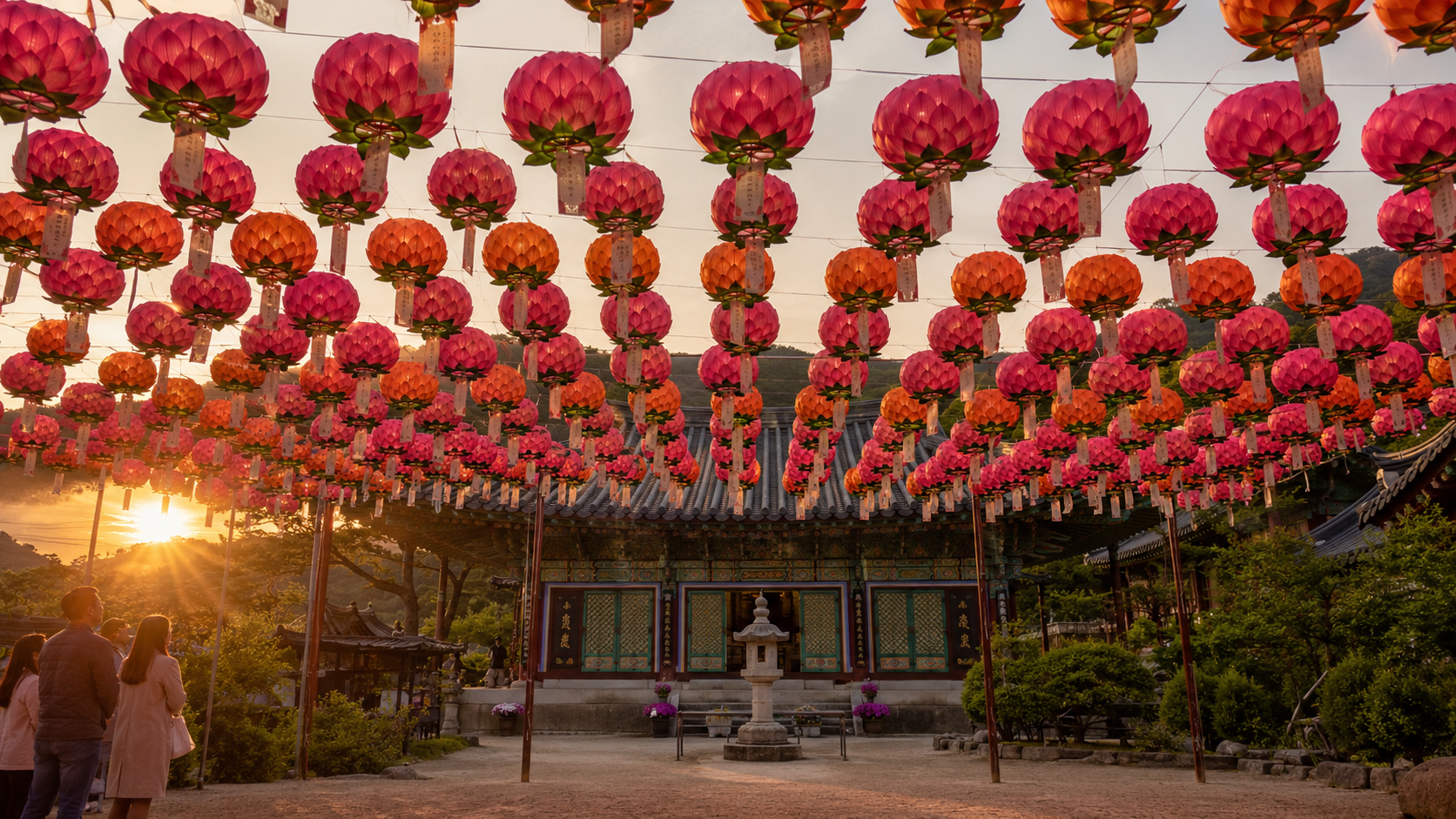
Buddha's Birthday is a public holiday based on the lunar calendar. In the weeks around it, Buddhist temples display colorful lotus lanterns. Seoul's major lantern events may involve road closures or temporary changes to bus routes, particularly around Jongno and central Seoul.
Temples generally welcome respectful visitors, but they remain places of worship. Keep voices low, avoid blocking ceremonies, and follow photography restrictions. Event dates and traffic arrangements should be checked for the relevant year rather than inferred from the public-holiday date.
National commemorative holidays
March 1, August 15, October 3, and October 9 are among Korea's national celebration days under the Act on National Celebration Days. Visitors will often see the national flag, the Taegeukgi (태극기), displayed along streets and outside buildings.
These holidays normally cause less nationwide travel pressure than Seollal or Chuseok. However, commemorative ceremonies, parades, rallies, or demonstrations can affect roads around central government and historic areas.
In Seoul, allow extra time near Gwanghwamun, City Hall, the National Assembly, and major memorial sites if an event is announced. Follow police barriers and use the subway when surface traffic is restricted.
What stays open on Korean holidays?
There is no universal answer. Each operator sets its own schedule unless a specific legal or institutional rule applies.
Usually available, but not guaranteed
- Subways and city buses, often using weekend or holiday timetables
- Taxis
- Convenience stores
- Large cinemas and entertainment complexes
- Restaurants in major commercial and tourist districts
- Hotel services
- Airports and intercity transport, although tickets may sell out
More likely to close or reduce services
- Government offices
- Banks and many financial-service counters
- Schools and university offices
- Post offices
- Private clinics and dental offices
- Small family-run restaurants and shops
- Offices serving visas, immigration, licensing, or local administration
Banks' automated teller machines normally remain accessible, but international cards do not work in every machine. Complete currency exchange, bank transfers, and in-person financial tasks before the holiday.
May 1 requires separate attention because Labor Day's legal and operational treatment has not always matched every public-office holiday in older guides. Check the specific bank, workplace, school, market, or government office instead of assuming that all organizations follow the same schedule.
Museums, palaces, and attractions
Do not apply a single rule to all cultural attractions. A venue may:
- Open normally on the holiday
- Use shorter hours
- Close on the holiday
- Open for the holiday and close on the following day
- Require timed reservations for a special program
Check the attraction's official notice page within several days of your visit. Map-app hours are useful for orientation but may not reflect a late holiday announcement.
For outdoor destinations, remember that a ticket office, shuttle bus, cable car, visitor center, or luggage facility can have different hours from the site itself.
Medical care and pharmacies
Non-emergency clinics and pharmacies often use special holiday schedules. Search the Korean government's E-Gen emergency medical information service for facilities reported as open, and telephone before traveling when possible. Availability can change, and English service is not guaranteed.
For a medical or fire emergency, call 119. This guide does not replace medical advice or confirmation from an individual facility.
How to plan around a major holiday
One month or more before travel
- Identify whether your dates overlap with Seollal, Chuseok, a substitute holiday, or an election day.
- Avoid placing an inflexible intercity journey on the first or last day of a major holiday period.
- Reserve accommodation early in popular domestic destinations.
- Monitor official KORAIL, airline, and bus announcements rather than relying only on third-party booking apps.
One week before
- Check every attraction's official holiday notice.
- Confirm restaurant reservations directly.
- Complete banking, postal, immigration, university, and government-office tasks.
- Locate at least one nearby pharmacy or medical facility listed as open.
- Download transport and map apps and save essential addresses in Korean.
The day before
- Buy necessary medication, toiletries, and basic food.
- Recheck train, bus, and flight departure details.
- Allow extra time for stations, terminals, and airport security.
- Check for demonstrations, parades, road closures, or severe-weather notices.
Common mistakes
Assuming every business will close
Korea's large cities do not become completely inactive on public holidays. Searching for alternatives is usually more useful than canceling the entire day.
Assuming everything will remain open
A shopping mall may operate while its bank, clinic, supermarket, or individual restaurants follow different hours.
Waiting to buy a holiday train ticket
Normal ticket-buying habits may not work during Seollal and Chuseok. Special sales procedures and strong demand can make spontaneous intercity travel risky.
Confusing a cultural observance with a day off
Korea has commemorative days and traditional festivals that are not necessarily public holidays. Conversely, election or temporary holidays may appear only in a particular year.
Trusting only an English map listing
Holiday updates are often posted first in Korean on an official website, Naver Map listing, Instagram account, or entrance notice. Useful terms include 휴무 for closed, 정상 운영 for normal operation, and 운영시간 변경 for changed operating hours.
What to check before you go
- Is the date an official, substitute, election, or temporary holiday?
- Are you traveling between cities during Seollal or Chuseok?
- Has the transport operator announced a special reservation period?
- Does your attraction open on holidays or close the following day?
- Is your restaurant reservation confirmed directly?
- Will you need a bank, clinic, pharmacy, post office, or government service?
- Are local buses and subways using a weekend or holiday timetable?
- Could a ceremony or rally affect roads near your destination?
Start by checking your travel dates against Korea's current official holiday regulation. If they overlap with Seollal or Chuseok, settle your intercity route before planning individual attractions.
Sources
- Korean National Law Information Center: Regulation on Holidays of Public Agencies
- Korean National Law Information Center: Act on National Celebration Days
- Korea Tourism Organization: VISITKOREA
- KORAIL official booking website
- KOBUS official express bus service
- Bustago official intercity bus service
- E-Gen emergency medical information service