Seollal (설날), Korea's Lunar New Year, is one of the country's most important family holidays. It can be an enjoyable time to visit, but you should expect intense demand for intercity transport, reduced business hours, and closures at independently operated restaurants and shops. Reserve long-distance travel early, verify every attraction's holiday schedule, and avoid building an itinerary that depends on small businesses being open.
Information in this guide was verified on June 11, 2026. Detailed transport schedules and attraction hours for future Seollal periods are usually announced closer to the holiday.
At a glance
| Question | Practical answer |
|---|---|
| What is Seollal? | The first day of the Korean lunar calendar and a major family holiday |
| When is the next Seollal? | Seollal Day falls on February 7, 2027 |
| How long is the holiday? | The statutory holiday covers the day before, Seollal Day, and the following day; substitute-holiday rules may extend the break |
| Is public transport available? | Urban transport normally operates, often on adjusted schedules; intercity tickets can sell out |
| Are attractions open? | Some major attractions open or run special programs, but museums and private businesses vary |
| Are restaurants open? | Some chains and tourist-area restaurants open, while many family-run businesses close |
| What should travelers book first? | Intercity trains, buses, flights, accommodation, and airport transfers |
When is Seollal in 2027?
Seollal Day falls on Sunday, February 7, 2027. Under Korea's current public-holiday framework, the regular Seollal holiday covers February 6-8. Because part of that period overlaps a Sunday, current substitute-holiday rules indicate an additional day off on Tuesday, February 9.
Travelers should therefore plan for a likely four-day holiday period from Saturday, February 6, through Tuesday, February 9, 2027. This projection was checked on June 11, 2026, but official operating notices for transport systems, museums, palaces, and city services had not yet been published. Confirm the final calendar through the Korean government portal and individual operators before booking nonrefundable arrangements.
Seollal moves each year because it follows the lunar calendar. Do not assume that dates from an older blog post apply to your trip.
Why travel becomes difficult
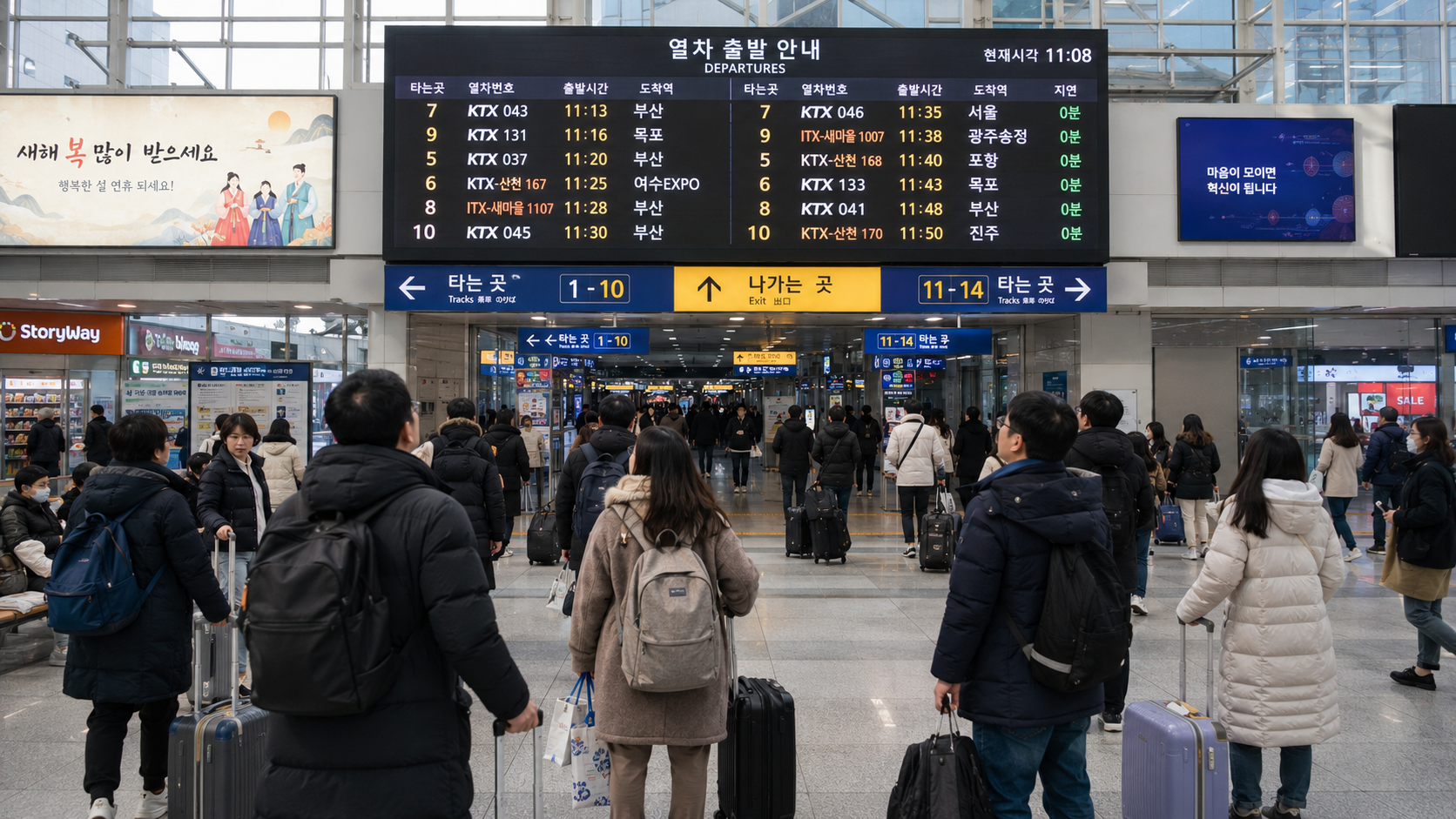
Seollal is primarily a family holiday rather than a public street festival. Large numbers of residents travel from Seoul and other major cities to hometowns around the country. This movement is known as gwiseong (귀성), meaning the journey home.
Demand affects:
- KTX and other KORAIL trains
- SRT high-speed trains
- Express and intercity buses
- Domestic flights, particularly routes involving Jeju
- Rental cars and highway rest areas
- Taxis near stations and terminals
- Hotels in popular domestic destinations
The heaviest movement is generally toward regional cities before Seollal and back toward the Seoul metropolitan area near the end of the break. Exact peak periods vary each year, so treat this as planning guidance rather than a confirmed traffic forecast.
How to book intercity transport
Trains
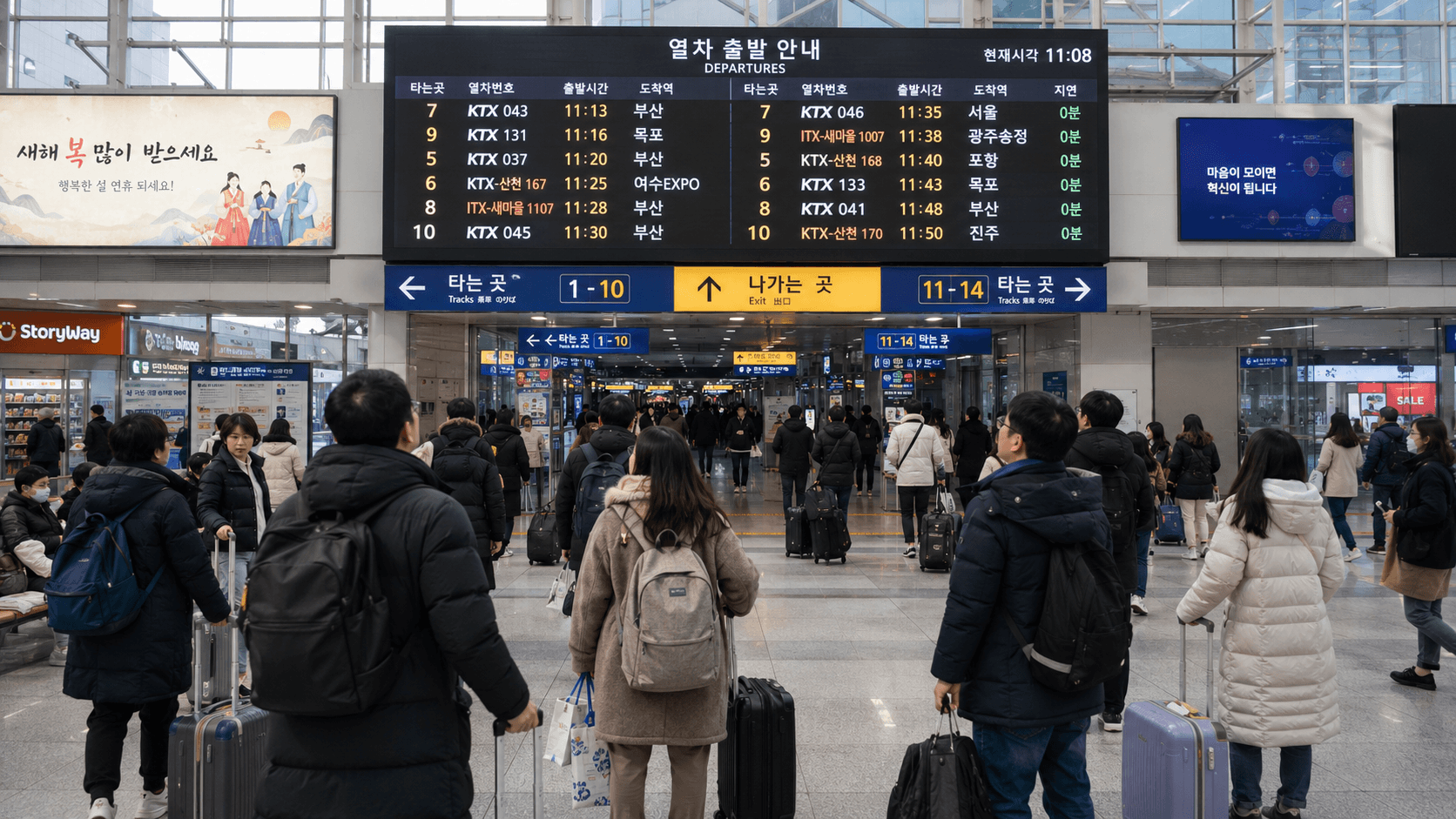
KORAIL normally uses a special reservation process for peak-holiday tickets rather than relying entirely on its ordinary booking window. Sales may be divided by railway line or passenger category, and standing tickets or cancellations may appear later.
The 2027 Seollal reservation dates had not been announced as of June 11, 2026. Monitor the official KORAIL booking service instead of relying on dates from previous years. For SRT services from Suseo Station, check the official SRT website.
Practical booking steps:
- Decide your route and acceptable departure times before sales begin.
- Create any required account and test the website in advance.
- Prepare two or three alternative trains.
- Check whether payment must be completed within a separate deadline.
- Save the reservation details and the card used for payment.
- Recheck after the payment deadline, when unpaid reservations may be released.
Foreign-issued card acceptance and identity-verification requirements can differ between booking channels. Confirm the payment screen before assuming that an overseas card will work.
Express and intercity buses
Express buses usually connect major terminals and cities, while intercity buses cover a wider range of regional destinations. They use separate reservation systems, so a route absent from one site may appear on another.
Use the official KOBUS express-bus service and T-money intercity-bus reservation system. The T-money English service provides reservation, cancellation, and route-information functions. Its listed call-center hours were 09:00-18:00 daily, including weekends and holidays, when checked on June 11, 2026.
Arrive earlier than usual. Holiday congestion can slow terminal access, baggage loading, and departures. Confirm the exact terminal name because cities such as Seoul have several terminals serving different regions.
Domestic flights
Flights can be useful for Jeju or long north-south journeys, but airport access and security queues may also be busy. Check baggage allowances before paying, especially on low-cost carriers, and leave more time than you would on an ordinary domestic trip.
For live flights, terminal information, ground transport, accessibility services, and congestion information, use the Incheon International Airport website. For other airports, consult the Korea Airports Corporation and your airline.
Driving
Driving provides flexibility but does not avoid holiday demand. Expressways can experience substantial delays, and rental cars may be scarce or expensive.
If you must drive:
- Collect the vehicle before the main departure rush when possible.
- Confirm whether the rental office opens on the holiday.
- Avoid scheduling a flight or fixed-time activity immediately after a long highway journey.
- Check live traffic through an official navigation or road-information service.
- Carry a charging cable and keep enough fuel or battery range for congestion.
What stays open during Seollal?
There is no single nationwide rule for tourism businesses. Verify each location directly rather than assuming that all public attractions open or all private businesses close.
Usually more likely to operate
- Convenience stores
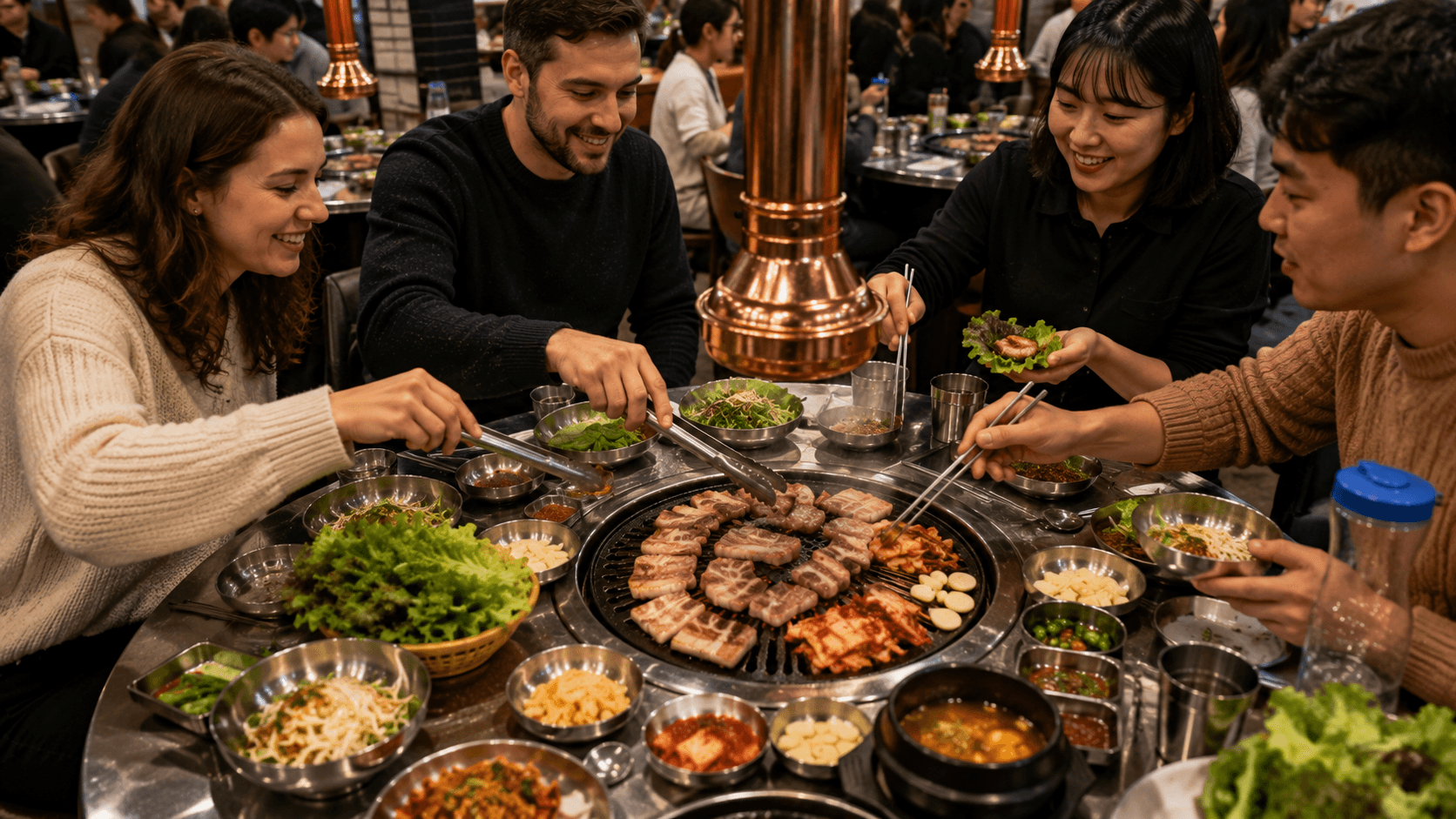
- Some chain cafés and restaurants
- Hotel restaurants
- Major shopping or entertainment districts
- Urban buses and subways
- Airport facilities
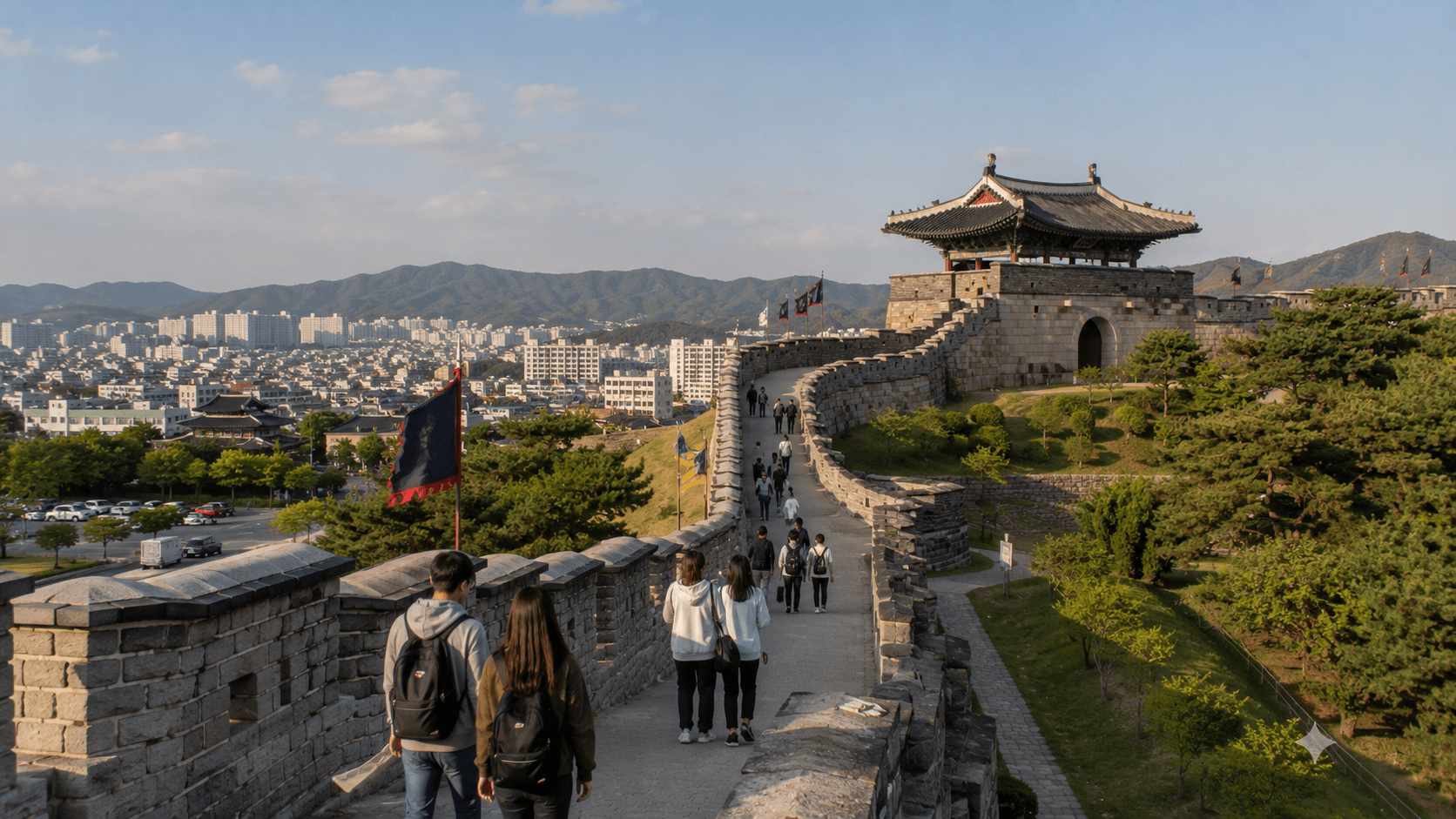
- Selected palaces, cultural sites, and holiday programs
More likely to close or shorten hours
- Family-run restaurants
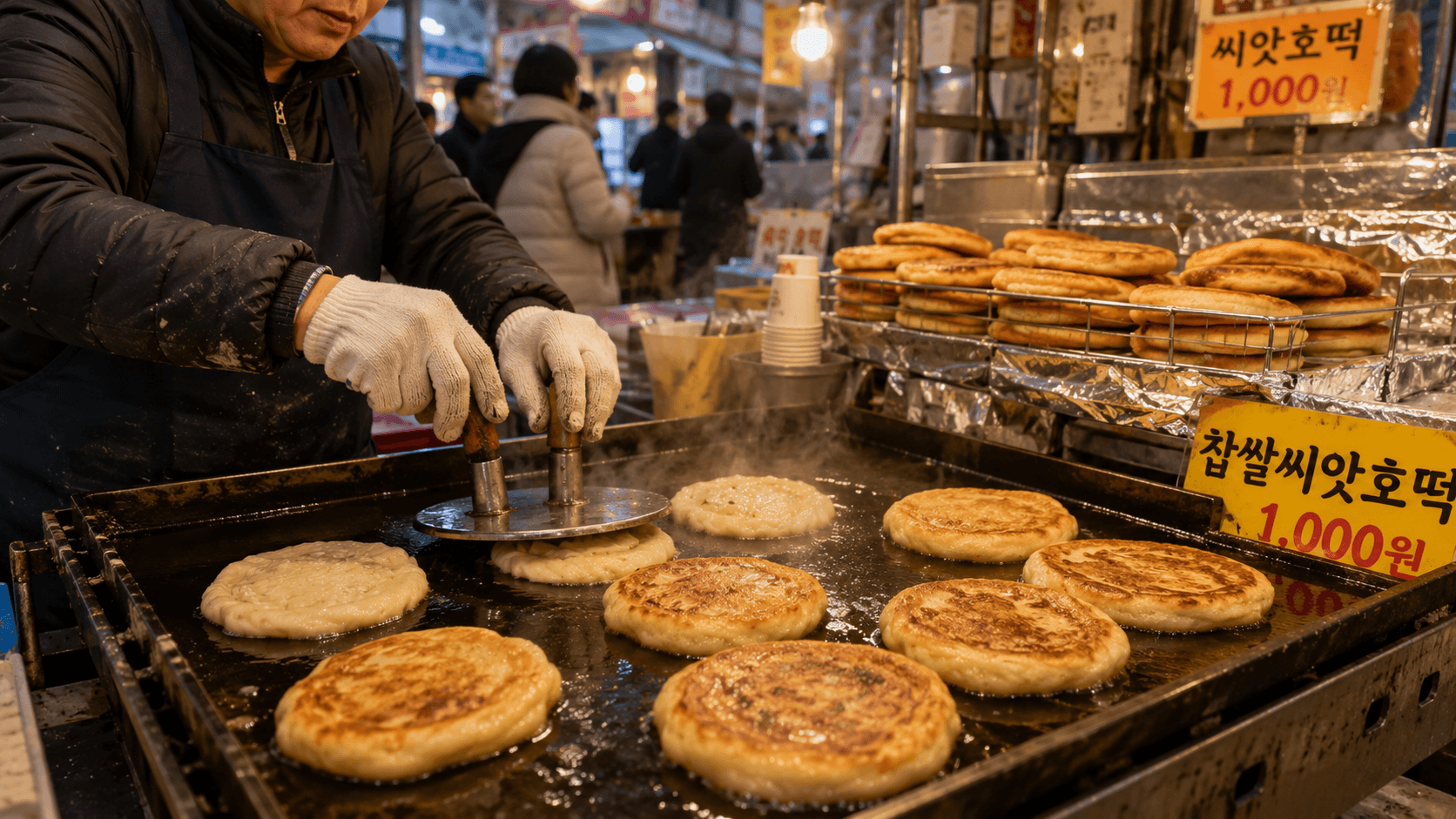
- Traditional market stalls
- Independent cafés and shops
- University facilities
- Banks and government offices
- Private clinics
- Some museums and performance venues
Regular closing days can complicate the schedule. An attraction that normally closes on Monday, for example, may adopt a special holiday timetable or close on another day instead. Check the official notice page during the final week before your visit.
In Seoul, city announcements are published through the Seoul Metropolitan Government's English website. National tourism updates and the 1330 Korea Travel Helpline are available through VISITKOREA.
Where to eat
Do not wait until the evening of Seollal Day to start searching for dinner. Restaurant information on mapping apps may not reflect a temporary family-holiday closure.
A safer approach is to:
- Ask your hotel which nearby restaurants have confirmed their hours.
- Call or message the restaurant on the same day.
- Keep a chain restaurant, food court, or convenience store as a backup.
- Buy breakfast and essential snacks the previous evening.
- Check the final order time, which may be earlier than the posted closing time.
Tteokguk (떡국), sliced rice-cake soup, is the food most closely associated with Seollal. Some restaurants offer it as a seasonal dish, but it should not be assumed that every Korean restaurant serves it.
How visitors can experience Seollal
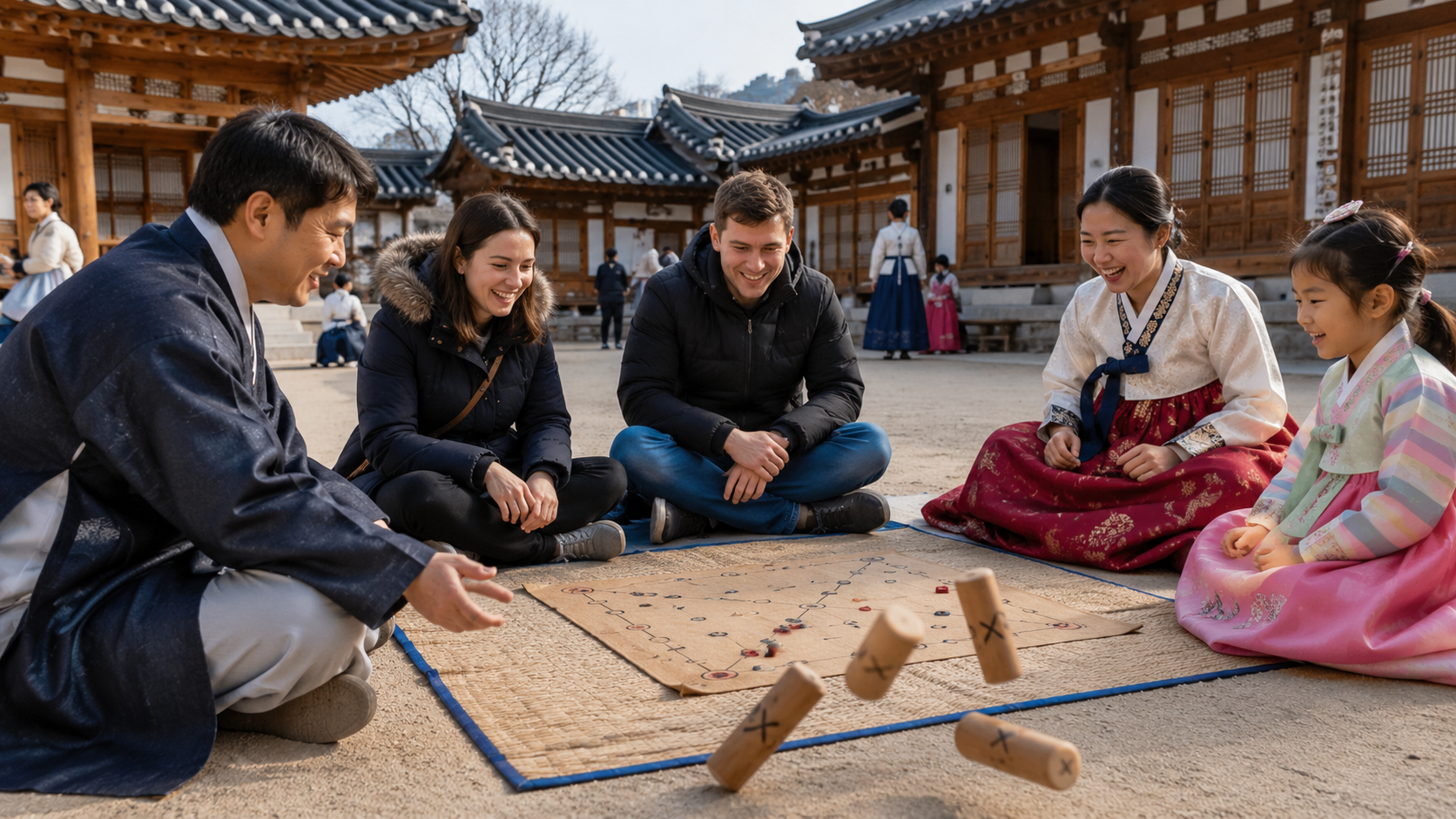
Major cultural venues sometimes organize folk games, craft sessions, performances, or demonstrations. Programs may include yutnori (윷놀이), a traditional board game played with wooden sticks; jegichagi (제기차기), a kicking game; and hanbok activities.
These programs change annually. Search the official event calendars for your destination shortly before the holiday. Useful starting points include VISITKOREA, city tourism organizations, national museums, and palace or heritage-site websites.
Seollal itself may feel quiet in residential neighborhoods because families celebrate privately. Visitors should not expect a countdown, fireworks, or continuous street parade. Public cultural events are normally the most accessible way to participate.
If a Korean friend invites you to a family gathering, ask what you should bring and how formally to dress. A modestly packaged fruit, dessert, or other shareable gift may be appropriate, but follow your host's guidance. Do not photograph ancestral rites or family members without permission.
A practical Seoul plan
Travelers who cannot obtain intercity tickets can remain in Seoul and build a flexible itinerary around places with confirmed holiday schedules.
Day before Seollal
- Buy snacks, medicine, and basic supplies.
- Confirm restaurant reservations and opening hours.
- Visit a traditional market early rather than near closing time.
- Avoid an unnecessary trip through a major railway terminal.
Seollal Day
- Choose one confirmed palace, museum, or cultural program.
- Keep the afternoon flexible for a neighborhood walk or riverside route.
- Eat dinner at a hotel, reserved restaurant, or verified chain location.
Final holiday day
- Expect returning passengers at stations and bus terminals.
- Use subway transport where practical.
- Leave generous time for airport transfers or timed reservations.
This plan reduces dependence on businesses whose holiday hours may change at short notice.
Money, medicine, and essential services
Banks and government offices generally close for public holidays. ATMs remain available, but an overseas card can still be rejected because of the issuing bank, network, or machine. Carry more than one payment method and a modest amount of KRW cash.
Hospitals provide emergency care, but ordinary clinics and pharmacies may close or operate limited hours. For urgent medical assistance, call 119. Holiday clinic and pharmacy information can be searched through the official E-Gen emergency medical portal. Because medical availability changes by date and district, confirm the listing by telephone before traveling to the facility.
For police assistance, call 112. For multilingual tourism help, contact the 1330 Korea Travel Helpline, whose online call and chat options are linked from VISITKOREA. Data charges may apply when using the online service without Wi-Fi.
Luggage and accessibility
Stations and terminals may be difficult to navigate with large suitcases during peak departures. Coin lockers can fill early, and elevators may have queues.
Travelers with mobility requirements should:
- Request airline or railway assistance in advance.
- Confirm elevator access at smaller stations.
- Avoid the busiest departure periods where possible.
- Allow time for boarding and transfers.
- Check whether an accessible taxi must be reserved.
Do not depend on finding an empty station locker. Hotel luggage storage or a prebooked service is more reliable, provided its holiday schedule has been confirmed.
Common mistakes to avoid
- Waiting for the normal train-sales window: Holiday tickets may use a special reservation schedule.
- Booking the last available connection: Congestion can make tight transfers risky.
- Trusting ordinary opening hours: Temporary Seollal notices may override map listings.
- Assuming Seoul shuts down completely: Transport and numerous visitor services operate, but individual venues vary.
- Assuming every cultural event is free: Admission and reservation requirements depend on the organizer.
- Planning a spontaneous cross-country road trip: Traffic and accommodation demand can remove much of the flexibility.
- Leaving meals unplanned: Independent restaurants may close for several days.
What to check before you go
One to three months before
- Monitor KORAIL, SRT, bus, and airline reservation announcements.
- Reserve accommodation near useful urban transport.
- Avoid nonrefundable intercity arrangements until transport is secured.
One week before
- Check each attraction's official holiday notice.
- Confirm restaurant hours directly.
- Review the weather forecast and pack for winter conditions.
- Identify an open pharmacy or medical facility near your accommodation.
The day before travel
- Recheck departure time and terminal or station.
- Download or capture essential booking details.
- Charge your phone and portable battery.
- Buy water, snacks, and necessary medication.
- Leave earlier than the journey planner's ordinary estimate.
Your most useful next step is to mark February 6-9, 2027 as the likely Seollal disruption period, then set reminders to check official train and bus announcements several weeks before ticket sales normally begin.
Sources
- VISITKOREA official travel information and 1330 Korea Travel Helpline
- KORAIL official railway service
- SRT official reservation service
- KOBUS official express-bus service
- T-money official intercity-bus reservation service
- Incheon International Airport
- Korea Airports Corporation
- Seoul Metropolitan Government English website
- Korean government portal
- E-Gen emergency medical portal