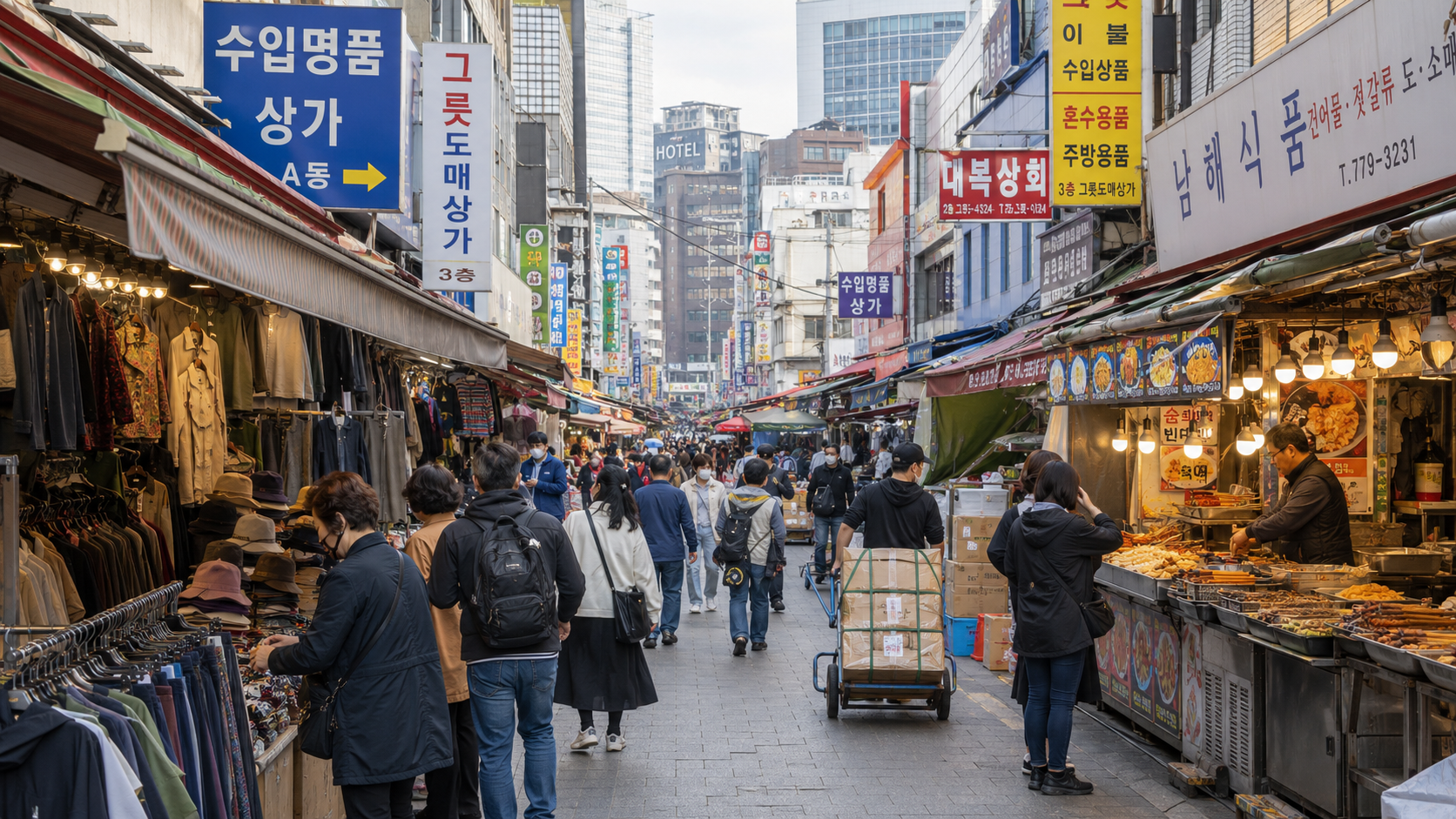
Namdaemun Market (남대문시장) is a large traditional market beside Sungnyemun Gate in central Seoul. Come here for kitchenware, accessories, children’s clothing, souvenirs, packaged food, eyewear, street snacks, and compact restaurant alleys. The market is not one building with one timetable: it is a network of streets and independently operated shopping complexes, so opening hours and closing days vary considerably.
At a glance
| Item | Practical information |
|---|---|
| Korean name | 남대문시장 (Namdaemun Sijang) |
| Main address | 21 Namdaemunsijang 4-gil, Jung-gu, Seoul |
| Nearest subway | Hoehyeon Station (회현역), Seoul Subway Line 4 |
| Recommended exit | Exits 5, 6, or 7; the market association describes the walk as about five minutes |
| Admission | Free; you pay only for purchases and food |
| Good time to allow | Two to three hours for browsing and a meal |
| Best time for a first visit | A weekday or Saturday morning through early afternoon |
| Main caution | There is no single market-wide opening schedule |
Location and access information were verified on June 11, 2026, using the Namdaemun Market Association’s official overview and directions page.
What Namdaemun Market is like
Namdaemun is both a retail market and a wholesale trading district. Shops selling similar products tend to cluster together, sometimes on different floors of the same building. A street that appears quiet may lead into a busy indoor arcade, basement shop, or narrow restaurant alley.
The official market history traces commercial activity here to 1414, during the Joseon period. The modern market has changed repeatedly through reconstruction and redevelopment, but it retains its role as a general trading center. According to the market association’s product guide, its major categories include clothing, fashion accessories, children’s wear, kitchenware, imported goods, food, agricultural products, ginseng, flowers, crafts, jewelry, watches, and cameras.
Do not expect the polished layout of a department store. Signs may identify a building, gate, floor, or product category rather than an individual shop. Save a map pin for your entrance and photograph useful signs if you plan to return to a particular seller.
When to visit and opening-hour cautions
The official market overview states that operating times differ by shopping complex and individual store. This is the most important planning point.
The association also hosts a detailed building-by-building timetable, but that page is dated November 15, 2016. It should not be treated as a dependable current schedule. As of June 11, 2026, the market website did not provide one clearly updated timetable covering every section.
For a first visit, late morning is the simplest option. More retail shops and food businesses are likely to be operating than very early or late in the day. Some wholesale businesses keep unusually early, late, or overnight hours, but those schedules are intended mainly for trade buyers and should be confirmed directly.
Sunday, public-holiday, Lunar New Year, and Chuseok operations can be limited. The association publishes occasional holiday notices, but closures differ by building. Check the official Namdaemun Market notices shortly before visiting. If one specific shop is essential, contact that shop or its building management office rather than relying on a general map listing.
How to get there
By subway
Take Seoul Subway Line 4 to Hoehyeon Station (회현역). The market association recommends exits 5, 6, and 7, followed by a walk of approximately five minutes.
Exit choice matters less than it may appear because the market covers several blocks. Use the exit nearest your first target:
- Start near the main market streets if you want general browsing.
- Set a separate map pin for Sungnyemun Gate if you want to see it before entering the market.
- Search in Korean,
남대문시장, if an English map search produces unclear results.
The market is also walkable from Seoul Station, although the exact distance depends on your starting exit and destination within the market. Travelers carrying suitcases should use the subway or a taxi rather than treating the market as a shortcut: lanes can be crowded, and large luggage is inconvenient inside small shops and restaurants.
By bus or taxi
Numerous city buses serve the surrounding area, but route lists can change. Check a live Korean navigation app on the day rather than using an old bus list from the market website.
For a taxi, show the driver 남대문시장 or the address 서울 중구 남대문시장4길 21. Because the district has multiple entrances, add a specific gate, building, or restaurant when possible.
What to buy
Kitchenware and household goods
Namdaemun is useful for comparing cookware, tableware, storage products, baking supplies, restaurant equipment, and decorative household items. Some shops focus on wholesale quantities, while others sell individual pieces.
Before paying, ask whether the displayed price is for one item, one set, or a wholesale bundle. Inspect ceramics and glassware for damage and consider how you will pack them for the flight home.
Accessories and jewelry components
Several buildings specialize in earrings, hair accessories, costume jewelry, beads, findings, and other components. Some sellers primarily serve business customers, so minimum quantities may apply.
A displayed sample is not always the exact item handed over. Confirm color, size, quantity, and condition before leaving. For precious metals, branded goods, watches, or expensive products, request clear documentation and understand the return policy before purchasing.
Children’s clothing
Children’s wear is one of the market’s established specialties. Sizing may use Korean age labels or centimeters rather than the system used in your home country. Bring the child’s height and basic measurements, and compare the garment itself instead of relying only on the age printed on the tag.
Souvenirs and packaged food
The official souvenir street guide lists crafts, traditional fans, hand mirrors, seaweed, ginseng, and general souvenir products. Quality and origin can differ between sellers, so check labels rather than assuming every item was made in Korea.
For food, verify the expiration date, storage requirements, ingredients, and your destination country’s customs restrictions. Meat products, fresh produce, seeds, and certain herbal products may be restricted on arrival abroad.
Eyewear
The market has a designated eyewear street selling glasses, sunglasses, contact lenses, and related products. Prices, lens specifications, fitting services, and completion times vary by shop. Bring a current prescription if you need corrective lenses and confirm whether the quoted price includes frames, lenses, coatings, and fitting.
Contact lenses and prescription glasses are health-related products. Use a qualified provider and do not substitute a market purchase for an appropriate eye examination.
What to eat
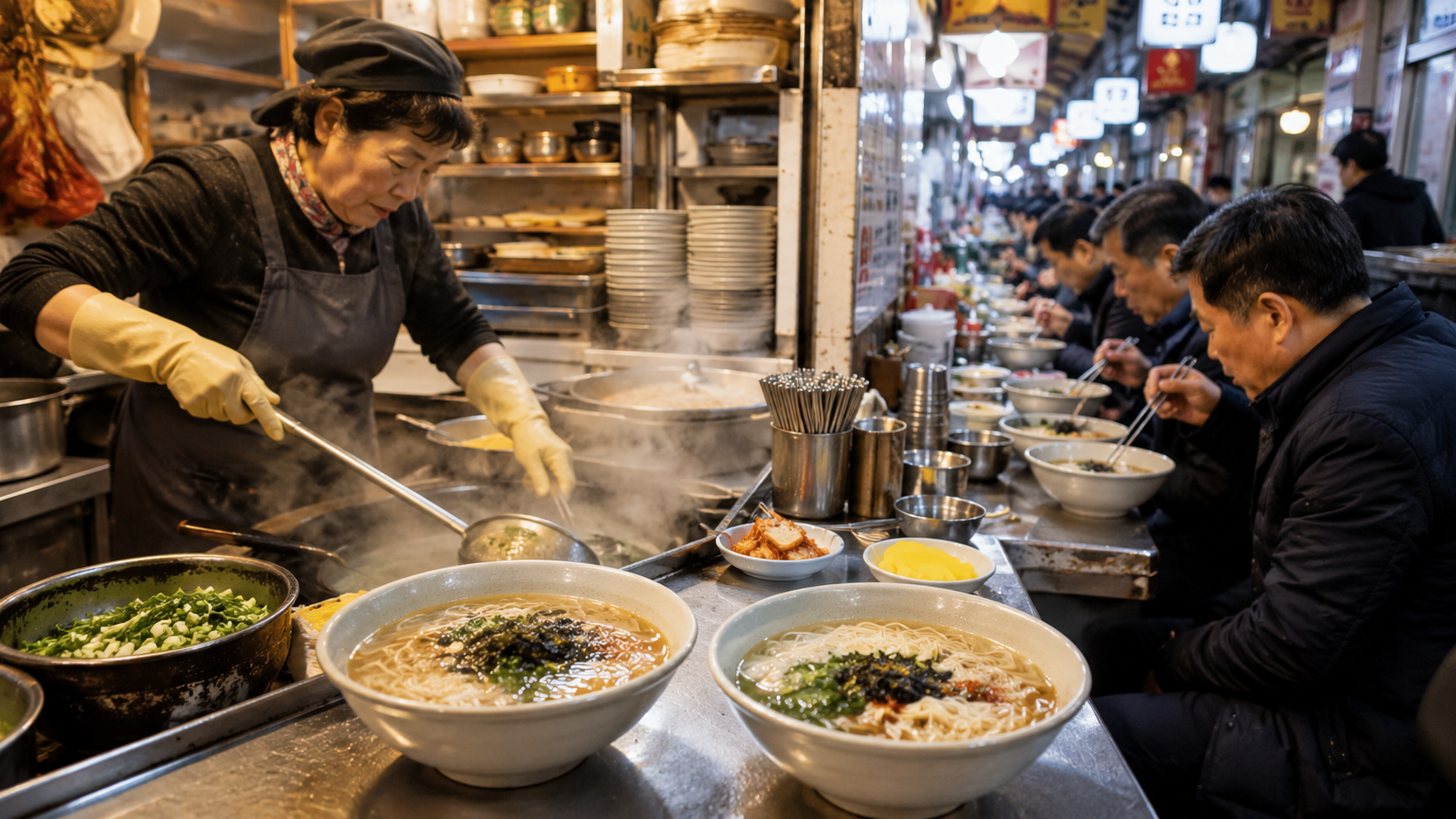
Namdaemun is known for both street snacks and compact restaurant alleys. Menus, prices, opening hours, and accepted payment methods vary by business and were not published in a reliable market-wide source as of June 11, 2026. Check the posted menu before ordering.
Kalguksu Alley
Kalguksu (칼국수) means knife-cut wheat noodles, usually served in a hot broth. Restaurants may serve noodle meals with small side dishes or additional items. Seating is close together, and staff may direct diners to available places quickly during busy periods.
If you have allergies or dietary restrictions, do not assume a vegetable-looking broth is vegetarian. Broths and kimchi can contain anchovy, seafood, meat, or fish sauce.
Galchi Alley
Galchi-jorim (갈치조림) is cutlassfish braised in a seasoned sauce, commonly with radish. It can be spicy and contains bones. Ask whether the listed dish is intended for one person or for sharing, particularly when portions are served in a communal pot.
Food Street and snack stalls
The market association’s Food Street description identifies dishes including rice cakes, bibimbap, barley rice, japchae, and seolleongtang. Street stalls elsewhere in the market may sell hotteok, dumplings, skewers, or seasonal snacks.
Vegetable hotteok, often filled with noodles and vegetables rather than sugar, is strongly associated with Namdaemun. Stall locations and queues can change, so follow current signs and do not block the lane while waiting.
Payment, bargaining, and receipts
Bring a payment card and some Korean won. Card acceptance is common in Seoul, but a small stall or specialist wholesaler may prefer cash or use a minimum purchase condition. Ask before ordering or requesting custom work.
Bargaining is not automatic. Fixed-price food, packaged goods, and clearly labeled retail products are generally not appropriate targets for aggressive negotiation. A polite price question may be reasonable for multiple items or wholesale quantities. Useful phrases include:
이거 얼마예요?(Igeo eolmayeyo?) — How much is this?카드 돼요?(Kadeu dwaeyo?) — Can I pay by card?영수증 주세요.(Yeongsujeung juseyo.) — Please give me a receipt.하나만 살 수 있어요?(Hanaman sal su isseoyo?) — Can I buy just one?
Count items and check change at the counter. Keep the receipt for higher-value purchases and ask about exchanges before paying. Small independent shops may not follow the return practices familiar to overseas visitors, especially for opened, altered, or custom goods.
Tax-refund eligibility is store-specific. Look for an authorized tax-refund sign and ask before payment; do not assume that every market seller participates. Requirements can change, so consult Korea’s official tourism or customs information for the rules applying to your departure.
Facilities and accessibility
The official facilities page lists toilets in several market buildings, information points near Gates 3 and 5, ATMs, parking areas, and a rest area with nursing and baby facilities in the basement of Daedo Arcade Building G. The page also lists a foreigner community lounge, but it contains conflicting operating hours and telephone numbers. Its current availability could not be confirmed on June 11, 2026, so do not rely on it for luggage storage or essential assistance without checking locally.
Accessibility varies. Outdoor streets include traffic, delivery carts, uneven surfaces, crowds, and narrow passages. Older buildings may have tight aisles or floors that are difficult to reach without stairs. Visitors using wheelchairs, walkers, or strollers should focus on wider main lanes, travel outside peak meal periods, and ask an information point for the most accessible entrance to a particular building.
Public parking exists around the market, but driving is usually less convenient than using the subway. Entrances can be busy, and parking availability or fees may change.
A practical two-hour route
- Arrive at Hoehyeon Station and use Exit 5, 6, or 7.
- Photograph the gate number or nearby building name where you enter.
- Walk one main lane first to understand the layout before entering smaller alleys.
- Browse one specialist area, such as kitchenware, children’s clothing, accessories, or souvenirs.
- Choose Kalguksu Alley, Galchi Alley, or Food Street for a meal after checking the menu and price.
- Finish near Sungnyemun Gate or continue toward Myeong-dong, depending on your itinerary.
Trying to inspect the entire market is unrealistic and unnecessary. Choose one shopping category and one food stop, then leave time for unplanned browsing.
Common mistakes to avoid
- Assuming the entire market opens and closes at one time.
- Visiting late on Sunday or a major holiday without checking closures.
- Carrying a large suitcase through crowded lanes.
- Buying clothing based only on an age or size label.
- Assuming every food that looks meat-free is vegetarian.
- Ordering fish without expecting bones or a shared portion.
- Confusing wholesale bundle prices with single-item prices.
- Buying expensive or branded goods without documentation.
- Depending on foreign cards without carrying any KRW.
What to check before you go
- Review the official market notices for holiday or event information.
- Confirm the hours of any specific building or shop you consider essential.
- Check live subway and bus directions on the day.
- Save
남대문시장and your preferred entrance in your map app. - Carry some KRW as a backup payment method.
- Bring measurements if shopping for clothing or household fittings.
- Check customs rules before buying food, plants, seeds, or herbal products.
- Wear shoes suitable for several hours of walking and standing.
Start at Hoehyeon Station, pick one product district, and plan your meal before entering the smaller lanes. That gives the visit enough structure without removing the discovery that makes Namdaemun useful.
Sources
- Namdaemun Market official overview
- Namdaemun Market official history
- Official directions to Namdaemun Market
- Namdaemun Market specialty streets
- Namdaemun Market facilities
- Namdaemun Market official notices
Time-sensitive details were checked on June 11, 2026.