Seoul is too large to cover in one day, so focus on the historic center rather than crossing the city repeatedly. This route begins at Gyeongbokgung Palace, continues through Bukchon and Insadong, stops at Gwangjang Market, and finishes around Myeongdong and Namsan.
The full itinerary takes approximately 12 to 13 hours and involves substantial walking. Expect roughly 15,000 to 20,000 steps, including slopes and uneven surfaces. Start later or omit one stop if you prefer a slower day.
All fares, admission prices, and operating information below were verified on June 9, 2026.
At a glance
| Time | Stop | Main purpose |
|---|---|---|
| 08:00-09:00 | Gwanghwamun area | Breakfast and orientation |
| 09:00-11:00 | Gyeongbokgung Palace | Joseon royal history and architecture |
| 11:15-12:15 | Bukchon Hanok Village | Traditional residential streets |
| 12:30-14:00 | Insadong | Lunch, tea, and crafts |
| 14:15-14:45 | Cheonggyecheon Stream | Short central-Seoul walk |
| 15:00-16:30 | Gwangjang Market | Market food and local atmosphere |
| 17:00-18:30 | Myeongdong | Shopping, dinner, or a rest |
| 18:30-21:00 | Namsan and N Seoul Tower | Sunset or night views |
Before starting: transport and payment
Most journeys on this route are short enough to walk or take by subway. A rechargeable transportation card is convenient because it works on Seoul buses and subways and supports transfer discounts. Remember to tap when entering and leaving the subway, and when boarding and getting off a bus.
The Seoul Metropolitan Government subway fare table lists the adult base fare as KRW 1,550 with a transportation card and KRW 1,650 for a single-journey ticket, effective from June 28, 2025. Longer journeys cost more according to distance.
A subway single-journey card also requires a KRW 500 deposit, which can be reclaimed from a deposit-refund machine after the trip. Since March 17, 2026, selected vending machines on Seoul Subway Lines 1-8 have accepted internationally issued cards and mobile payment services for single-journey tickets and short-term Climate Card passes. The city states that international card transactions carry an average service fee of about 3.7%; see the Seoul Metropolitan Government payment announcement.
The one-day Climate Card short-term pass costs KRW 5,000, but a reusable physical card costs an additional KRW 3,000. It is therefore not automatically cheaper for this itinerary, which may require only three or four transit rides. Check the current coverage and purchase rules on the official Climate Card information page.
Keep some cash available. Major attractions and many shops accept cards, but individual market vendors may have different payment policies.
08:00-09:00: Breakfast near Gwanghwamun
Begin near Gwanghwamun Station on Subway Line 5 or Gyeongbokgung Station on Line 3. Eat before entering the palace because the morning schedule is easier if you are ready at the gate when it opens.
A Korean breakfast does not have to involve a special breakfast menu. Nearby restaurants may serve dishes such as seolleongtang, a mild ox-bone soup; gimbap, rice and fillings rolled in seaweed; or juk, rice porridge. Café opening times vary, particularly on weekends, so check your chosen business directly rather than relying on map-app hours alone.
Use the remaining time to see Gwanghwamun Square and the main palace gate from outside. Do not spend too long here: the palace grounds are extensive, and the first hour after opening is usually the most comfortable time to explore.
09:00-11:00: Explore Gyeongbokgung Palace
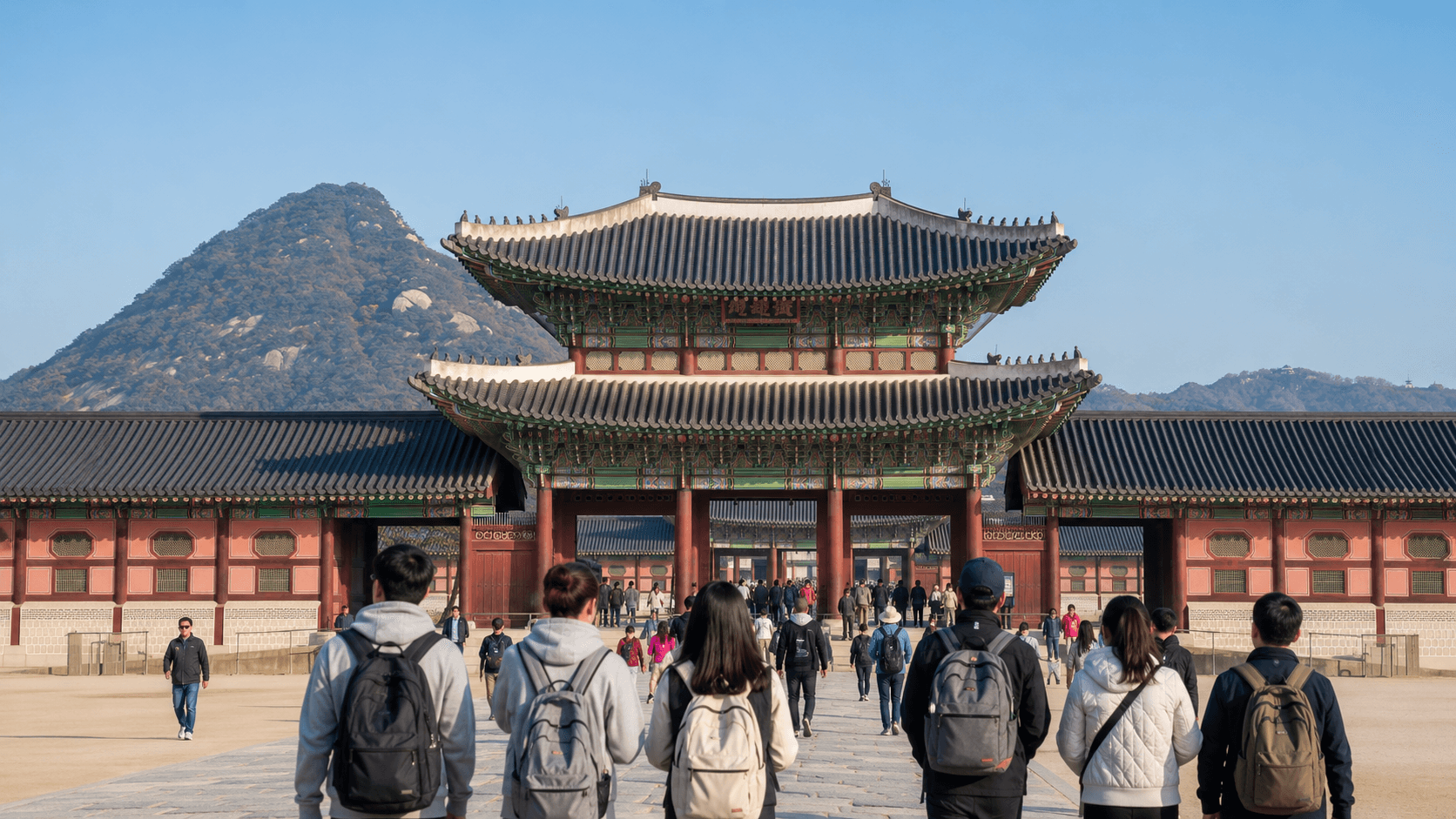
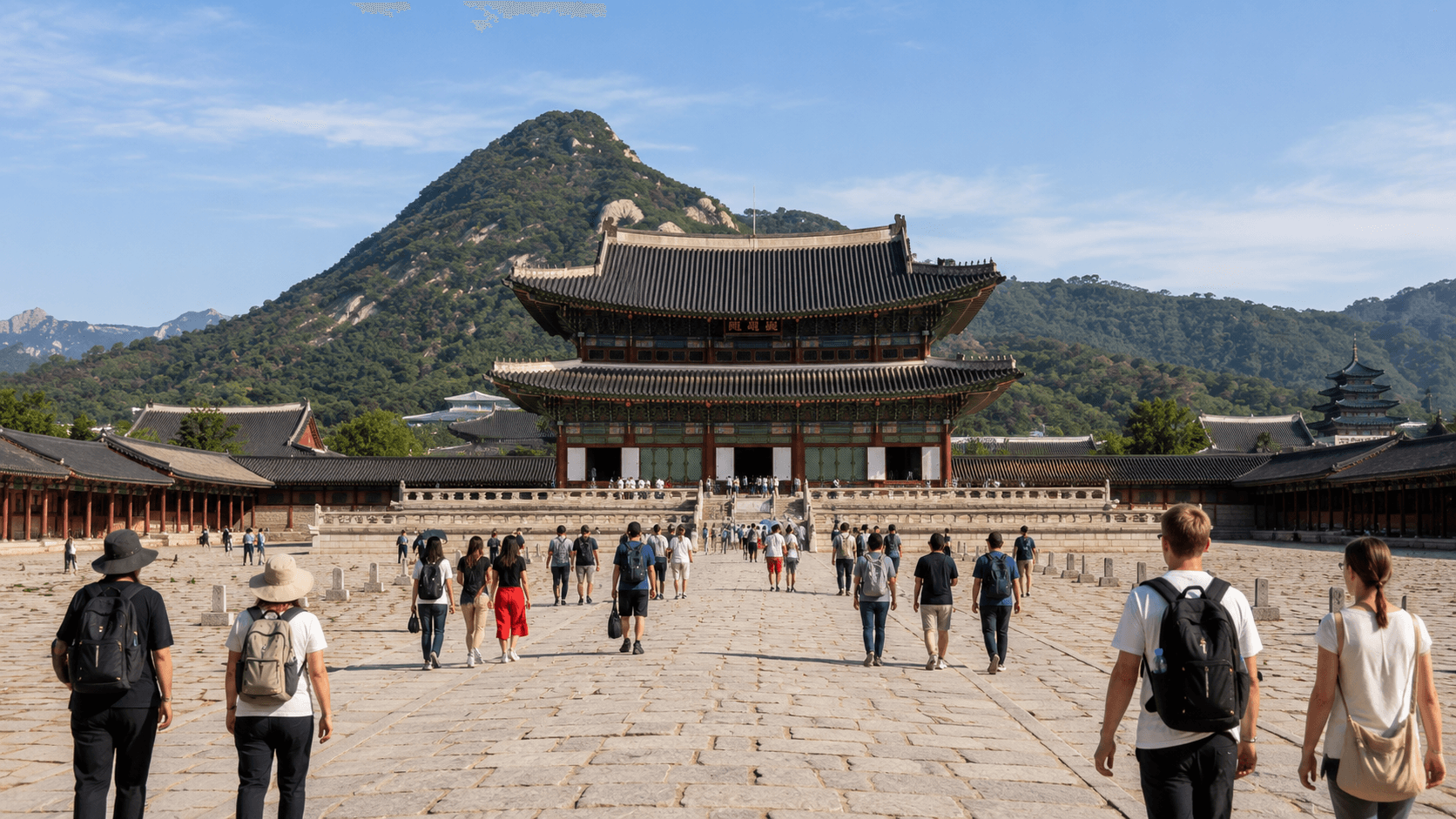
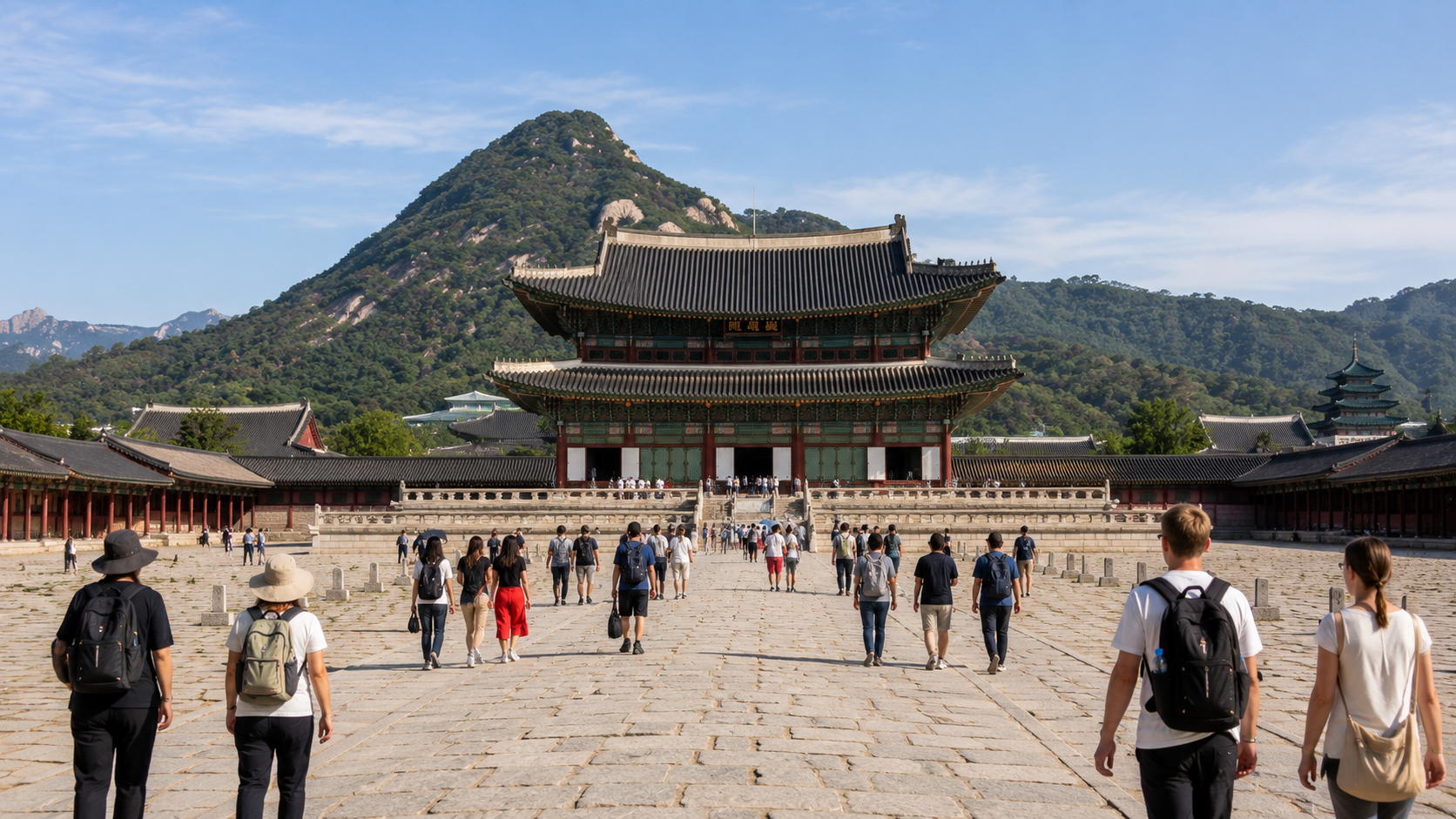
Gyeongbokgung (경복궁) was the principal palace of the Joseon Dynasty. Two hours allows time for the throne hall, courtyards, Gyeonghoeru Pavilion, and the northern part of the grounds without examining every building.
Adult general admission is KRW 3,000. The palace is closed on Tuesdays. According to the official Royal Palaces and Tombs Center schedule, regular hours are:
- March-May and September-October: 09:00-18:00, last admission 17:00
- June-August: 09:00-18:30, last admission 17:30
- November-February: 09:00-17:00, last admission 16:00
If the regular closing day falls on a public holiday or substitute holiday, the palace normally opens that day and closes on the next non-holiday. Special events, ceremonies, and night openings follow separate schedules, so check the Royal Palaces and Tombs Center shortly before your visit.
A sensible route inside
- Enter through Gwanghwamun Gate and continue to Geunjeongjeon, the main throne hall.
- Walk west toward Gyeonghoeru Pavilion and its pond.
- Continue through the residential compounds toward Hyangwonjeong Pavilion if time and energy allow.
- Leave through the eastern side for the most direct approach to Bukchon.
The palace has broad courtyards, but surfaces include stone thresholds, gravel, and uneven paving. Comfortable shoes are more useful than formal footwear.
Hanbok rental shops operate around the palace, and qualifying visitors wearing traditional Korean clothing can receive free palace admission under official rules. Renting hanbok adds changing, fitting, photography, and return time; allow at least an additional hour rather than forcing it into this schedule.
Tuesday alternative
If your only day in Seoul is Tuesday, use Changdeokgung Palace instead. Changdeokgung is closed on Mondays, while its general palace area is normally open on Tuesdays. It is closer to the eastern side of Bukchon, so reverse the next section: visit the palace first, then walk west through Bukchon toward Insadong.
The Secret Garden at Changdeokgung uses separate timed admission and can consume much of the morning. For a one-day overview, stay in the general palace area unless the garden is one of your main priorities. Confirm current admission and tour availability through the Royal Palaces and Tombs Center.
11:15-12:15: Walk carefully through Bukchon
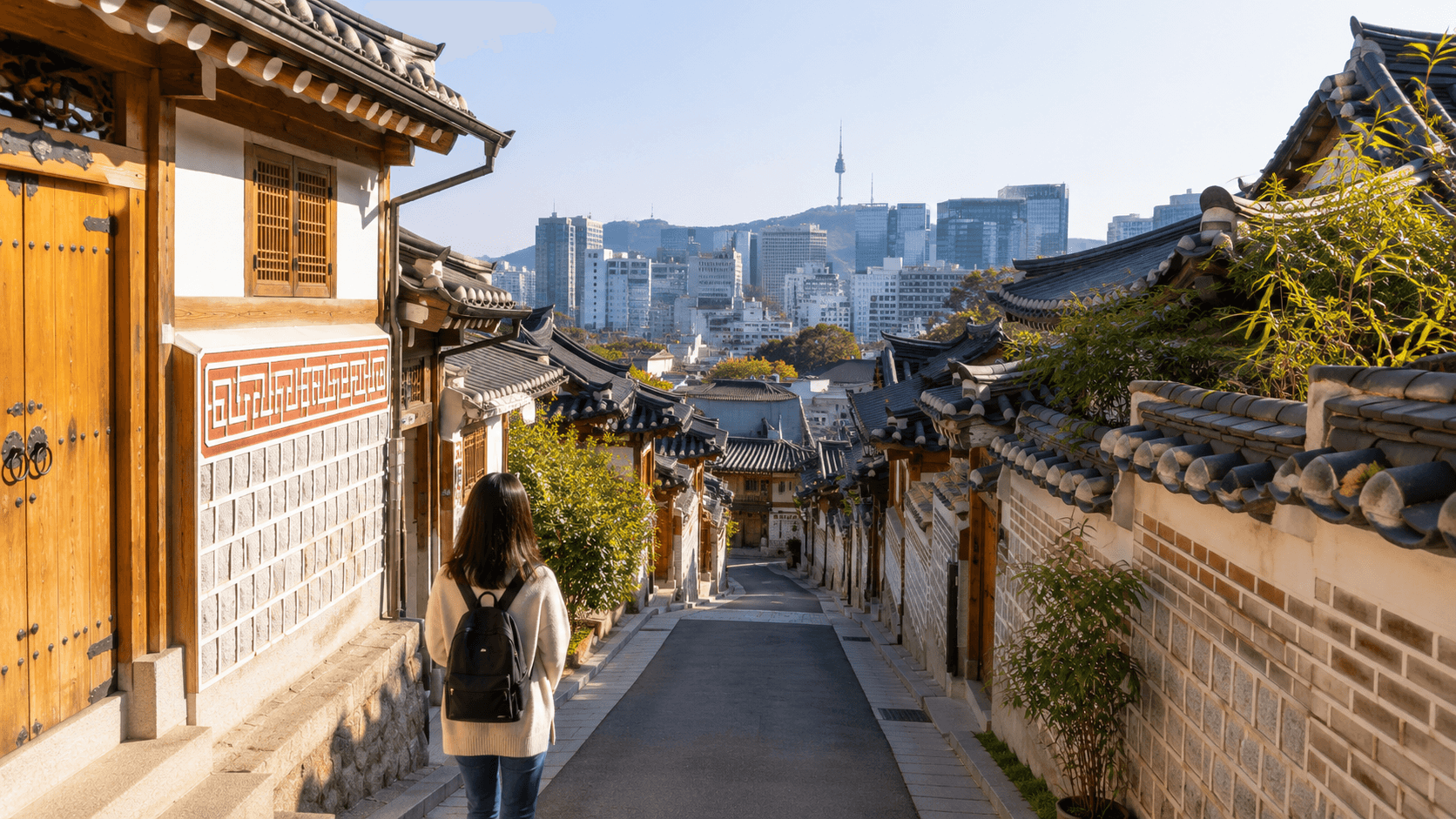
Bukchon Hanok Village (북촌한옥마을) is not an enclosed attraction. It is a residential district containing traditional Korean houses, or hanok, alongside workshops, cafés, galleries, and ordinary homes.
The most sensitive residential section around Bukchon-ro 11-gil has tourist access restrictions from 17:00 to 10:00. The currently stated visiting period is 10:00-17:00, and violations in the designated red zone may result in a KRW 100,000 fine. Review the official tourism notice on Bukchon visitor restrictions before going, as the controlled boundaries and enforcement details may change.
During your visit:
- Keep voices low, especially in narrow alleys.
- Do not enter private courtyards or photograph through residential windows.
- Avoid blocking doors, driveways, and stairways for photos.
- Use public restrooms rather than asking private businesses unless you are a customer.
- Follow local signs even if a map app suggests another route.
Bukchon is hilly. If steep streets are difficult, skip the upper residential lanes and continue directly toward Anguk and Insadong. You will still see hanok buildings without undertaking the full climb.
12:30-14:00: Lunch and a short Insadong walk
Insadong is a practical lunch stop because it lies between Bukchon and the next part of the route. The main street, Insadong-gil, and its side alleys contain restaurants, tea houses, craft shops, and galleries.
For a filling lunch, look for a restaurant displaying a menu and prices outside. Common choices include bibimbap, rice mixed with vegetables and sauce; kalguksu, knife-cut noodles; mandu, dumplings; and set meals with several side dishes.
Vegetarian travelers should confirm whether soup stock, kimchi, sauces, or side dishes contain meat or seafood. The absence of visible meat does not necessarily mean a dish is vegetarian. Useful phrases include "chaesik" (채식, vegetarian food) and "gogi wa saengseon eopsi" (고기와 생선 없이, without meat or fish), although staff may still need clarification about broth and fish sauce.
Allow approximately 45 minutes for lunch and another 30 to 45 minutes for browsing. Insadong is easy to overextend; choose either shopping or a traditional tea break if you want to preserve time for the market and evening view.
14:15-14:45: Pause at Cheonggyecheon Stream
Walk south from Insadong to Cheonggyecheon (청계천), the landscaped stream running through central Seoul. This itinerary uses it as a brief transition rather than attempting the entire route.
Enter near a convenient stairway and walk east for 20 to 30 minutes. The lower path provides a break from road traffic, but most entrances use stairs. Travelers requiring step-free access should look for signed ramps or remain at street level.
In heavy rain, severe heat, icy weather, or after a flood-control closure, skip the stream and take the subway or a taxi directly to Gwangjang Market.
15:00-16:30: Try food at Gwangjang Market
Gwangjang Market (광장시장) combines textile and household-goods sections with a well-known food street. It can be crowded, noisy, and difficult to navigate at peak meal times, but mid-afternoon is suitable for a snack-focused visit.
The Korea Tourism Organization market listing gives general-market hours as 09:00-18:00 and food-street hours as 09:00-23:00. The general market is listed as closed on Sundays, while the food street operates year-round. Individual stalls set their own schedules and may close without notice.
Popular foods include bindaetteok, fried mung-bean pancake; mayak gimbap, small seaweed rice rolls; mandu; noodles; and yukhoe, seasoned raw beef. Raw meat is not suitable for everyone, particularly pregnant travelers or people with compromised immune systems. Choose cooked food if you have any concern about foodborne illness.
Before ordering, point to the item and confirm the price. Shared counters are common, and you may be expected to order one item per seated customer during busy periods. Cards are officially listed as accepted at the market, but acceptance can differ by stall, so carry KRW cash as a backup.
17:00-18:30: Myeongdong for shopping, dinner, or rest
Take Subway Line 2 from Euljiro 4-ga toward Euljiro 1-ga, or use a short taxi ride if traffic is reasonable. Myeongdong is a useful buffer before Namsan: it has restaurants, cafés, shops, restrooms, and transport connections.
You have three realistic options:
- Eat an early dinner before going to Namsan.
- Shop for cosmetics, clothing, or souvenirs.
- Sit in a café and recover before the uphill section.
Do not assume every street-food stall operates daily or accepts cards. Prices and operating times vary, and rain can reduce the number of vendors.
For in-person assistance, the Myeongdong Tourist Information Center is listed as open 09:00-18:00 and provides multilingual tourism information. It closes on Lunar New Year and Chuseok day.
18:30-21:00: Finish at Namsan and N Seoul Tower
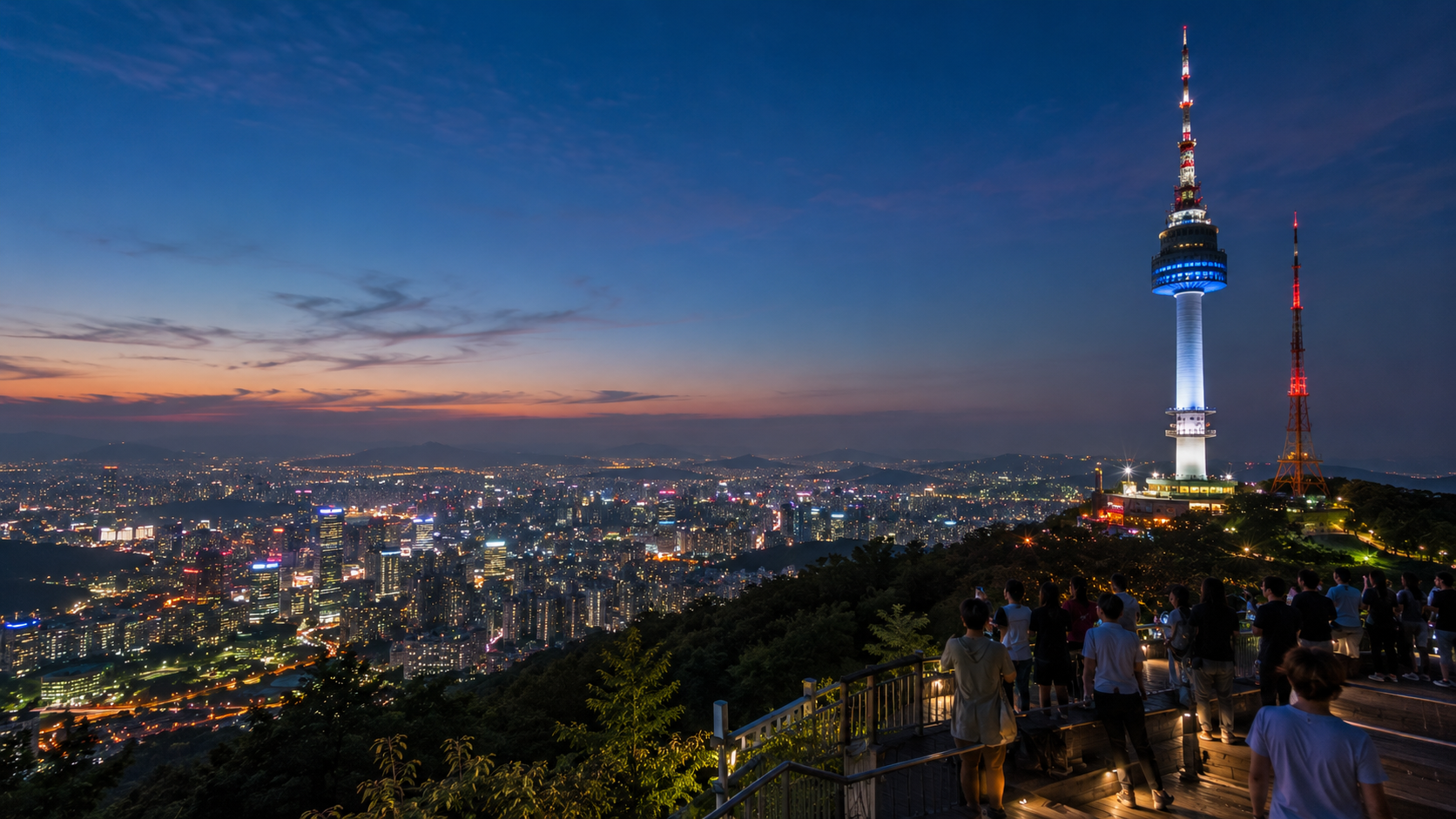
Namsan provides a clear geographical ending to the day: from the mountain, you can look back across central Seoul and the districts visited earlier.
Ways to reach the upper area include walking, using the Namsan Cable Car, or taking a permitted public bus. The cable-car lower station itself requires an uphill approach from Myeongdong, and queues can become long around sunset, weekends, and holidays. Do not plan around an exact sunset arrival without allowing extra time.
The outdoor Namsan viewpoints and tower plaza can be enjoyed without buying an observatory ticket. For a higher indoor view, the official N Seoul Tower admission page lists observatory admission at KRW 29,000 for adults and KRW 23,000 for children aged 3-12 and seniors aged 65 or older.
The official tower schedule lists the observatory as open 10:00-22:30 on weekdays and 10:00-23:00 on weekends and public holidays, with final entry 30 minutes before closing. N Seoul Tower operates year-round, but hours can change because of weather or operational conditions. Recheck the official N Seoul Tower website on the day of your visit.
If visibility is poor, skip the paid observatory. Low cloud, heavy rain, dust, or haze can substantially reduce the view, while the free outdoor area still provides a pleasant conclusion to the route.
Estimated budget
This estimate excludes accommodation, shopping, hanbok rental, taxis, and the cable car.
| Expense | Approximate cost |
|---|---|
| Palace admission | KRW 3,000 |
| Three or four transit rides | About KRW 4,650-6,200 at base card fare |
| Breakfast | KRW 5,000-12,000 |
| Lunch | KRW 10,000-20,000 |
| Market snacks | KRW 5,000-15,000 |
| Dinner | KRW 10,000-25,000 |
| N Seoul Tower observatory, optional | KRW 29,000 adult |
| Likely total without observatory | About KRW 37,650-81,200 |
| Likely total with adult observatory ticket | About KRW 66,650-110,200 |
Food figures are practical estimates rather than fixed official prices. Restaurant, market, and café prices vary considerably.
Adjustments for weather, luggage, and mobility
Rain or extreme weather
Keep Gyeongbokgung if conditions are manageable, but replace Bukchon and Cheonggyecheon with a museum, café, or longer indoor lunch. Palace grounds offer limited shelter between buildings. In severe weather, check official closure notices before leaving your accommodation.
Large luggage
Do not attempt this itinerary with a suitcase. Palace paving, Bukchon slopes, crowded markets, and Namsan approaches make rolling luggage impractical. Use your accommodation's storage service or a station locker, checking the locker's dimensions and operating access before relying on it.
Limited mobility
Use a shorter route: Gyeongbokgung, Insadong, Gwangjang Market, and Myeongdong. Skip upper Bukchon and the walk up Namsan. Palace grounds and market aisles can still involve uneven surfaces, thresholds, crowds, and long distances, so contact each attraction for current accessibility details if step-free access is essential.
What to check before you go
- Confirm that Gyeongbokgung is open; its regular closing day is Tuesday.
- Check Bukchon's controlled visiting zone and permitted hours.
- Review the day's weather, air quality, and sunset time.
- Check N Seoul Tower and cable-car operating notices separately.
- Charge your phone and install a Korea-compatible navigation app.
- Carry a transportation card or know how to buy single-journey subway tickets.
- Keep a small amount of KRW cash for market stalls.
- Wear shoes suitable for stone paving, hills, and a full day of walking.
- Save the names of key destinations in Hangul: 경복궁, 북촌한옥마을, 인사동, 광장시장, 명동, and 남산서울타워.
Your next step is to check the palace closing calendar and weather forecast for your exact date. Those two factors determine whether this route can be followed as written or should use the Tuesday or rainy-day version.
Sources
- Royal Palaces and Tombs Center: opening hours and closing days
- Korea Tourism Organization: Gyeongbokgung visitor information
- Korea Tourism Organization: Bukchon access restrictions
- Korea Tourism Organization: Gwangjang Market information
- Seoul Metropolitan Government: subway fares
- Seoul Metropolitan Government: Climate Card
- N Seoul Tower: official hours and admission