Seoul and Busan fit comfortably into a seven-day trip if you spend four nights in Seoul and three nights in Busan. Travel between them by KTX high-speed train, group nearby sights together, and avoid treating Busan as a day trip: the city is geographically spread out and deserves at least two full days.
All operating information and transport guidance below was checked on June 10, 2026. Train times, fares, attraction hours, and reservation rules can change, so confirm them on the linked official websites before travel.
At a glance
| Day | Base | Main areas |
|---|---|---|
| 1 | Seoul | Arrival, hotel check-in, Myeong-dong or Cheonggyecheon |
| 2 | Seoul | Gyeongbokgung, Bukchon, Insadong, Ikseon-dong |
| 3 | Seoul | Gwangjang Market, Dongdaemun, Namsan |
| 4 | Seoul | Hongdae or Seongsu, Han River |
| 5 | Busan | KTX, Gamcheon Culture Village, Nampo-dong, Jagalchi |
| 6 | Busan | Haedong Yonggungsa, Haeundae, Gwangalli |
| 7 | Busan or departure | Flexible morning and onward travel |
This plan assumes that you arrive in Seoul and depart from Busan, or return to Seoul after Day 7. If both international flights use Incheon International Airport, consider adding one final night in Seoul rather than attempting a tight same-day connection from Busan.
Before choosing hotels
Where to stay in Seoul
For this itinerary, Jongno, Myeong-dong, Euljiro, and the Seoul Station area are practical bases. Jongno provides convenient access to the historic center, while Seoul Station makes the KTX departure easier.
Hongdae is useful for travelers arriving on the all-stop Airport Railroad train, but it is farther from the palaces. Gangnam has good nightlife, shopping, and business hotels, although it creates longer journeys for most sights in this route.
Where to stay in Busan
Choose your Busan base according to your priorities:
- Nampo-dong or Busan Station: Better for Gamcheon Culture Village, Jagalchi Market, and an early KTX departure.
- Seomyeon: The most balanced transport base, with access to Busan Metro Lines 1 and 2.
- Haeundae: Better for beach time and east Busan, but less convenient for Gamcheon and Busan Station.
- Gwangalli: A good evening base with bridge views, though some journeys require a walk or bus connection.
Busan is much more spread out than central Seoul. A journey between western Busan and the Haeundae coast can consume a substantial part of the day, especially when buses and transfers are involved.
Day 1: Arrive in Seoul and keep the evening simple
After checking in, stay near your hotel rather than crossing the city immediately. International arrivals can take longer than expected because of immigration, baggage collection, airport transport, and Seoul traffic.
If you stay in Myeong-dong or Euljiro, walk through Myeong-dong and continue to Cheonggyecheon, the stream corridor running through central Seoul. If you stay near Seoul Station, consider the elevated Seoullo 7017 walkway and nearby streets around Namdaemun Market.
Use this evening to buy or load a rechargeable transport card. These cards can be used on most metropolitan buses and subways in Seoul and Busan. Keep some KRW cash available because card purchase and top-up methods can vary by machine or retailer.
Install a Korean navigation app before the next morning. Naver Map and KakaoMap generally provide more useful local public-transport routing than international map services. Search destinations by English name first and use the Korean name if results are unclear.
Practical arrival rule
Do not reserve a timed performance or expensive activity for your first evening. Flight delays and airport transfers make arrival-day bookings unnecessarily risky.
Day 2: Palaces, hanok streets, and central Seoul
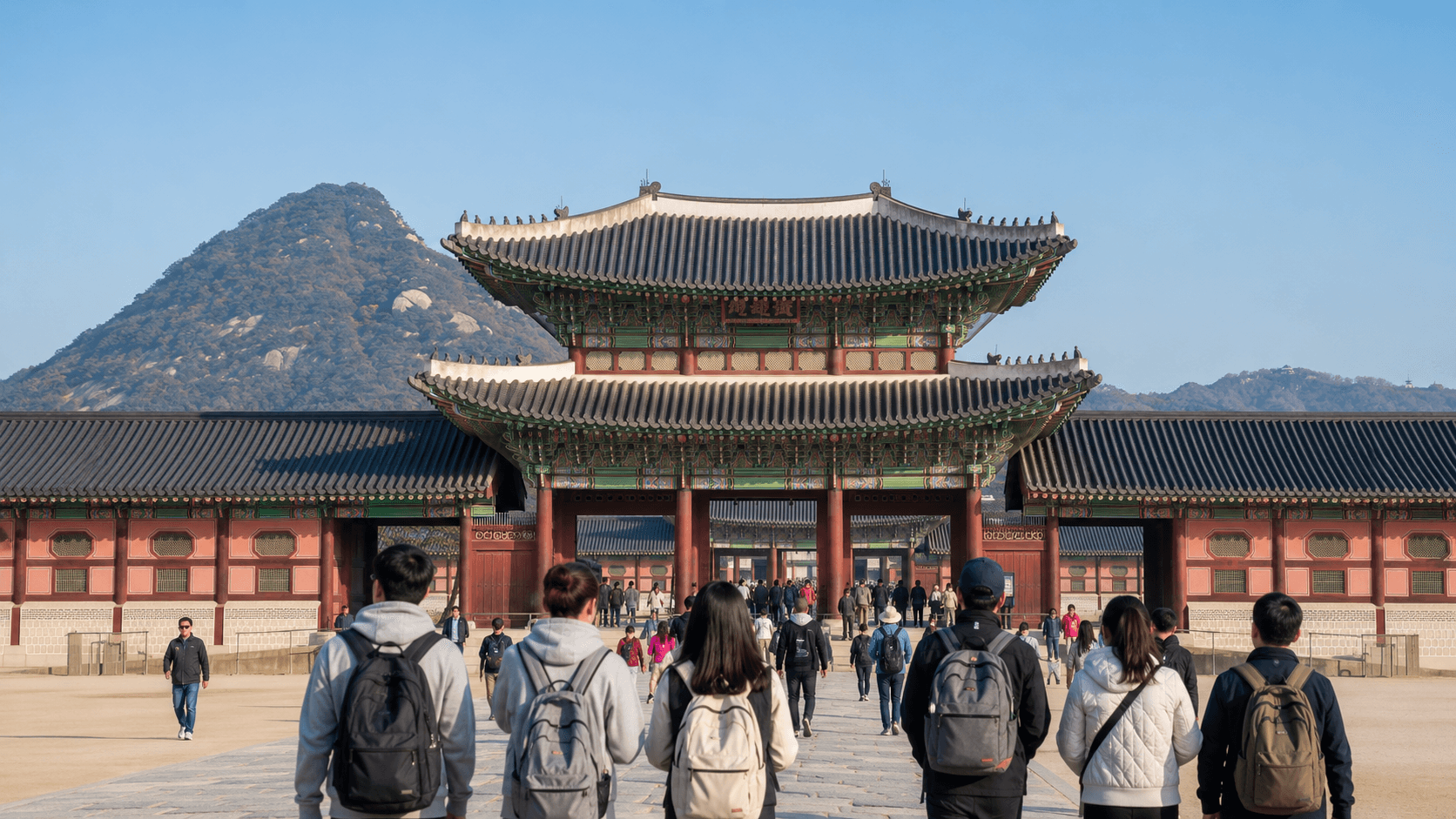
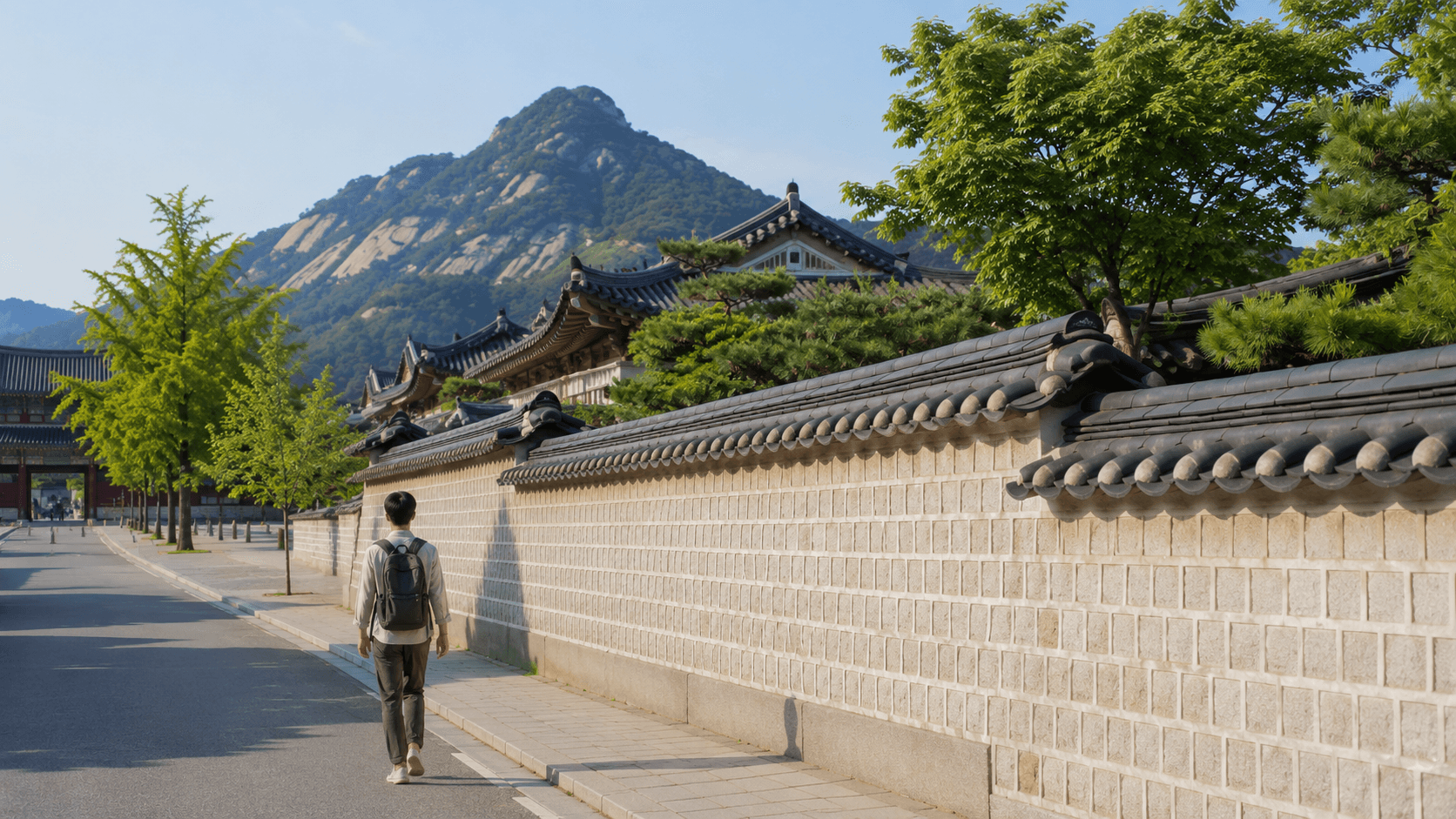
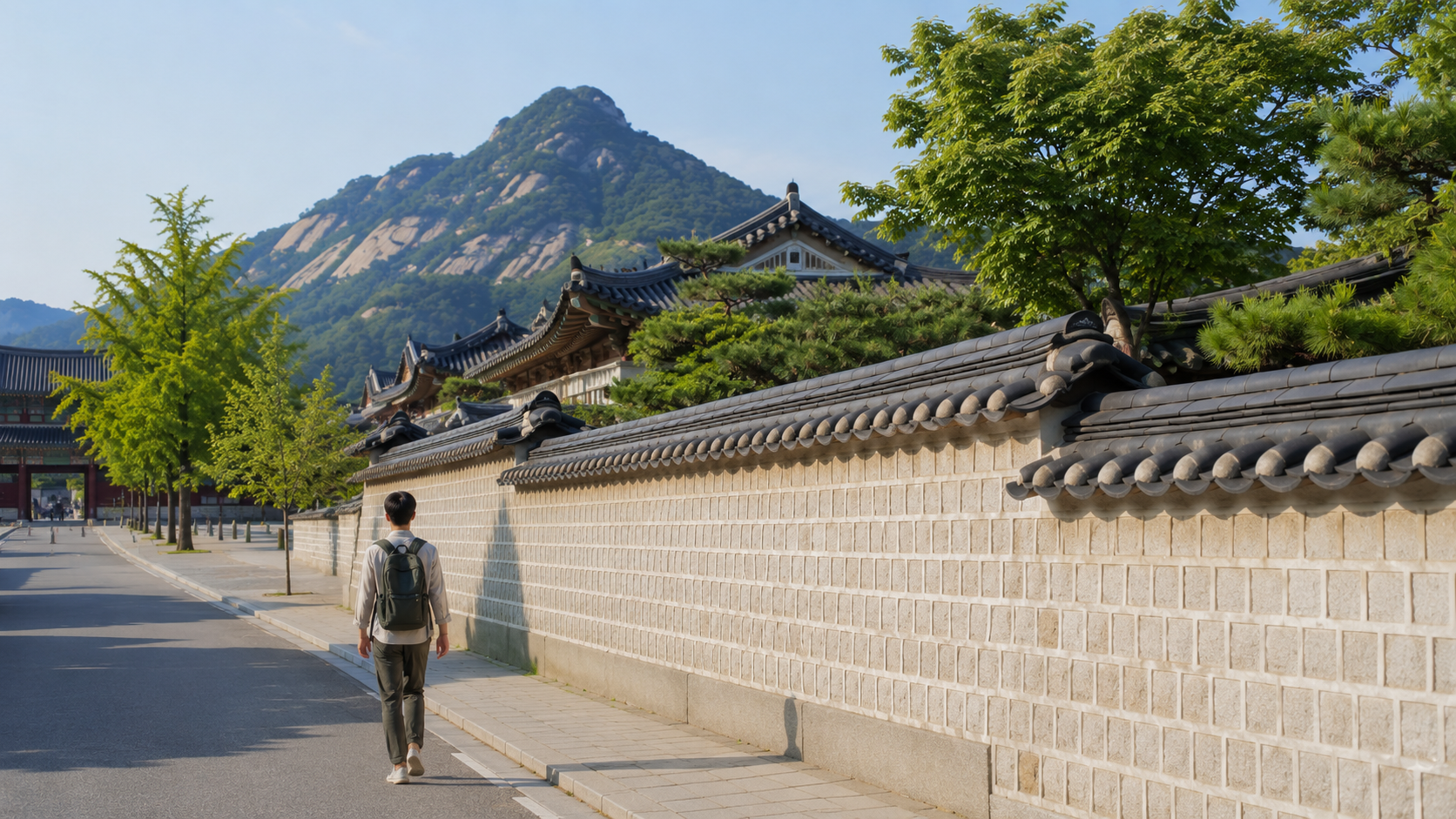
Start at Gyeongbokgung Palace (경복궁), the principal palace established at the beginning of the Joseon dynasty. Allow roughly two hours if you want to see the main halls, courtyards, and pond area without rushing.
Palace hours, admission rules, temporary closures, and evening-opening programs vary. Check the Korea Heritage Service Royal Palaces and Tombs Center immediately before visiting. Seasonal night openings are separate events and may require advance reservations.
Hanbok, meaning traditional Korean clothing, can be rented from shops around the palace. Treat rental as an optional paid activity rather than a requirement. Compare the total price, rental duration, accessories, locker availability, and late-return policy before changing clothes.
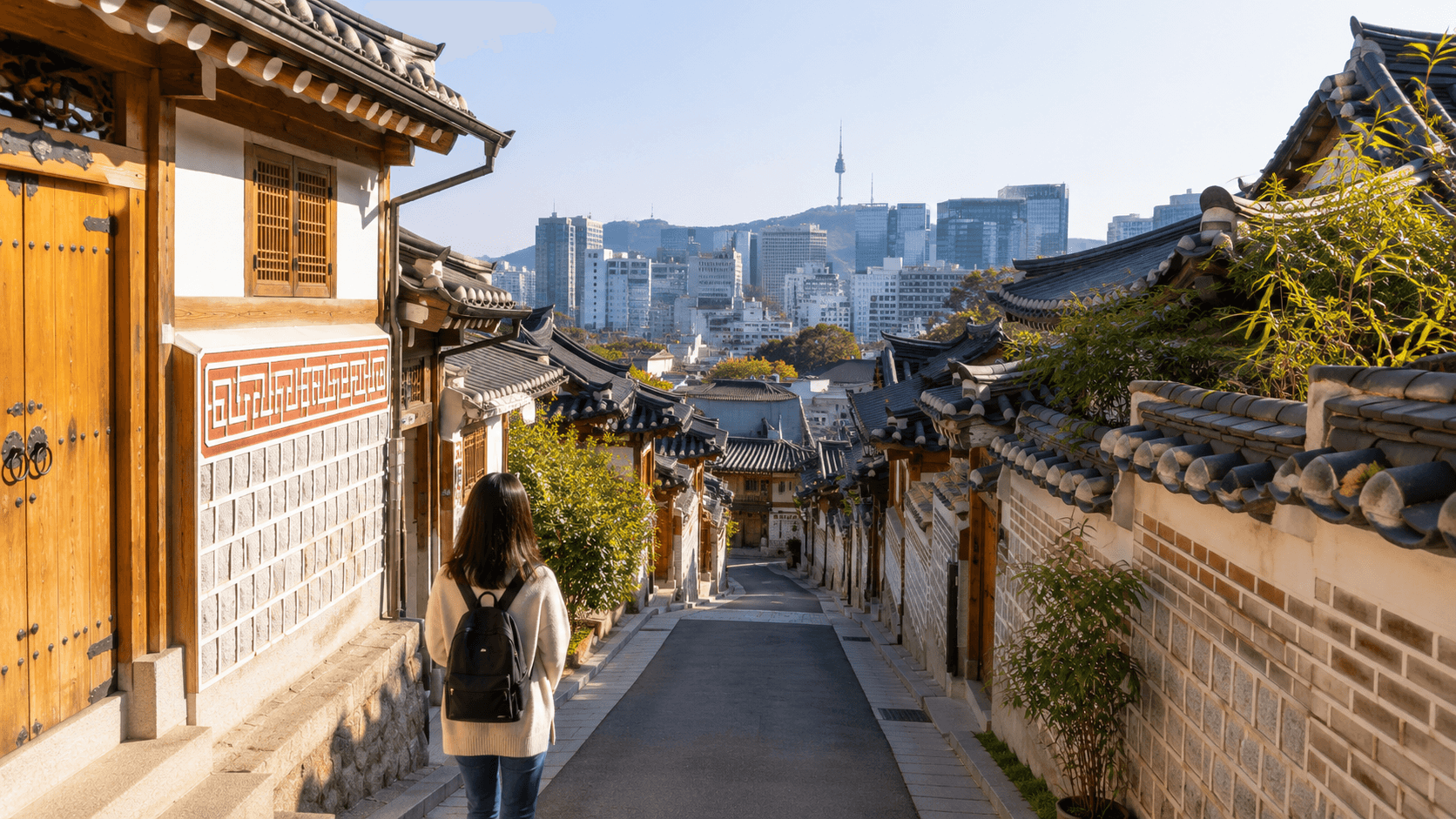
After the palace, walk toward Bukchon Hanok Village (북촌한옥마을). Bukchon is a residential district, not an open-air museum. Keep voices low, stay on public streets, and obey signs restricting access or photography. The slopes and stone surfaces can be difficult with wheelchairs, strollers, or heavy luggage.
Continue downhill to Insadong for crafts, tea shops, galleries, and lunch. Finish in Ikseon-dong, where narrow hanok-lined lanes contain cafés and small restaurants. The lanes become congested on weekends, so visit earlier if photography is important.
Day 3: Market food, Dongdaemun, and Namsan
Begin at Gwangjang Market. The food lanes are busiest around lunch, but arriving earlier makes it easier to look around. Popular items include bindaetteok, a mung-bean pancake; mayak gimbap, small seaweed rice rolls; and kalguksu, knife-cut noodles.
Prices and menus are posted by individual vendors and can change. Check the price before ordering, especially for seafood or items sold by weight. Carry a small amount of cash even if many stalls accept cards.
Walk or take the subway to Dongdaemun Design Plaza. The surrounding district mixes wholesale fashion buildings, conventional shopping centers, historic sites, and late-opening businesses. Do not assume every wholesale shop sells single items or accepts foreign cards.
In the late afternoon, head toward Namsan. You can walk through Namsan Park or use available public transport toward N Seoul Tower. The outdoor tower plaza and park can be enjoyed without buying an observatory ticket. Check the official N Seoul Tower website for current observatory hours, prices, and maintenance notices.
Sunset and weekend periods attract the largest crowds. Leave enough time for the return journey because queues can form for hillside transport.
Day 4: Choose contemporary Seoul, then visit the Han River
Use this morning for one modern neighborhood rather than trying to cover both sides of Seoul.
Option A: Hongdae and Yeonnam-dong
Choose Hongdae for independent shops, cafés, music venues, and a younger university-area atmosphere. Walk into Yeonnam-dong and the Gyeongui Line Forest Park for a quieter contrast.
Option B: Seongsu and Seoul Forest
Choose Seongsu for converted industrial buildings, design shops, temporary pop-ups, and cafés. Brand pop-ups frequently require online registration or a local waiting system, so regard them as optional rather than building the entire day around one venue.
In the late afternoon, go to a Han River park. Yeouido Hangang Park is straightforward for first-time visitors, while Ttukseom Hangang Park pairs well with Seongsu. Convenience stores near major parks commonly sell drinks and picnic food, but rental services and seasonal activities have separate prices and operating conditions.
Avoid swimming outside officially designated and supervised facilities. During heavy rain, flooding, heat warnings, or poor air quality, replace the park with a museum or indoor shopping area. Seoul city notices and visitor information are available through the Seoul Metropolitan Government English website.
Day 5: Take the KTX to Busan and explore western Busan
Reserve a morning KTX from Seoul Station to Busan Station. Allow about three hours aboard the train and four to five hours door to door after hotel checkout, station navigation, waiting, and travel to your Busan accommodation.
Book through the official KORAIL booking website or the official KorailTalk app. Search carefully for Busan, not Gupo or another station in the Busan area. For budgeting, allow approximately KRW 60,000 per adult for a standard-class direct KTX seat from Seoul to Busan; this is a planning estimate, not a quoted fare. Confirm the exact fare and train-specific journey time before payment.
KTX tickets include an assigned train, car, and seat. Arrive early enough to find the platform, but note that Korean railway stations do not use airline-style check-in. Store large luggage only in designated spaces or where it does not block aisles and doors. Luggage racks can fill quickly on busy services.
After leaving bags at your hotel, go to Gamcheon Culture Village (감천문화마을). The official listing showed free general admission and visitor-facility hours of 09:00–18:00 from March through October and 09:00–17:00 from November through February when checked on June 10, 2026. The neighborhood itself is residential, and individual shops keep their own hours. See the official Visit Busan Gamcheon listing before traveling.
Gamcheon is steep and contains stairs and narrow lanes. Use a small bag, wear shoes with grip, and avoid bringing luggage. Official visitor guidance asks travelers to remain quiet, keep the area clean, and not fly drones.
Continue to Nampo-dong, BIFF Square, and the Jagalchi area. Jagalchi is both a working seafood district and a visitor destination. Ask how an item is priced and whether preparation, seating, or side dishes add separate charges before ordering.
Day 6: Coastal Busan from Haedong Yonggungsa to Gwangalli
Leave early for Haedong Yonggungsa (해동용궁사), a Buddhist temple on Busan’s eastern coast. Public transport usually involves a metro-plus-bus combination or a substantial bus journey, depending on your hotel. A taxi can save time for two or more travelers, but the fare depends on traffic and starting point.
The temple is an active religious site. Dress and behave respectfully, avoid blocking worshippers, and expect stairs. Coastal wind, rain, and summer heat can make the route more demanding than photographs suggest.
Continue to Haeundae Beach for lunch and a seaside walk. If you plan to use the Haeundae Beach Train or Sky Capsule, check the official Haeundae Blue Line Park website for current routes, fares, maintenance, and reservations. The Sky Capsule is a timed attraction and should not be treated as ordinary public transport.
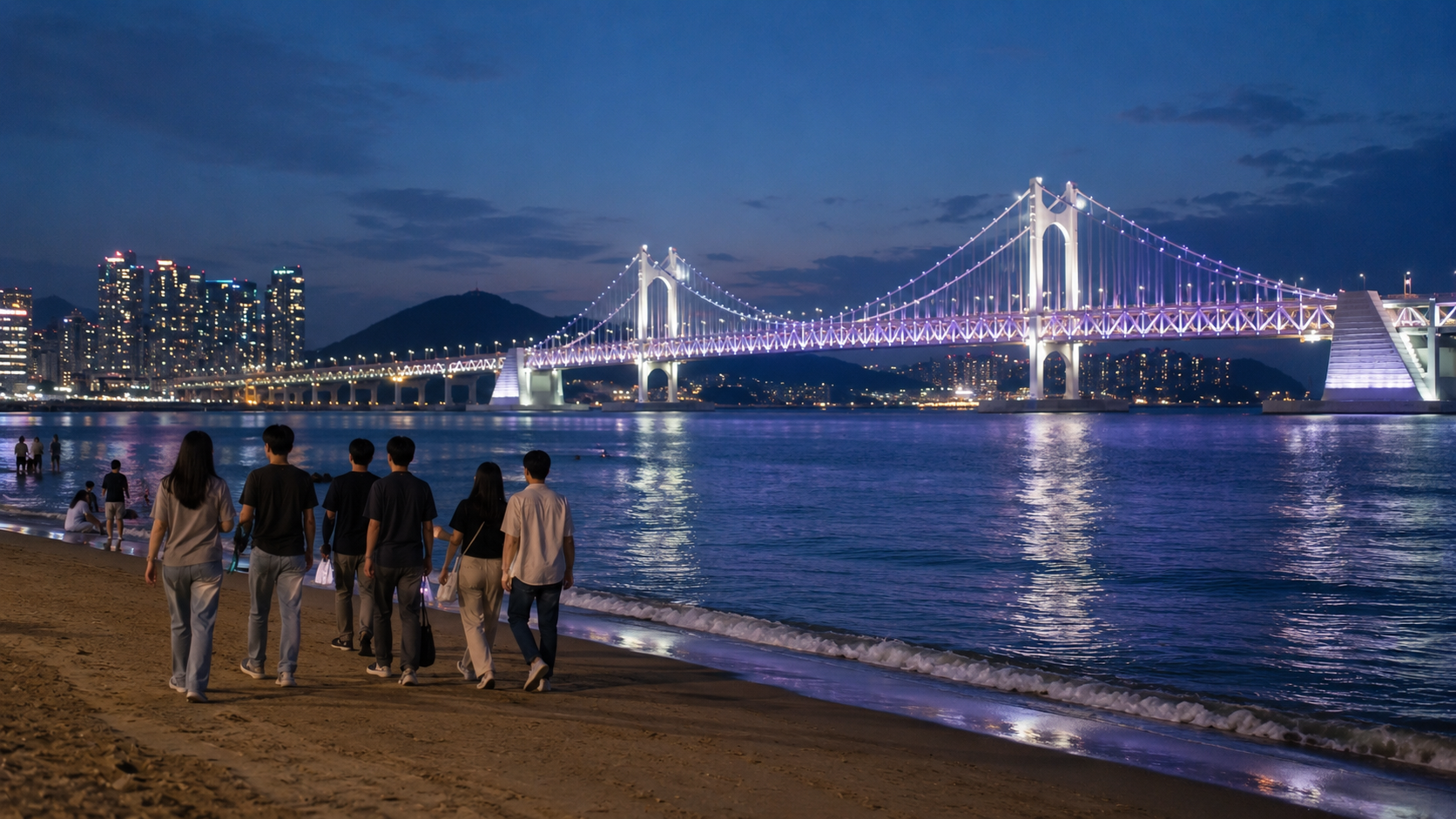
Finish at Gwangalli Beach. According to the official Visit Busan listing checked on June 10, 2026, the public beach area is open at all times and has no general admission fee. It is about a 13-minute walk from Gwangan Station Exit 5; see the official Gwangalli visitor information.
Gwangalli is particularly useful in the evening because Gwangandaegyo Bridge forms the main view across the water. Events, performances, and drone shows are weather-dependent and may be cancelled. Confirm any event on the Visit Busan notices page rather than assuming it will operate during your stay.
Day 7: Flexible Busan morning and departure
Keep the final morning flexible. From Nampo-dong, revisit the harbor area or walk around Yongdusan Park. From Haeundae, take a final beach walk. From Seomyeon, use the morning for cafés, shopping, or a meal near the hotel.
For a flight from Gimhae International Airport, the Busan-Gimhae Light Rail connects with Busan Metro at Sasang and Daejeo. The most practical transfer depends on your hotel and terminal. Check current airport transport information through the official Gimhae International Airport website.
For a return to Seoul, reserve the KTX in advance and leave a substantial buffer before any international flight. KTX trains do not run directly into Incheon International Airport. You must transfer in Seoul, normally between KTX and an airport train or bus. A same-day Busan-to-Incheon connection is possible, but a separate Seoul night is more resilient to delays.
Transport and payment checklist
- Carry a rechargeable transport card for city buses and subways.
- Keep some KRW cash for transport-card top-ups, markets, and small businesses.
- Use Naver Map or KakaoMap for local route planning.
- Reserve Seoul–Busan KTX seats before peak weekends and national holidays.
- Avoid rush-hour subway travel with large luggage when possible.
- Check the final subway, bus, or train departure on the day; last-service times vary by route and station.
- Use licensed taxis and confirm that the meter is running unless a legitimate fixed-fare service was booked.
What to check before you go
- Confirm whether Gyeongbokgung is open on your chosen day and whether a seasonal night program affects access.
- Check the weather separately for Seoul and Busan; coastal Busan can be windier.
- Verify KTX times, fares, station names, and assigned seats through KORAIL.
- Review luggage rules for your airline and leave storage space on intercity travel days.
- Check maintenance notices for N Seoul Tower and Haeundae Blue Line Park.
- Confirm Busan event schedules on the official tourism website, especially outdoor drone or light shows.
- Allow extra travel time at weekends, during national holidays, and in the summer beach season.
- Review accessibility before visiting Bukchon, Gamcheon, Namsan, or Haedong Yonggungsa; all involve slopes, stairs, or uneven surfaces.
Sources
- KORAIL official train booking
- Korea Heritage Service Royal Palaces and Tombs Center
- Seoul Metropolitan Government English website
- Visit Busan official travel guide
- Official Gamcheon Culture Village visitor information
- Official Gwangalli Beach visitor information
- Gimhae International Airport
Start by booking your international flights and Seoul–Busan KTX journey. Once those fixed points are settled, choose hotels that minimize transfers rather than selecting accommodation by neighborhood reputation alone.