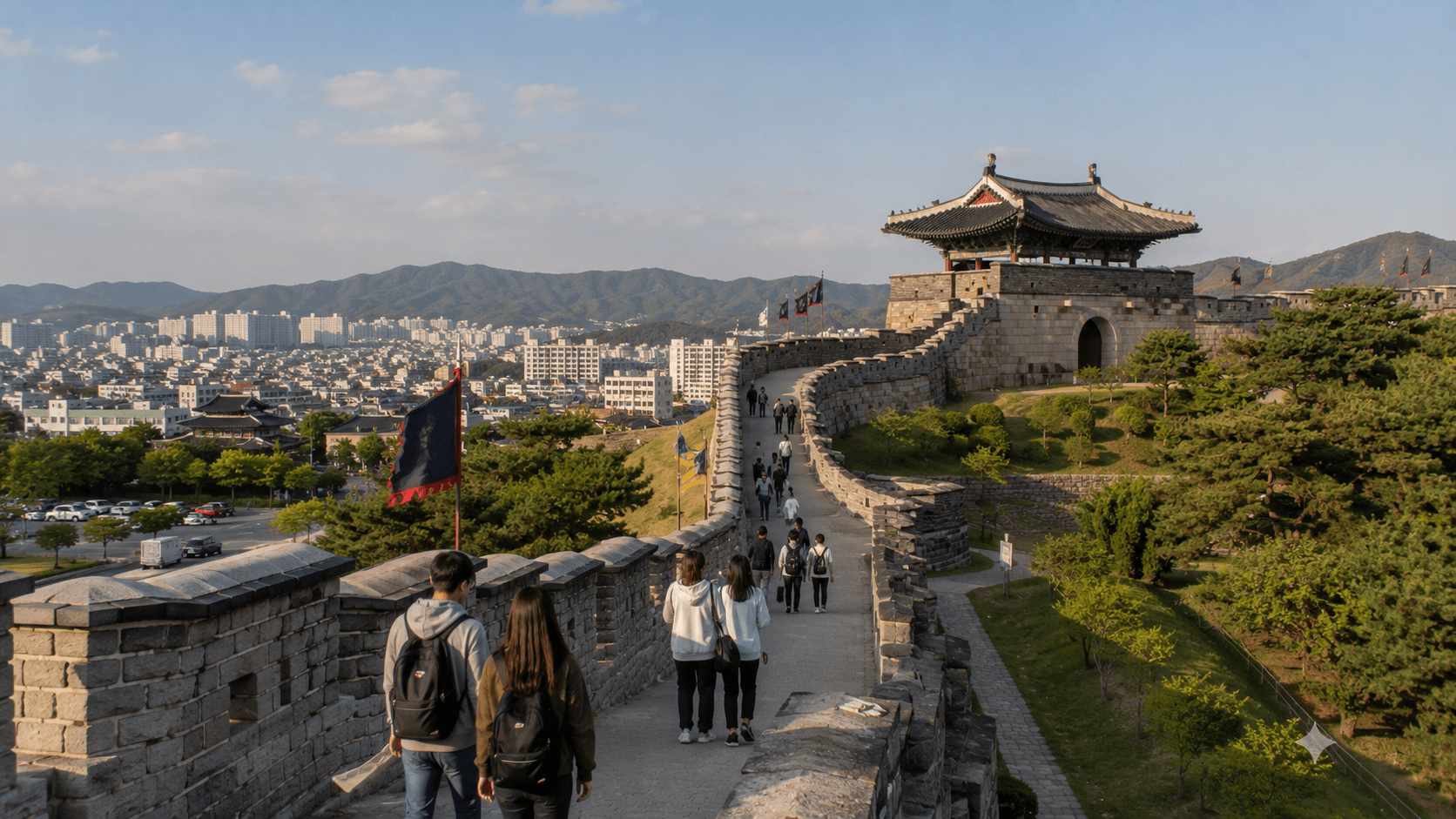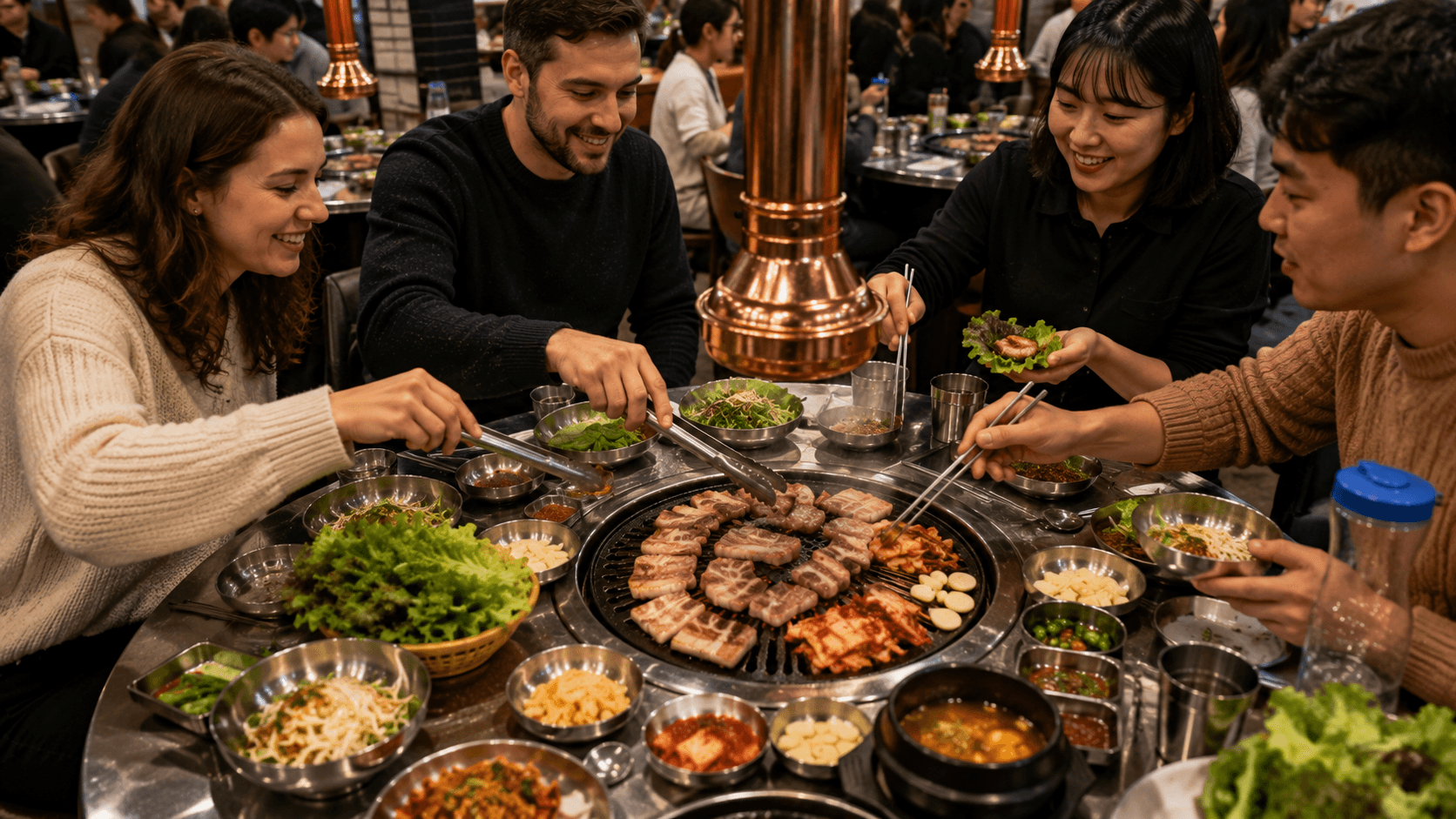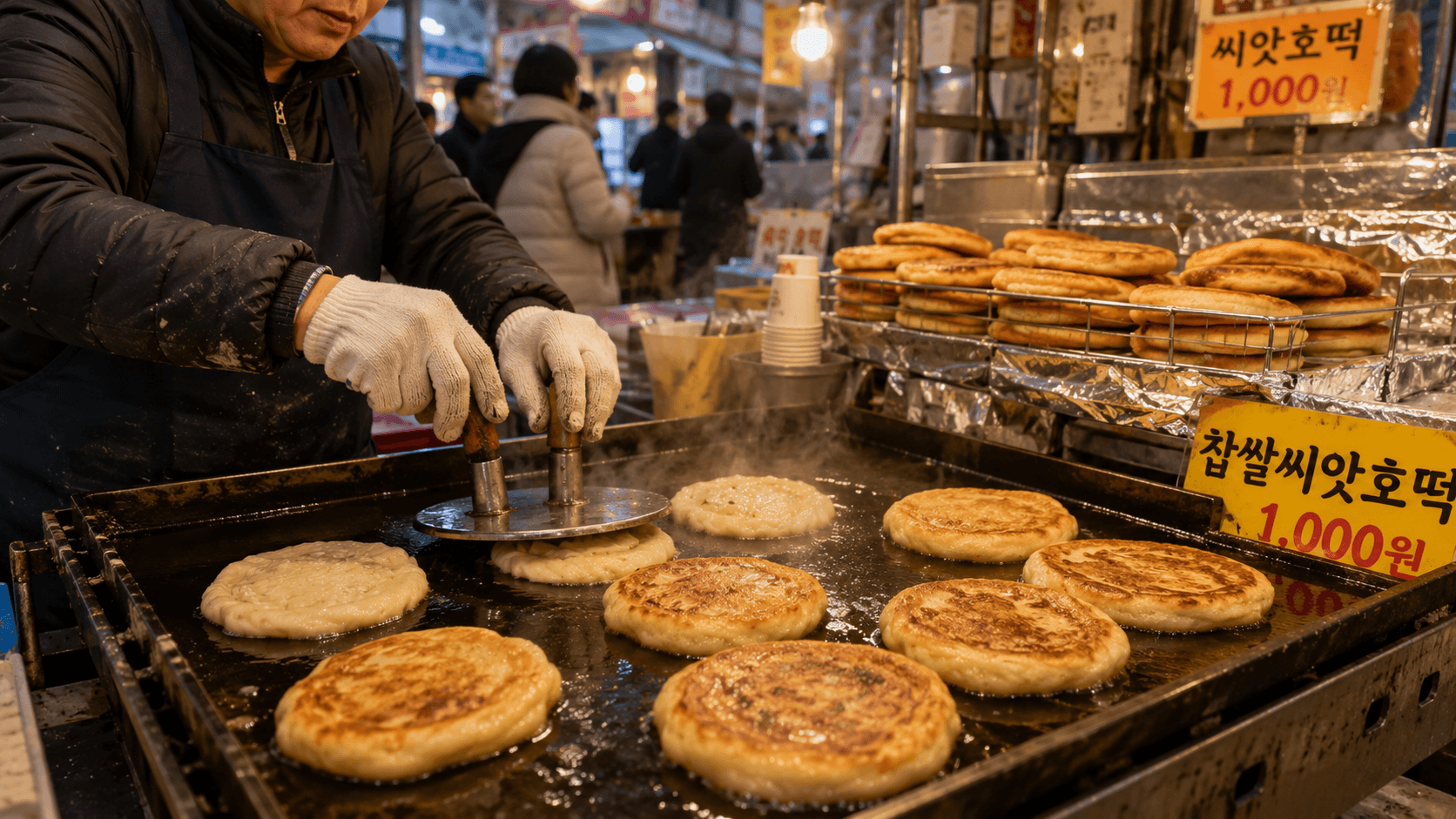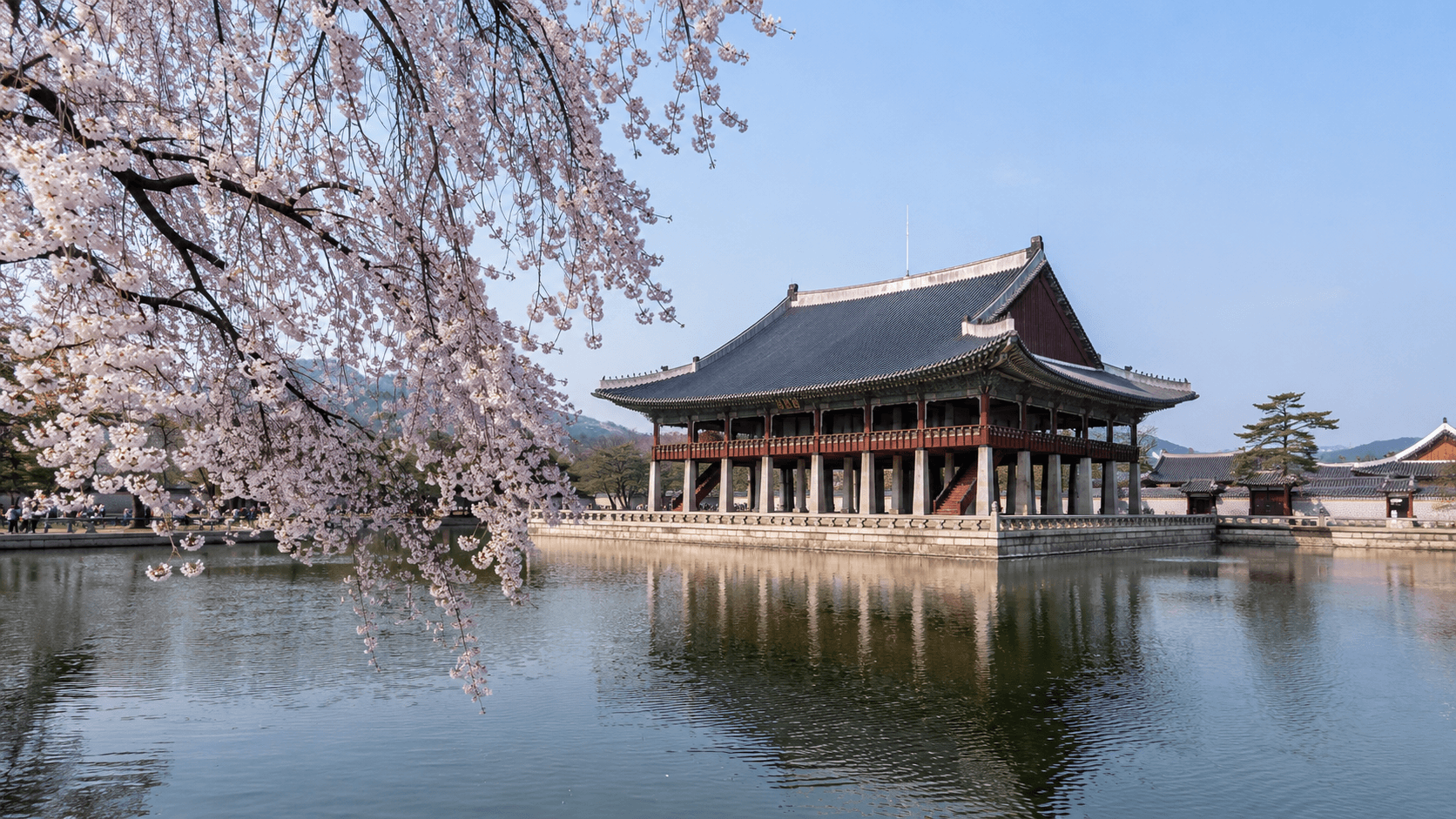
Spring is one of Seoul's most comfortable seasons for walking, palace visits, riverside picnics, and hiking. March can still feel cold, cherry blossoms usually arrive around early April, and May brings warmer days and greener parks. Blossom dates, air quality, rain, and event schedules vary each year, so build flexibility into your plans rather than organizing the entire trip around one forecast.
Information involving fares, admission fees, operating hours, and 2026 events was verified on June 9, 2026.
At a glance
| Period | What to expect | Good choices |
|---|---|---|
| Early to mid-March | Cold mornings, bare trees, occasional early flowers | Palaces, museums, cafés, indoor markets |
| Late March to mid-April | Rapidly changing weather and the main cherry blossom window | Yeouido, Seokchon Lake, palace grounds, Seoul Forest |
| Late April | Fresh leaves, azaleas, tulips, and fewer blossom-focused crowds | Hangang parks, urban walks, hiking |
| May | Mild to warm afternoons, longer daylight, greener landscapes | Picnics, cycling, mountain trails, evening walks |
The Korea Tourism Organization's 2026 cherry blossom forecast predicted first bloom in Seoul on April 3 and peak bloom around April 10. These were forecasts rather than guaranteed dates, and the organization cautioned that actual conditions could differ because of the weather. As a general planning rule, early to mid-April offers the strongest chance of seeing ordinary cherry blossoms in Seoul, but a stay of several days is safer than a one-day visit.
Spring weather and what to pack
Seoul's spring weather changes quickly. A sunny afternoon may feel warm while the same day's morning and evening require a jacket. March is transitional and can resemble the end of winter; May can occasionally feel like early summer.
Bring layers that can be removed during the day:
- A light insulated jacket or lined coat for March
- A light jacket, cardigan, or windbreaker for April and May
- Long trousers and comfortable walking shoes
- A compact umbrella or lightweight rain shell
- Sunglasses and sunscreen for exposed palace courtyards and riverside paths
- A reusable water bottle, especially for hiking
- A well-fitting mask for days with elevated fine-dust levels
Do not rely only on a weather icon in a general travel app. Check Seoul's detailed forecast through the Korea Meteorological Administration shortly before leaving your accommodation. For particulate pollution, use the government-operated AirKorea current air-quality and forecast service.
On an unhealthy air-quality day, move strenuous hikes to another date and choose museums, shopping areas, covered markets, or cafés instead. Air quality can differ by day and district, so it is more useful to check the live reading than to make assumptions about the whole season.
Where to see spring flowers
Yeouido and Yeouiseo-ro
Yeouiseo-ro, the road behind the National Assembly, is Seoul's most prominent cherry blossom destination. Rows of mature trees create a long corridor of flowers, while nearby Yeouido Hangang Park provides lawns, river views, convenience stores, and space for a picnic.
This is also one of the busiest choices. Visit on a weekday morning if photography or an uncrowded walk matters to you. During festivals, the city may restrict traffic and redirect pedestrians. Use the subway rather than a taxi because surrounding roads can become congested.
The 2026 Yeouido Spring Flower Festival was scheduled for the blossom period, with timing subject to actual blooming conditions. Future dates should be confirmed through the Yeongdeungpo Cultural Foundation or Seoul's official tourism announcements rather than copied from a previous year's calendar.
Seokchon Lake
Seokchon Lake in Songpa-gu offers a nearly continuous walking route beneath cherry trees, with water and the city skyline behind them. The path is level and generally easier than a mountain or hillside route, although it becomes extremely crowded around peak bloom.
For a quieter visit, arrive shortly after sunrise or walk on a weekday. Jamsil Station provides convenient subway access. Allow extra time inside the station during major events because exits serving the lake and nearby commercial complexes can be busy.
Seoul Forest and the eastern Hangang
Seoul Forest combines lawns, wooded paths, flower beds, and access toward the riverside. It works well for visitors who want a relaxed half-day rather than a single blossom photograph. Continue into Seongsu for cafés and shops, or walk toward the Hangang if the weather is clear.
Ttukseom Hangang Park is another practical eastern Seoul option, particularly for a picnic or sunset walk. Seoul maintains 11 riverside parks with walking and cycling infrastructure; facilities and access information are available in the city's official Hangang Parks guide.
Namsan
Namsan's ring roads and walking paths provide spring flowers together with elevated city views. The southern ring road, the area near Namsan Library, and routes around Namsangol Hanok Village are useful alternatives to the most famous blossom corridors.
The terrain includes slopes, so wear proper shoes and allow more time than a map's distance might suggest. Visitors who do not want a full uphill walk can combine a bus or cable-car journey with a shorter descent, but should check the relevant operator's current hours and queues on the day.
Royal palaces
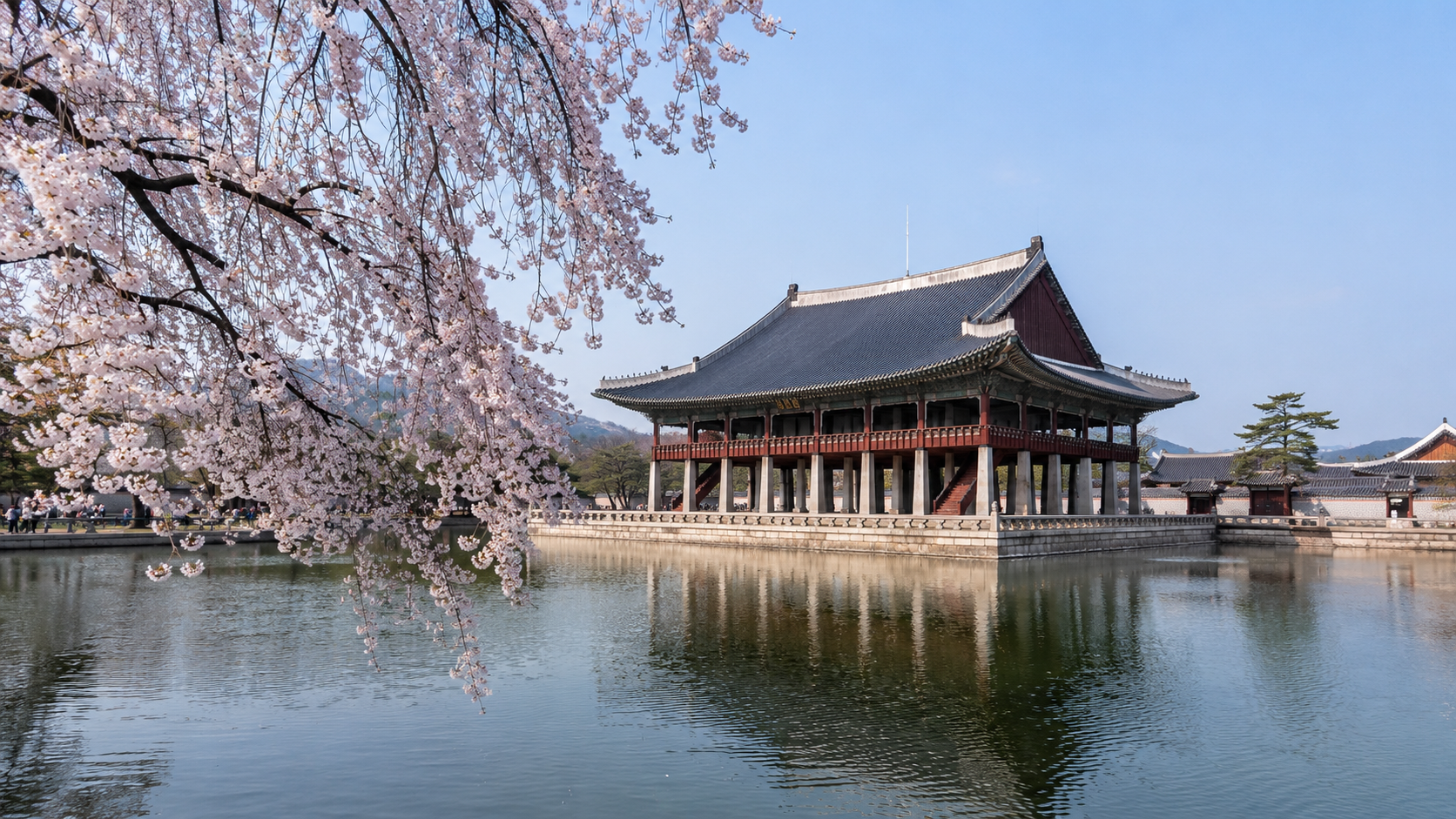
Spring flowers around palace walls, ponds, and tiled roofs create a distinctly Seoul setting. Gyeongbokgung is the largest and easiest first palace, while Changdeokgung has more varied terrain and access to its landscaped rear garden, known as the Huwon.
As verified on June 9, 2026, Gyeongbokgung's regular spring hours from March through May were 9:00 a.m. to 6:00 p.m., with final entry at 5:00 p.m.; it normally closed on Tuesdays. Adult general admission was KRW 3,000. Changdeokgung's main palace area also charged KRW 3,000 for an adult, while Huwon entry was separately controlled by timed admission. Confirm current hours, closure days, prices, and reservation rules through the Royal Palaces and Tombs Center before visiting.
Special evening openings are seasonal events, not part of normal palace hours. Do not assume that a palace will be open at night because photographs from a previous year's program appear online.
Spring beyond cherry blossoms
Cherry blossoms receive the most attention, but their peak is brief. Magnolia, forsythia, azaleas, tulips, and fresh green leaves appear at different points between March and May. A trip after the cherry petals fall is not too late for spring scenery.
The Korea Tourism Organization's 2026 spring bloom guide placed Seoul's Yeouido cherry blossom period in early to mid-April while noting later-flowering plants elsewhere into May. Treat such calendars as planning references, not promises.
Good non-cherry-blossom options include landscaped sections of Seoul Forest, Olympic Park, the palace gardens, riverside ecological areas, and neighborhood walks beside smaller streams. These places are generally more enjoyable when you focus on the walk itself rather than searching for one exact tree or photo angle.
Walking, cycling, and hiking
Hangang picnic or bicycle ride
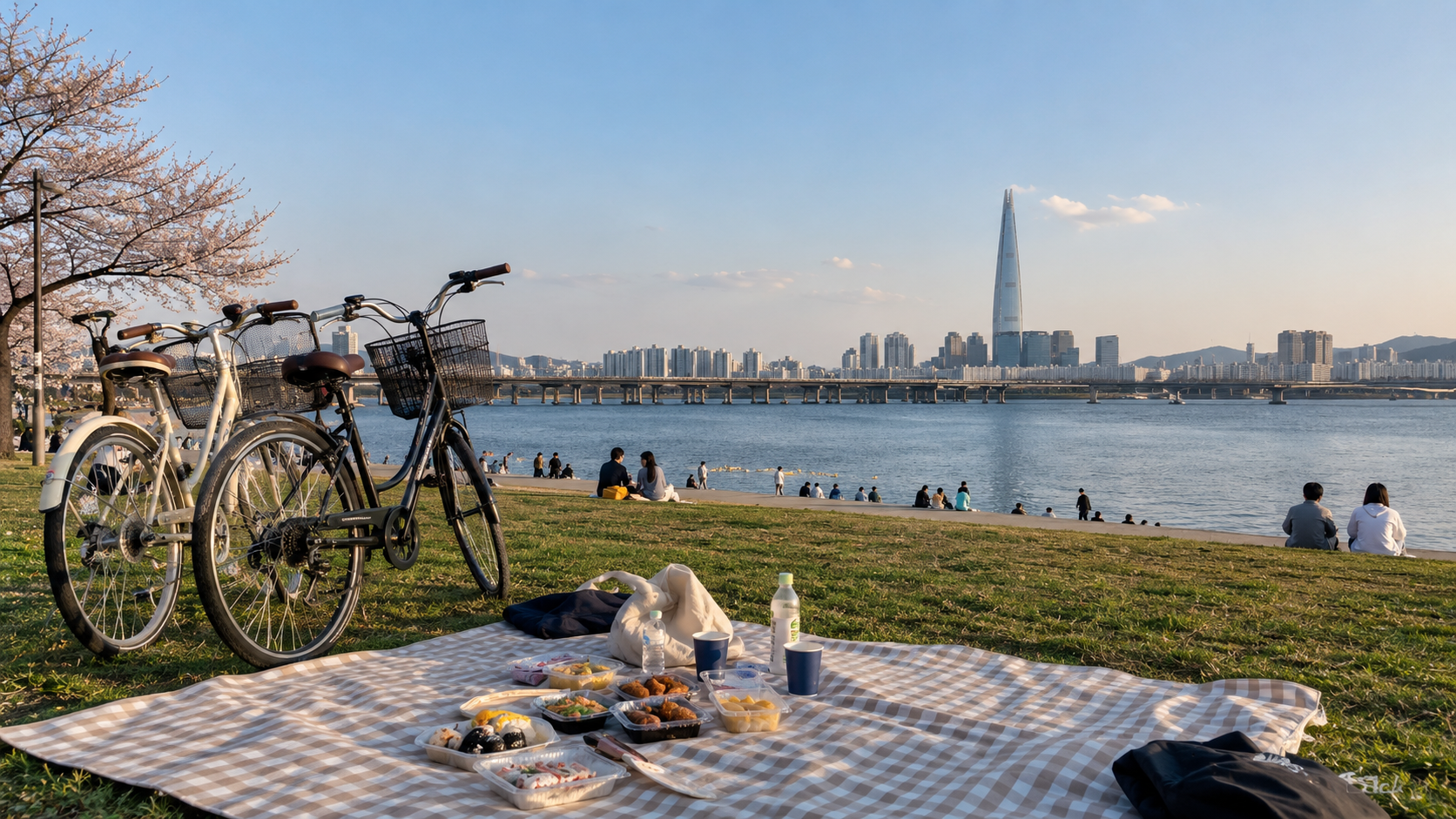
The Hangang River is particularly useful in late April and May, when evenings are milder. Yeouido is convenient for first-time visitors, Ttukseom has easy subway access and an active atmosphere, and Mangwon pairs well with Mangwon Market.
Public and private rental systems operate around the river, but prices, accepted payment methods, and return requirements differ. The city reports bicycle rental stations across multiple Hangang parks in addition to the Ttareungi public-bike system. Check the rental conditions before starting; some bicycles must be returned to the same operator rather than any public dock.
Stay on designated paths, watch for fast cyclists, and do not spread picnic mats across cycling lanes. Riverside temperatures can feel cooler after sunset, so carry an extra layer even when the afternoon is warm.
A manageable urban hike
For a shorter outing, Achasan has comparatively gentle access and city views. The Seoul Metropolitan Government describes its summit as 287 meters high and estimates that visitors can go up and return in under two hours, depending on route and pace. The trail begins roughly a 15-minute walk from Gwangnaru Station on Line 5; see the city's Seoul mountain guide for orientation.
Bukhansan offers more demanding routes, including steep and rocky sections. Do not treat it as a casual park stroll. Check trail conditions, start early, carry water, and wear shoes with grip. The Seoul Hiking Tourism Center near Bukhansan Ui Station provides route information and equipment-related services; reservations and current details are available through the Seoul Hiking Tourism Center.
Avoid exposed ridges during strong wind, rain, or poor visibility. After rainfall, rock and wooden steps may remain slippery even when streets in central Seoul are dry.
Getting around Seoul in spring
Subway and bus services are usually the most reliable way to reach flower areas because taxis share the same congested streets as private vehicles. A reloadable transportation card also allows integrated transfers when the required tap-in and tap-out rules are followed.
As verified on June 9, 2026, Seoul's adult subway base fare was KRW 1,550 with a transportation card and KRW 1,650 for a single-journey ticket. A single-journey subway ticket also requires a refundable KRW 500 deposit. Distance charges may apply. Current fares and transfer rules are listed in the Seoul Metropolitan Government's official transport guide.
On buses, tap when boarding and again before getting off. On the subway, check the station name and number as well as the line color; several destinations have similar English names. Naver Map and KakaoMap usually provide more locally detailed routing than international map services, including station exits and live bus information.
Since March 17, 2026, selected ticket machines have accepted internationally issued cards and mobile payments for single-journey tickets and short-term Climate Cards. Seoul states that an average service fee of about 3.7% applies to international-card transactions. Machine availability can vary, so carrying some KRW remains sensible. See the city's international payment announcement for details.
A flexible three-day spring plan
Day 1: Palace district and central Seoul
Start at Gyeongbokgung when it opens, then walk through the western side of the palace district or toward Samcheong-dong. Continue to Cheonggyecheon for an easy central-city walk. Use a museum or café as a midday option if rain or fine dust develops.
Day 2: Choose flowers according to current conditions
Check recent official tourism updates and local photographs before selecting Yeouido, Seokchon Lake, or Seoul Forest. Do not cross the city simply because a month-old article describes a location as being in bloom. Finish with a Hangang walk near the same district to reduce unnecessary travel.
Day 3: Outdoor activity with a weather fallback
Choose Achasan for a shorter hike, Bukhansan for a properly prepared mountain day, or a Hangang bicycle ride on level ground. If conditions are poor, replace the activity with the National Museum of Korea, Seoul Museum of History, or another indoor attraction whose current opening hours you have confirmed.
Common mistakes to avoid
- Assuming cherry blossoms remain at peak for several weeks
- Visiting Yeouido or Seokchon Lake on a weekend afternoon without expecting crowds
- Packing only for the warmest part of the day
- Ignoring fine-dust forecasts before a strenuous hike
- Wearing smooth-soled fashion shoes on mountain trails
- Planning a palace visit on its regular closure day
- Assuming special night openings happen every evening
- Taking a taxi to a road-closure area during a flower festival
- Leaving a riverside picnic blanket or rubbish behind
What to check before you go
Use this checklist 24 to 48 hours before each outdoor day:
- Weather forecast, rainfall timing, wind, and temperature range
- AirKorea PM2.5 and PM10 forecast for Seoul
- Current bloom reports rather than only the preseason forecast
- Palace closure days, last admission, and special-program reservations
- Festival traffic controls and the nearest usable subway exit
- Hiking trail notices and sunset time
- Bicycle rental payment and return rules
- The final subway or bus connection back to your accommodation
For tourism assistance in English, the Korea Travel Hotline can be reached within Korea at 1330 or internationally at +82-2-1330. The service and number are listed by the Seoul Metropolitan Government in its visitor information materials.
Frequently asked questions
Is March a good time to visit Seoul?
Yes, particularly for sightseeing without blossom-season crowds, but early March can still be cold and many trees may remain bare. Pack for late-winter conditions and treat early flowers as a bonus.
When should I visit for cherry blossoms?
Early to mid-April is the usual planning window, not a guarantee. For 2026, the forecast placed first bloom around April 3 and peak bloom around April 10. Weather can move the dates, and wind or rain can shorten peak viewing.
Is Seoul crowded in spring?
Major flower locations can be extremely crowded during peak bloom, particularly on weekends. Other neighborhoods and ordinary attractions may feel normal. Early mornings and weekdays are the most practical times for popular blossom routes.
Do I need reservations for spring attractions?
Public parks and ordinary blossom walks generally do not require reservations. Palace special programs, Changdeokgung's Huwon, guided hikes, and seasonal evening openings may have timed admission or advance booking requirements.
What is the most useful next step?
Choose two outdoor priorities and one indoor backup for each day. About a week before arrival, check the latest Seoul weather and bloom reports; then make the final decision each morning using the rain and air-quality forecasts.
Sources
- Korea Tourism Organization: 2026 Cherry Blossom Forecast
- Korea Tourism Organization: 2026 Spring Bloom Destinations
- Seoul Metropolitan Government: Public Transportation and Fares
- Seoul Metropolitan Government: Hangang Parks
- Royal Palaces and Tombs Center: Visiting Hours
- Royal Palaces and Tombs Center: Admission Fees
- AirKorea: Current Air Quality and Forecast
- Korea Meteorological Administration