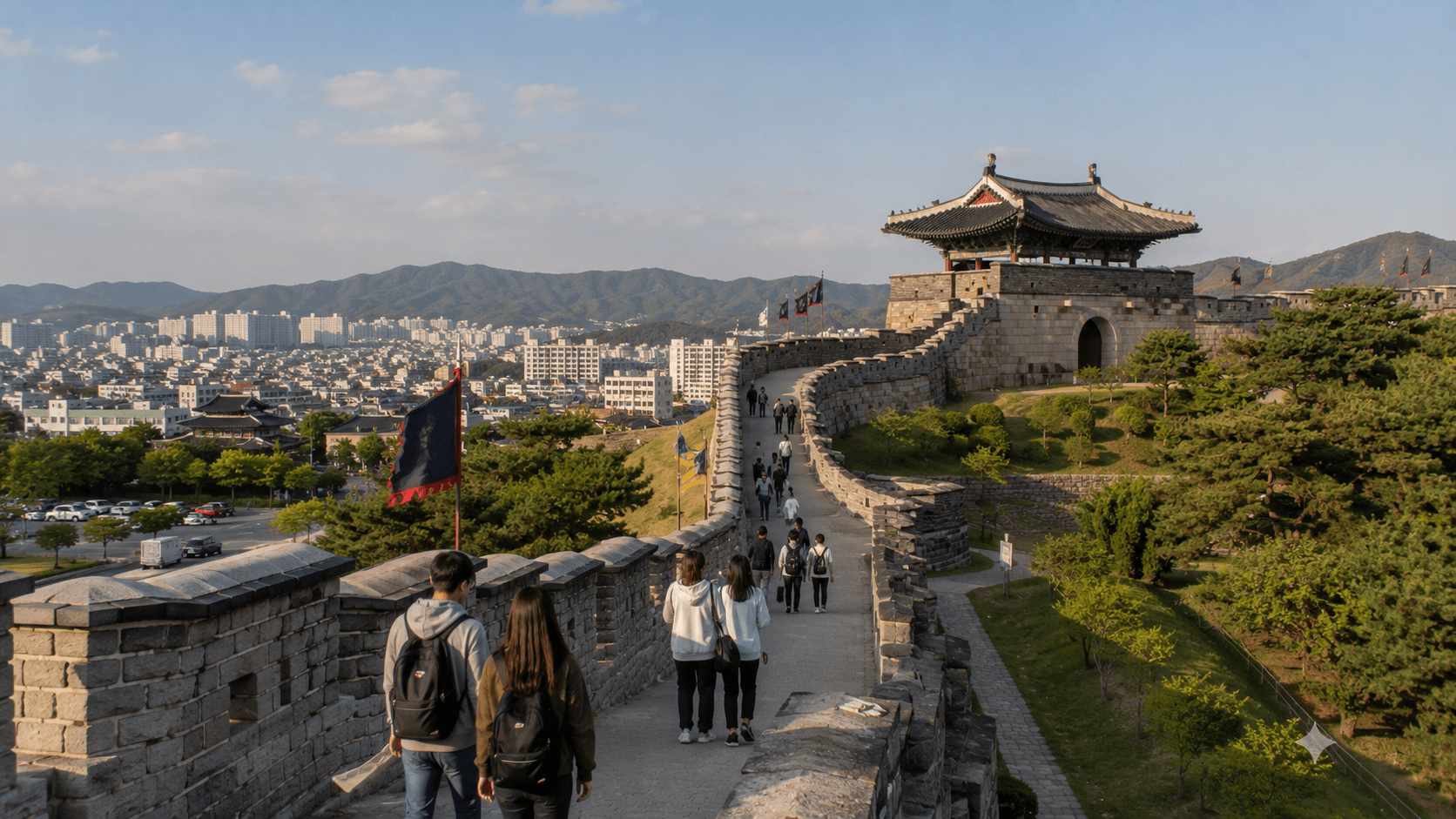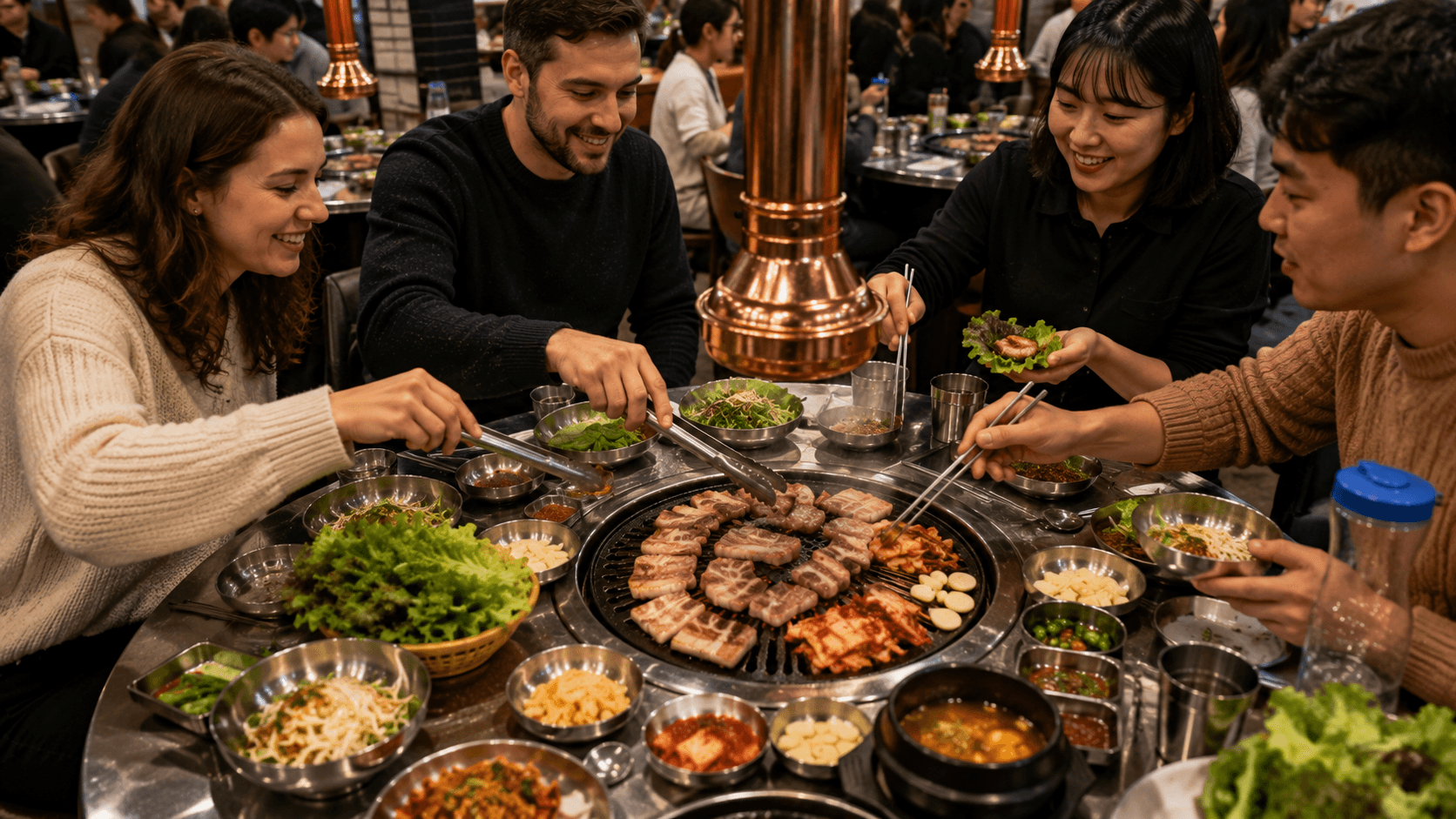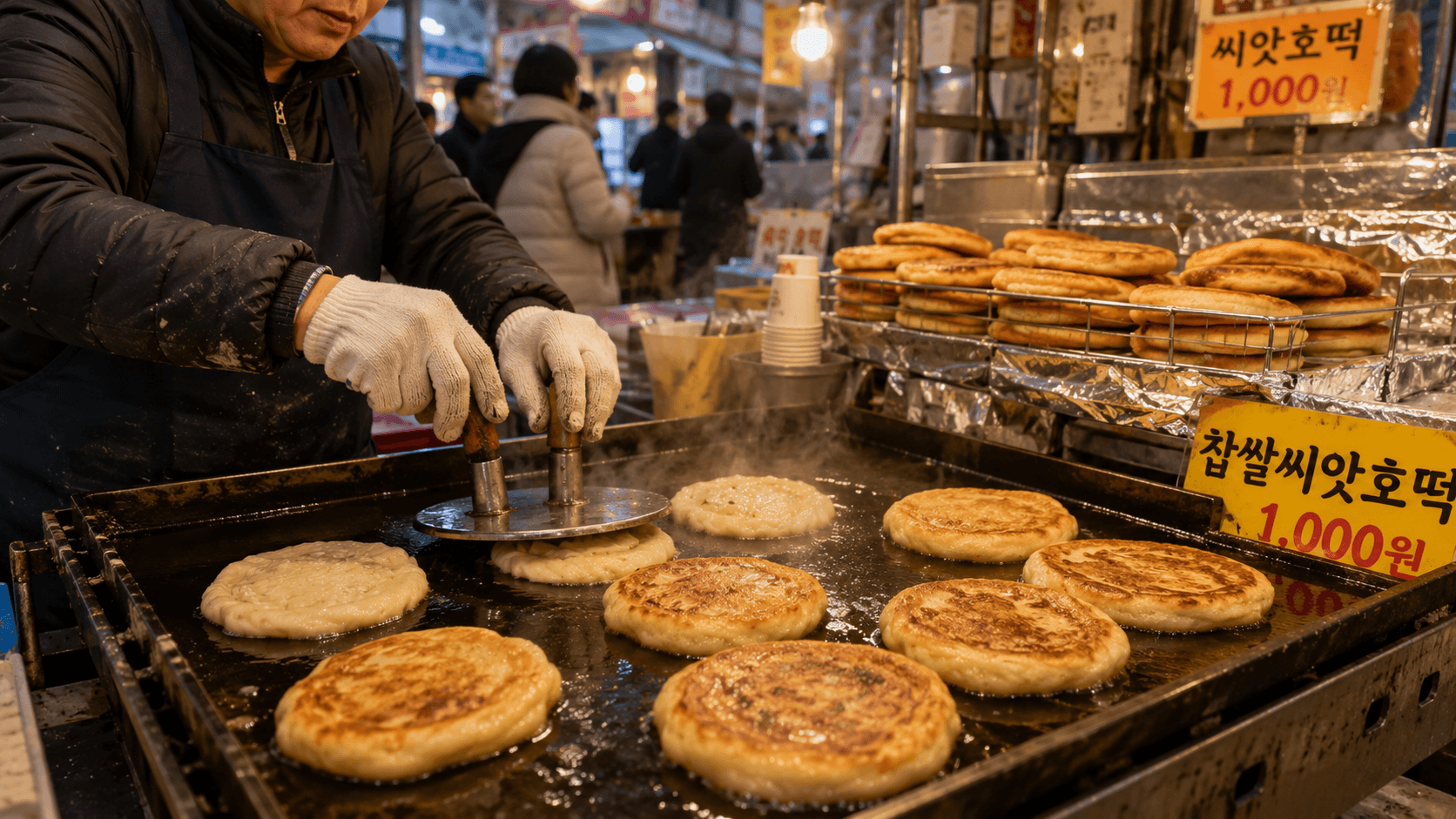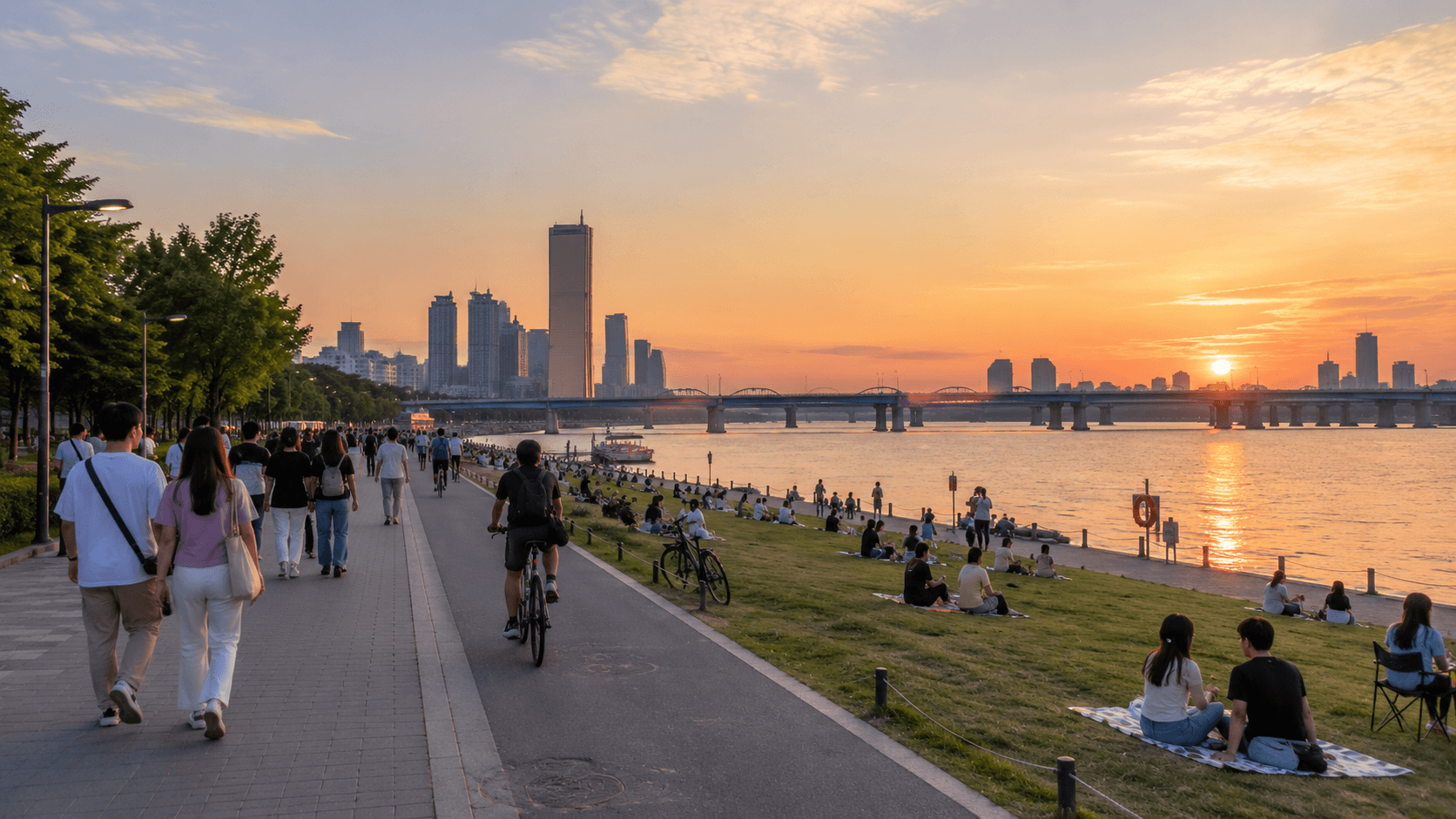
Seoul in summer is hot, humid, and periodically very wet, but it remains practical to explore if you plan around the weather. Schedule outdoor sightseeing for mornings and evenings, keep an indoor alternative for each day, and treat heat and heavy-rain alerts seriously. June is generally easier for walking than July or August, although exact conditions vary each year.
At a glance
- Summer period: June through August
- Typical conditions: Warm to very hot, humid, with intense sunshine and sudden downpours
- Rainy season: Usually concentrated around late June and July, but dates and rainfall vary
- Hottest period: Commonly late July through August
- Best sightseeing hours: Early morning and after sunset
- Essential items: Breathable clothing, sun protection, refillable water bottle, compact umbrella, and shoes that tolerate rain
- Main planning rule: Pair each outdoor area with a nearby museum, mall, market, or café district
The Korea Meteorological Administration weather portal should be your main source for forecasts and weather warnings. For air-quality readings, use the government-operated AirKorea service.
What summer in Seoul feels like
June
June is normally the most manageable summer month. Days are warm and can already feel humid, but prolonged extreme heat is less likely than in late July or August. Rain becomes a bigger consideration as the month progresses.
This is a suitable time for palace grounds, neighborhood walks, hiking, and long days outdoors, provided you check the forecast. Do not assume that early June will be cool: direct sunlight on paved streets and palace courtyards can still be tiring.
July
July often combines high humidity with the jangma (장마), Korea's summer rainy period. Jangma does not mean uninterrupted rain every day. It can produce alternating dry spells, short cloudbursts, and several hours of heavy rain.
Rainfall can be highly localized. Conditions in northern Seoul may differ from those south of the Han River, so check the hourly forecast rather than relying only on a daily rain icon.
August
August is frequently the hardest month for long walks. High temperatures, warm nights, humidity, and strong sunshine can make a normal sightseeing schedule unrealistic. Tropical systems can also affect Korea during this period, although their routes and impacts cannot be predicted far in advance.
Use August for a slower itinerary built around museums, shopping complexes, performances, cafés, and evening river visits. Add outdoor activities only after checking the day's heat and rain warnings.
How to plan a summer day
Start outdoors early
Palaces, traditional neighborhoods, markets, and hiking routes are easier before the pavement and buildings have absorbed a full day of heat. Eat breakfast early and aim to begin outdoor sightseeing near opening time.
Gyeongbokgung Palace's official visitor information lists seasonal opening hours, admission details, and closure days. Operating information was checked on June 9, 2026, but palace schedules can change for ceremonies, maintenance, or severe weather.
Move indoors around midday
Plan lunch and an indoor attraction between roughly noon and late afternoon. Useful options include:
- National Museum of Korea
- Seoul Museum of History
- War Memorial of Korea
- National Museum of Korean Contemporary History
- Dongdaemun Design Plaza
- COEX and Starfield Library
- Large department stores and underground shopping areas
Check each venue's official website for its closure day and last admission. Korean museums commonly close one day each week, but the exact day is not consistent across all institutions.
Return outside in the evening
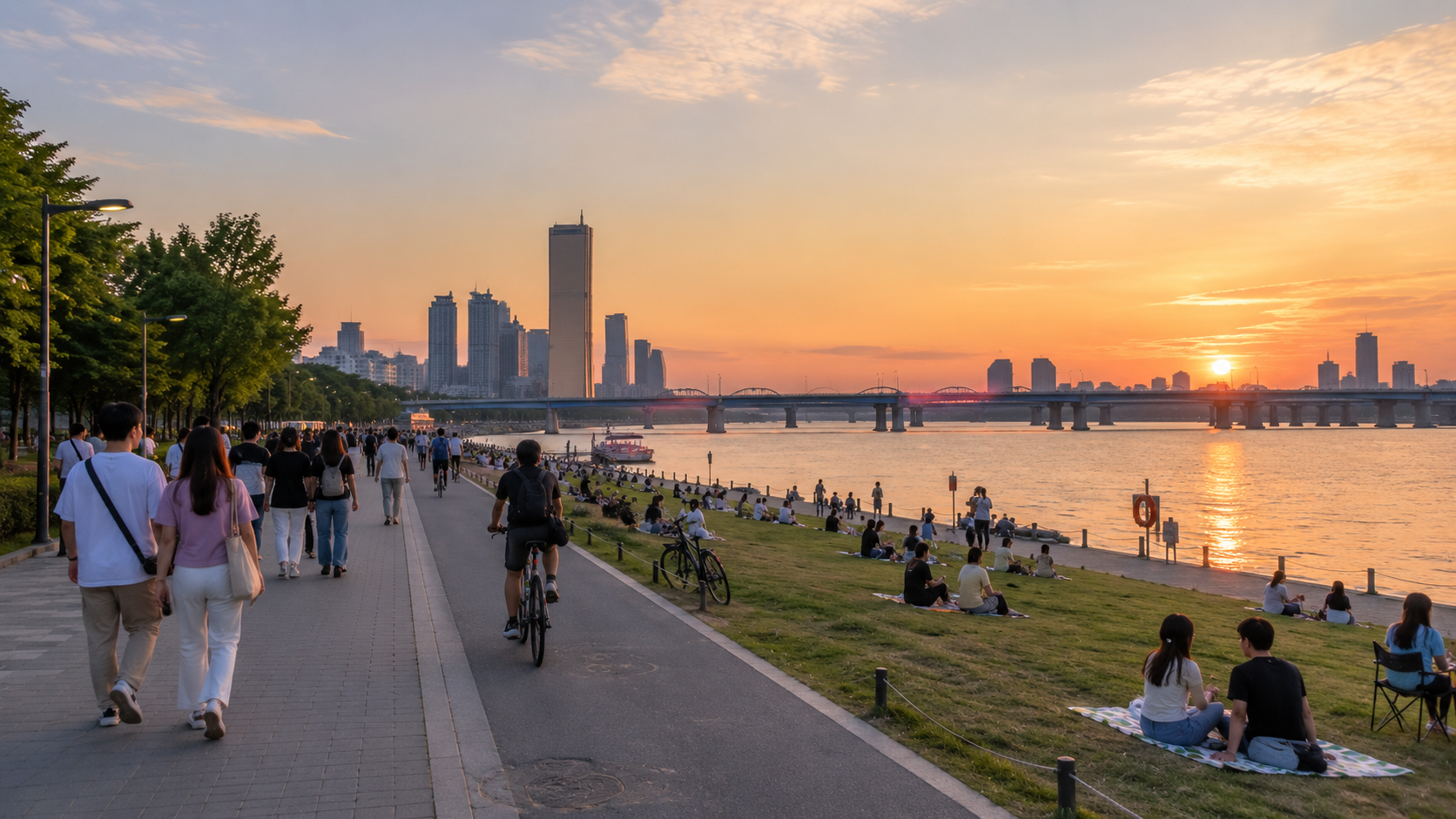
After sunset, explore stream paths, illuminated palace areas when officially open, neighborhood dining streets, or the Han River parks. Humidity can remain high at night, so evening is more comfortable rather than necessarily cool.
Do not build a tightly timed riverside evening around seasonal fountains, pools, or performances until you have confirmed that day's operation. Heavy rain, water conditions, or maintenance can cause short-notice cancellations.
Where to go in summer
Historic Seoul: Gyeongbokgung, Bukchon, and Insadong
Visit Gyeongbokgung when it opens, then continue toward Bukchon Hanok Village and Insadong. This area has limited shade in several sections, so avoid doing the full route in the afternoon.
Bukchon is a residential neighborhood, not an open-air theme park. Follow posted visitor restrictions, keep voices low, and do not enter private alleys or doorways. Seoul's official Bukchon visitor information explains the area's residential character and local rules.
For an indoor break, use the National Museum of Korean Contemporary History, craft galleries in Insadong, or nearby cafés. A hanbok rental can add layers of synthetic fabric, so choose a light outfit and confirm the shop's return time before leaving.
Central Seoul: Cheonggyecheon and city museums
Cheonggyecheon Stream is convenient for an evening walk, but lower paths may be closed during or after heavy rain. Barriers and closure notices are safety measures; do not go around them even if the water appears manageable.
Pair the stream with Seoul Museum of History, Gwanghwamun, or the indoor sections of major shopping complexes around Jongno and Euljiro.
The Han River
The Hangang parks provide cycling paths, convenience stores, picnic areas, and broad river views. Yeouido, Banpo, Ttukseom, and Mangwon are among the most accessible parks, but each has a different layout and nearest subway station.
The city has announced the 2026 Hangang Festival for July 25 to August 16, 2026. Program details and weather-related changes should be checked through the official Hangang Festival website. These dates were verified on June 9, 2026.
Seasonal swimming pools and water-play areas require separate operating announcements. Do not assume that every facility opens on the same date or accepts the same payment method.
Namsan and Seoul's viewpoints
For Namsan, use the bus or cable car for part of the journey if heat makes a full uphill walk impractical. Visibility is often more important than sunset timing: clouds, haze, and rain can obscure the view.
Other observation options include Lotte World Tower's Seoul Sky and indoor viewpoints in high-rise buildings. Confirm admission prices, reservation requirements, and last entry directly with the operator before visiting.
Short hikes
Bukhansan and other Seoul mountains should not be treated as casual heatwave activities. Start early, carry more water than you would for an urban walk, and avoid exposed ridges during thunderstorms.
The Korea National Park Service posts trail notices and closures through its official English website. After heavy rain, conditions may remain slippery even when the sky has cleared.
A flexible three-day summer itinerary
Day 1: Palace district and central Seoul
- Enter Gyeongbokgung near opening time.
- Walk through the public sections of Bukchon while respecting residential restrictions.
- Have lunch in Insadong.
- Spend the hottest hours in a museum or gallery.
- Walk around Cheonggyecheon after sunset if the path is open.
Rain alternative: Replace Bukchon with museum visits and use underground connections around Jonggak, Jongno 3-ga, and Euljiro.
Day 2: Museum and Han River evening
- Visit the National Museum of Korea in the morning.
- Have lunch around Ichon or move to Yongsan.
- Use an indoor shopping or exhibition space during the afternoon.
- Visit a Hangang park in the early evening.
- Check the last subway time before settling into a long picnic.
Heavy-rain alternative: Stay in Yongsan or move to COEX, where several activities can be combined indoors.
Day 3: Neighborhoods and a viewpoint
- Explore Seongsu, Mangwon, or another neighborhood in the morning.
- Take a long indoor lunch and café break.
- Visit a covered market, gallery, or shopping complex.
- Choose Namsan or another viewpoint only if visibility is reasonable.
Heatwave alternative: Reduce neighborhood walking and select one museum plus one indoor observation deck.
Getting around Seoul in summer
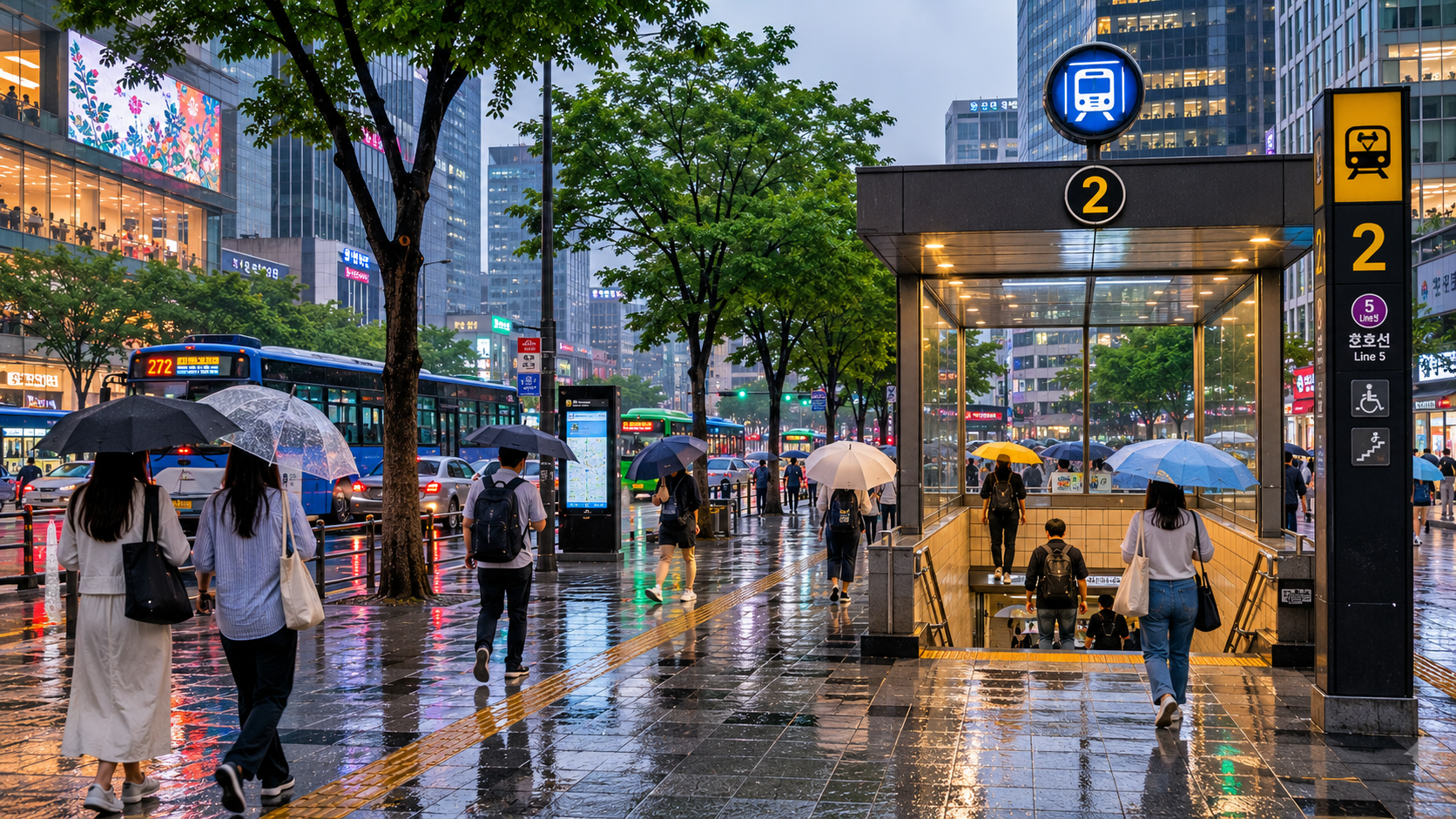
Seoul's subway system is usually the easiest way to avoid road congestion and limit time in the heat. Stations and trains are air-conditioned, although platforms, transfer corridors, and station exits can still be warm. Large interchanges may require substantial walking.
As verified on June 9, 2026, the adult base subway fare paid with a transport card is KRW 1,550, with additional charges based on distance. Seoul's official public-transport fare page provides the current fare structure and transfer information.
For buses, tap your transport card when boarding and again when leaving. The exit tap is needed to calculate distance and preserve eligible transfers.
Is the Climate Card useful for visitors?
The Climate Card is Seoul's unlimited-use transit pass for eligible services. Short-term versions cost KRW 5,000 for one day, KRW 8,000 for two days, KRW 10,000 for three days, KRW 15,000 for five days, and KRW 20,000 for seven days, excluding the cost of a physical card where required. These prices were verified on June 9, 2026 through the Seoul Metropolitan Government's Climate Card guidance.
A short-term pass starts on the day it is charged rather than on a future selected date. Coverage is not identical to the entire metropolitan transport network, so confirm that your planned lines and stations are included. A regular rechargeable transport card may be simpler for occasional trips or travel outside the Climate Card service area.
Visitors using large luggage should allow extra time at stations. Not every convenient exit has an elevator, and an elevator may be located across a road or at the opposite end of the platform. Search for elevator symbols on station maps rather than assuming the nearest numbered exit is accessible.
Heavy rain and heat safety
During heavy rain
- Do not enter closed stream paths, riverside underpasses, or blocked hiking trails.
- Avoid basement-level spaces if flooding is developing nearby.
- Do not attempt to cross fast-moving water, even when the distance looks short.
- Allow extra travel time because buses may be delayed and station entrances can become crowded.
- Keep your phone charged and monitor official weather alerts.
During a heatwave
- Carry water and drink regularly rather than waiting until you feel thirsty.
- Use sunscreen, a hat, and light, breathable clothing.
- Take an air-conditioned break before symptoms become serious.
- Avoid steep hikes and long exposed walks during the hottest part of the day.
- Seek medical help for confusion, fainting, or other severe heat-related symptoms.
Foreign residents and visitors can use the government-backed Emergency Ready App information service for multilingual disaster and safety information. For immediate emergencies in Korea, call 119 for fire or ambulance assistance and 112 for police.
What to pack
Bring items that work for both heat and sudden rain:
- Lightweight, quick-drying tops and trousers or shorts
- Comfortable walking shoes with reasonable wet-surface grip
- Spare socks
- Compact umbrella
- Light waterproof outer layer
- Hat and sunscreen
- Refillable water bottle
- Small towel or handkerchief
- Waterproof pouch for a passport, power bank, and electronics
- Thin extra layer for heavily air-conditioned interiors
A disposable rain poncho is useful for festivals or exposed riverside areas, but it can become uncomfortable in high humidity. An umbrella is more practical for ordinary city walking unless wind is strong.
Common summer mistakes
Planning too much outdoor sightseeing
A palace, traditional neighborhood, market, mountain, and riverside park may look manageable on a map. In July or August, that schedule can become exhausting. Choose one main outdoor area for the morning and another optional activity for the evening.
Trusting a single daily weather icon
A rain symbol does not tell you whether rain is expected for 20 minutes or most of the day. Check hourly precipitation, weather warnings, and radar shortly before leaving.
Wearing shoes that become slippery when wet
Smooth fashion soles can perform poorly on wet stone, metal station surfaces, and steep neighborhood streets. Prioritize grip and quick drying.
Ignoring the last train
Subway closing times vary by line, station, direction, and day. Route-planning apps may show a last departure estimate, but check again on the day, especially after a concert, festival, or riverside event.
Assuming every indoor space opens early
Cafés, shops, and department stores may open later than palaces or commuter facilities. Have a confirmed morning destination rather than relying on an unspecified indoor backup.
What to check before you go
Complete this checklist on the evening before each sightseeing day:
- Check the hourly Seoul forecast and active warnings through the Korea Meteorological Administration.
- Check AirKorea if you are sensitive to air pollution.
- Confirm opening hours, closure days, last admission, and reservation requirements.
- Check official notices for river facilities, festivals, hiking trails, and outdoor performances.
- Save an indoor alternative in the same part of Seoul.
- Confirm the final train or bus for your return route.
- Charge your phone and power bank.
- Carry water, sun protection, and rain protection even if the morning is clear.
FAQ
Is Seoul worth visiting in July or August?
Yes, provided you accept a slower schedule. Museums, restaurants, shopping districts, public transport, and evening activities make the city workable in hot or rainy weather. Travelers who want extensive hiking and all-day neighborhood walks may find spring or autumn more comfortable.
Does it rain every day during jangma?
Not necessarily. The rainy period varies each year and can include both dry intervals and episodes of intense rainfall. Use short-range official forecasts instead of planning around assumed rainy-season dates.
Do I need to reserve attractions in advance?
Many public museums and outdoor areas can be visited without advance booking, but ticketed observation decks, performances, popular exhibitions, and limited-capacity programs may require reservations. Confirm this with the venue rather than relying on older travel posts.
Can I rely on convenience stores for summer supplies?
Convenience stores are useful for drinks, umbrellas, towels, and basic toiletries. Product availability varies, so bring essential medication, preferred sunscreen, and specialist equipment with you.
Sources
- Korea Meteorological Administration weather portal
- AirKorea national air-quality service
- Seoul public-transport modes and fares
- Seoul Climate Card guidance
- Gyeongbokgung Palace visitor information
- Korea National Park Service
- Official Hangang Festival website
Before setting out, open the hourly weather forecast and confirm your first attraction's operating notice. In Seoul's summer conditions, those two checks are more useful than trying to finalize every hour of the trip weeks in advance.