Seoul is cold, dry, and often sunny in winter. December to February suits travelers who are prepared for sub-zero temperatures, early sunsets, and occasional snow or icy sidewalks. The city remains fully active, with heated public transport, extensive indoor attractions, seasonal light displays, skating, sledding, and warming Korean food.
This guide was verified on June 9, 2026. Dates and prices for the coming 2026-2027 winter season had not yet been announced for several seasonal events, so previous-season details below are clearly identified as examples rather than confirmed future schedules.
At a glance
| Question | Practical answer |
|---|---|
| When is winter? | Usually December through February, with cold conditions possible from late November into March |
| Coldest period | Generally January, although individual cold waves vary |
| Does it snow? | Yes, but continuous deep snow is not typical; snow may melt and refreeze quickly |
| What should I wear? | A wind-resistant insulated coat, thermal layers, gloves, a warm hat, and shoes with good grip |
| Is Seoul easy to visit in winter? | Yes. Subways, museums, malls, cafes, and most major attractions operate normally |
| Main difficulties | Wind chill, dry indoor heating, icy slopes, early darkness, and occasional poor air quality |
| Good trip length | Four to seven days for central Seoul, neighborhoods, museums, and one flexible weather day |
What Seoul winter weather is really like
The Official Seoul Tourism Guide defines winter as December through February and notes that cold northwesterly winds can bring temperatures down to around -15°C during severe conditions. That does not mean every day is exceptionally cold. A winter visit may include crisp afternoons just above freezing, followed by a much colder and windier day.
The important number is often the apparent temperature rather than the forecast high. Wide avenues, riverside parks, palace courtyards, and observation points can feel considerably colder when exposed to wind.
Typical conditions by month
December: Early December can be manageable with proper layers, while late December is usually more consistently cold. Seasonal illuminations and year-end events make this one of the livelier winter periods.
January: Usually the safest choice for travelers seeking a distinctly cold winter atmosphere, but also the period most likely to require serious cold-weather clothing. Build indoor stops into each day.
February: Still winter, especially in the morning and at night. Conditions can begin to moderate later in the month, but snow, cold snaps, and icy surfaces remain possible.
Snowfall should be treated as a possibility rather than a guarantee. Seoul may receive picturesque snow, but visitors should not plan a trip around seeing a permanently white city. After snowfall, compacted snow can become slippery ice on shaded streets, palace paths, stairs, and hiking routes.
What to wear and pack
Dress in removable layers. Trains, department stores, restaurants, and cafes are usually well heated, so one extremely heavy outfit can become uncomfortable indoors.
Essential clothing
- A padded or insulated coat that blocks wind
- A thermal or moisture-wicking base layer
- A sweater, fleece, or light insulated middle layer
- Long trousers with thermal leggings for colder days
- Gloves that allow phone use
- A warm hat covering the ears
- Thick socks, preferably with a spare pair for wet days
- Water-resistant walking shoes or boots with textured soles
A scarf or neck warmer is particularly useful around the Hangang River, Gwanghwamun Square, palace grounds, and hilltop viewpoints. A compact umbrella can help during wet snow, but strong wind may make it impractical.
Korean convenience stores, pharmacies, and discount shops commonly sell disposable hand warmers known as hot packs. Product availability and prices vary, so treat these as a useful local purchase rather than a substitute for suitable clothing.
Indoor heating can make the air very dry. Lip balm, moisturizer, and a reusable water bottle are practical additions. Travelers who use contact lenses may also want to carry eye drops appropriate for their needs.
The best things to do in Seoul in winter
Walk through a royal palace
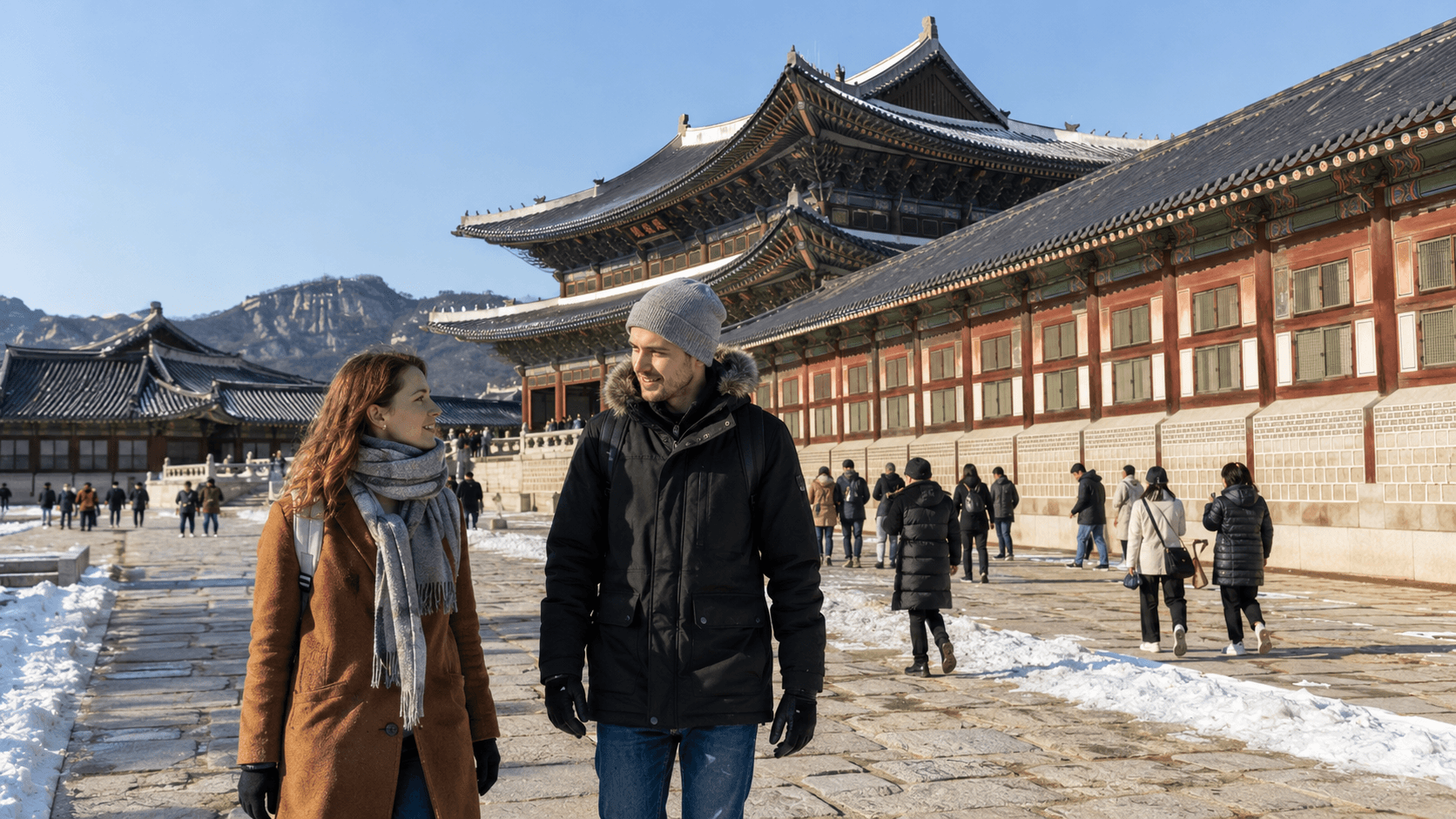
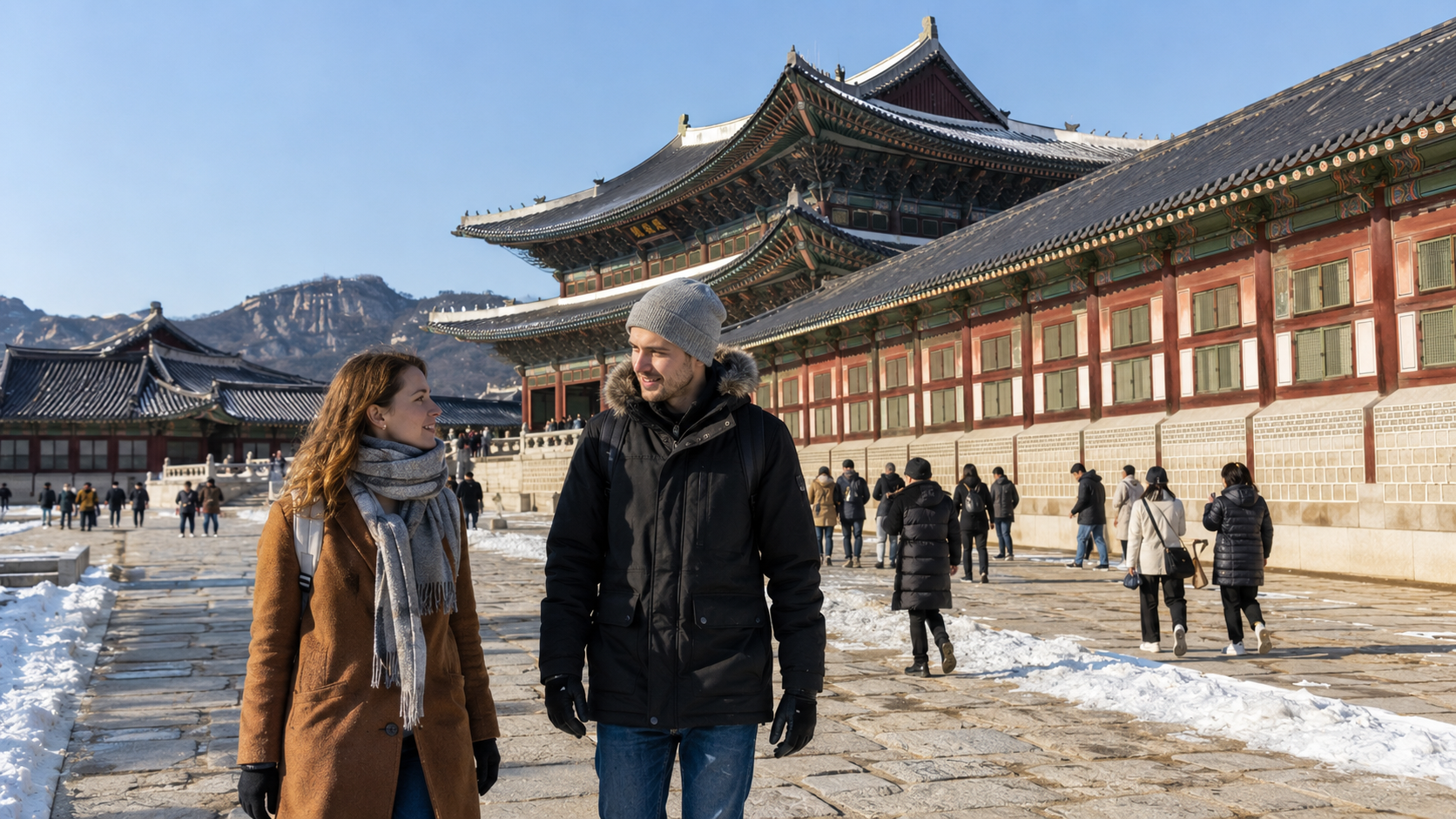
Gyeongbokgung, Changdeokgung, Deoksugung, and Changgyeonggung take on a quieter character in winter. Dark tiled roofs, bare trees, stone courtyards, and occasional snow make them good photography locations.
Visit near opening time for fewer people, but expect the coldest conditions of the day. Palace grounds provide limited protection from wind, so keep the visit shorter during a cold-wave warning. Operating hours, closure days, and admission policies differ by palace and can change seasonally; confirm them through the Korea Heritage Service royal palaces portal before visiting.
Deoksugung is especially convenient for a mixed indoor-outdoor day because it is beside Seoul City Hall and within walking distance of museums, cafes, Gwanghwamun, and Cheonggyecheon Stream.
Explore traditional neighborhoods carefully
Bukchon Hanok Village, Seochon, Ikseon-dong, and the streets around Anguk are attractive in winter, but their narrow lanes can include slopes and shaded ice. Bukchon is also a residential neighborhood: follow posted visitor hours and noise restrictions, and do not enter private courtyards for photographs.
For a less exposed route, combine a short neighborhood walk with the National Museum of Modern and Contemporary Art Seoul, craft museums, galleries, or cafes around Anguk.
Plan a museum day
Museums are not merely backup options. They provide useful historical and cultural context for the palaces and neighborhoods outside.
Strong choices include the National Museum of Korea, National Museum of Korean Contemporary History, National Folk Museum of Korea, Seoul Museum of History, and branches of the National Museum of Modern and Contemporary Art. Some national museums close on Seollal, the Lunar New Year itself, even when they open on other holiday dates. Check each institution's official calendar rather than relying on regular weekly hours.
See Seoul after dark
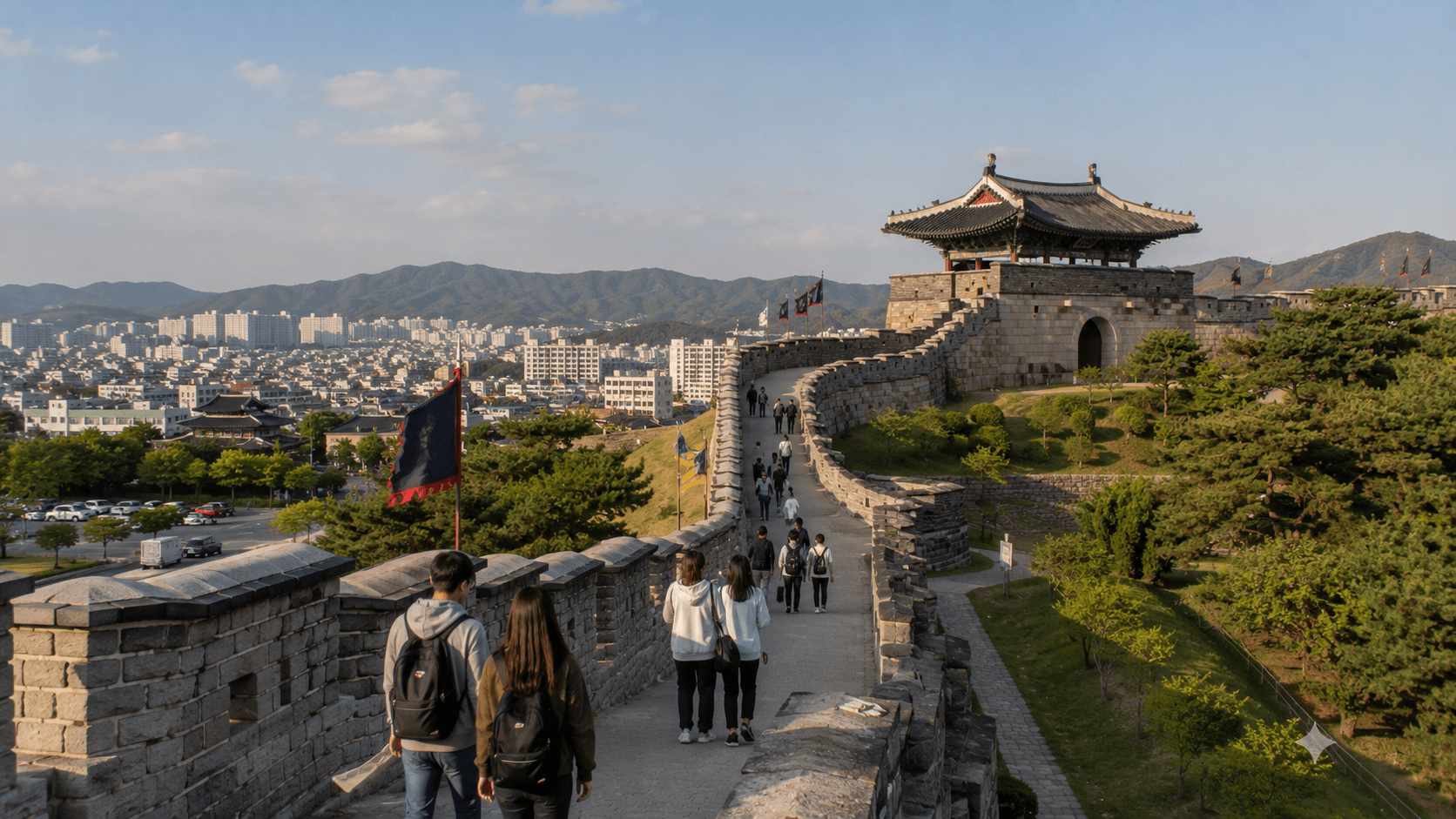
Winter sunsets leave plenty of time for evening views. N Seoul Tower, the city walls, elevated parks, and riverside viewpoints can be rewarding, but exposed locations become substantially colder after sunset.
For a more sheltered evening, use observation decks, covered markets, department stores, cinemas, performance halls, or large complexes such as Dongdaemun Design Plaza and COEX. Last admission may be earlier than the building's closing time, so verify the attraction's official booking page on the day.
Try winter food
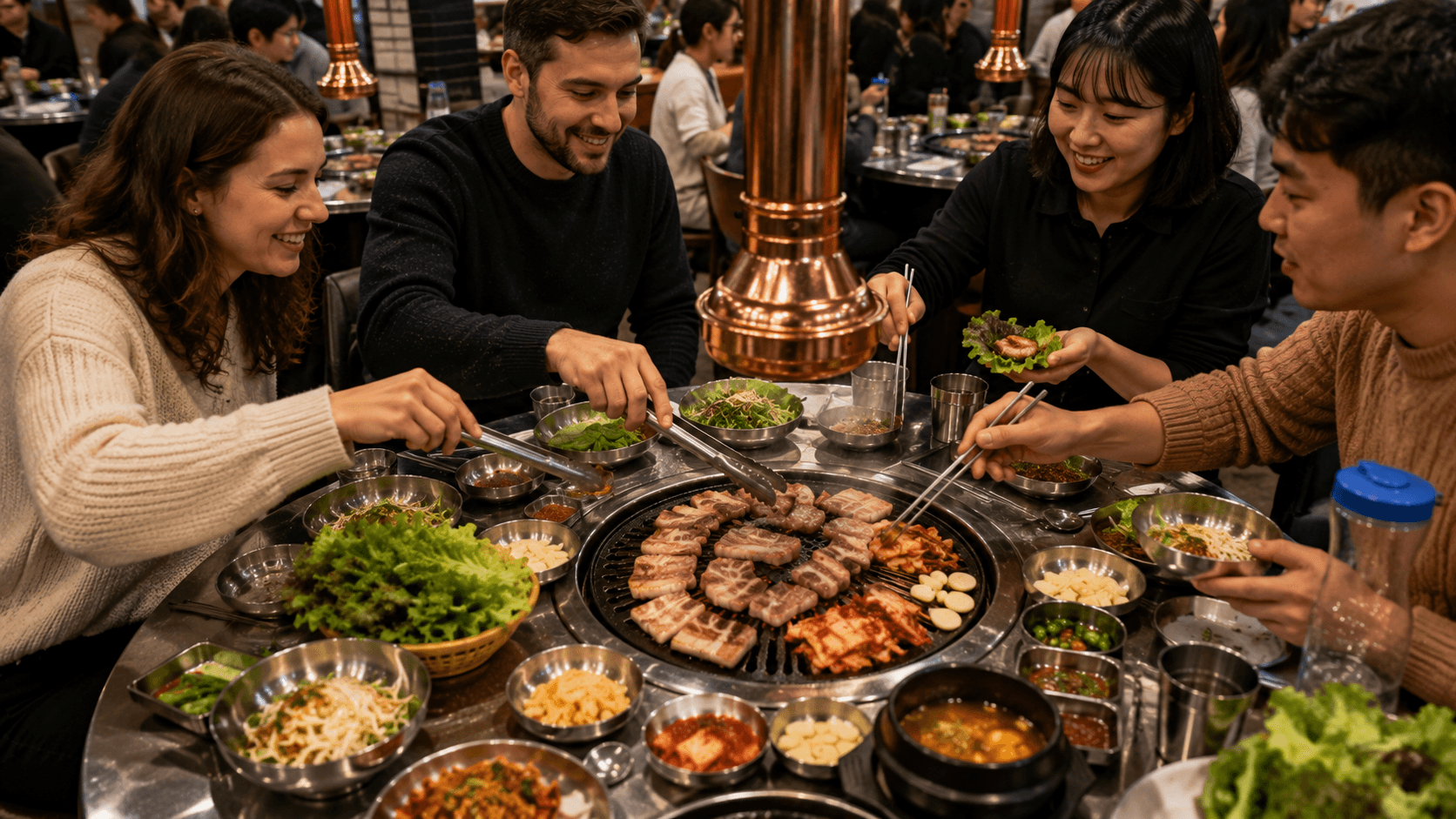
Cold weather is a good reason to seek out dishes designed to arrive hot:
- Gukbap (국밥): rice served with hot soup
- Seolleongtang (설렁탕): mild ox-bone soup, usually seasoned at the table
- Sundubu-jjigae (순두부찌개): bubbling soft-tofu stew
- Kalguksu (칼국수): knife-cut noodles in broth
- Mandu-guk (만둣국): dumpling soup, associated particularly with the New Year period
- Bungeoppang (붕어빵): fish-shaped pastry commonly filled with sweet red bean paste or custard
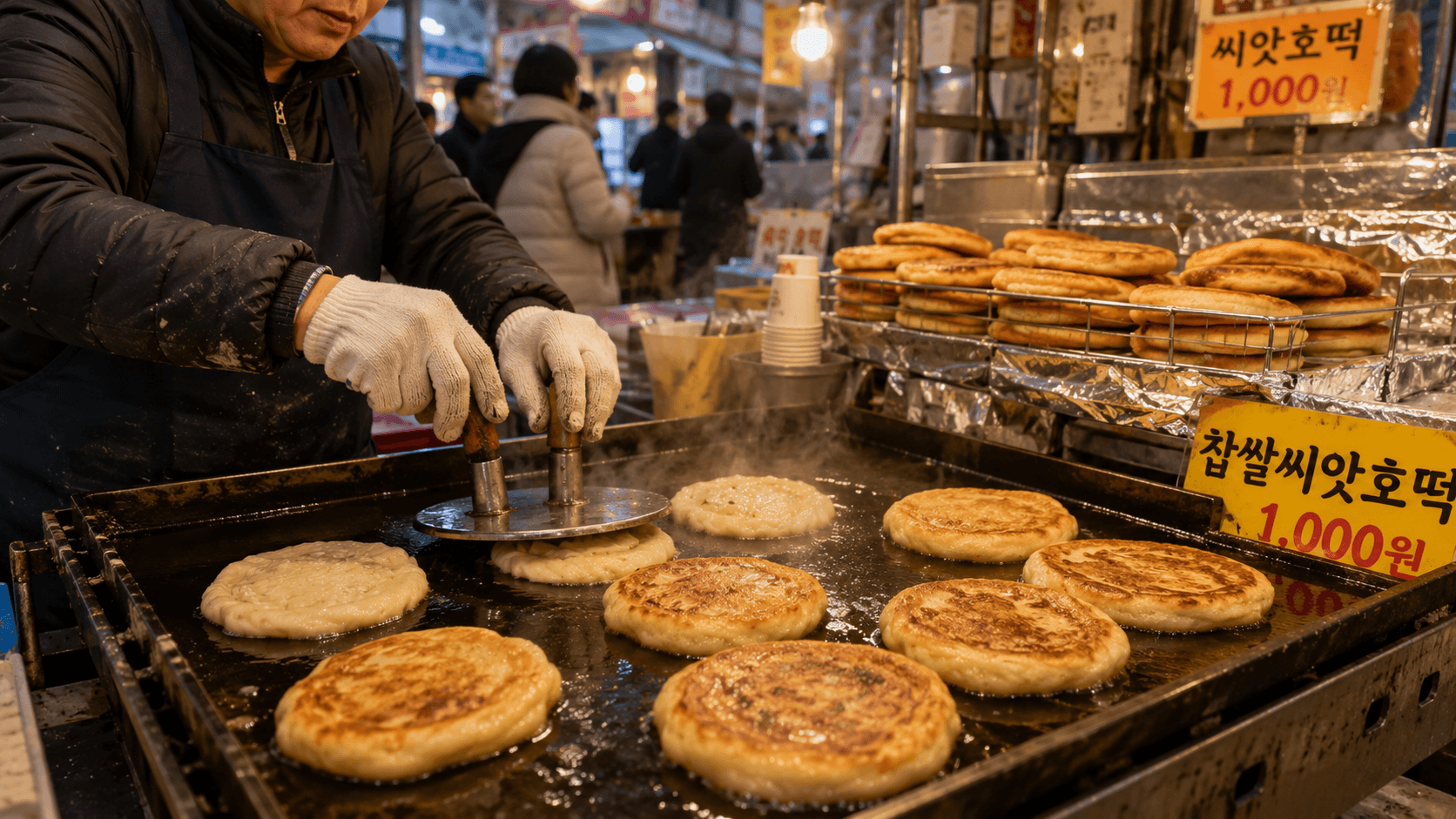
- Hotteok (호떡): griddled filled pancake, usually served very hot
- Eomuk (어묵): fish cake often sold with warm broth
Street-food opening times are inconsistent and weather-dependent. Traditional markets such as Gwangjang, Mangwon, and Namdaemun offer more concentrated choices, but individual stalls may close without notice or take holiday breaks.
Seasonal festivals, skating, and sledding
As of June 9, 2026, Seoul had not published complete dates and operating details for the 2026-2027 winter season. Do not assume that last winter's schedule will repeat exactly.
For reference, the 2025 Seoul Winter Festa ran from December 12, 2025, to January 4, 2026, linking light displays and events at locations including Gwanghwamun Square, Cheonggyecheon Stream, Seoul Plaza, Dongdaemun Design Plaza, and Bosingak. The 2026-2027 program should be checked on the Seoul Metropolitan Government or Visit Seoul websites closer to December 2026.
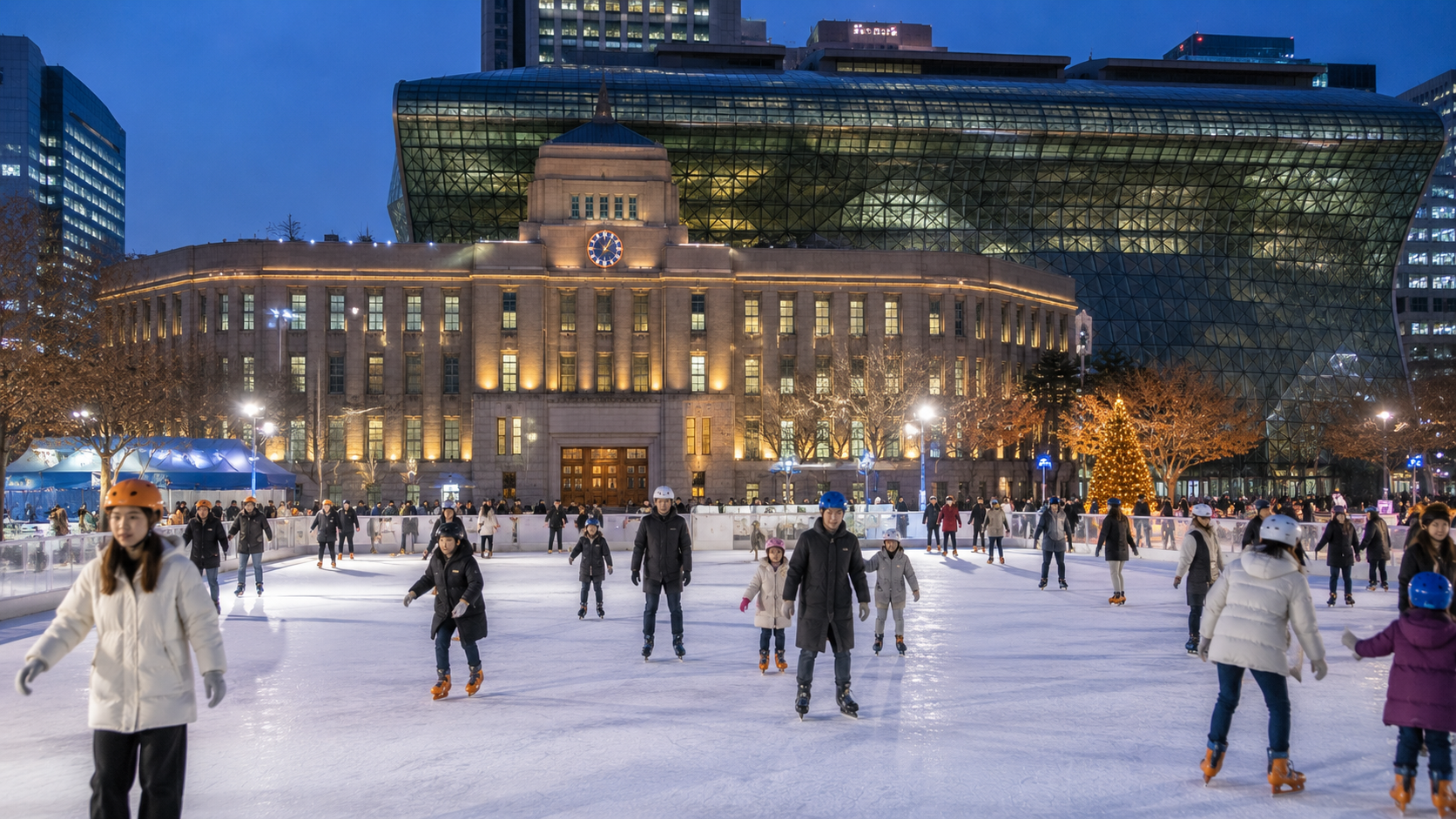
The Seoul Plaza Ice Skating Rink operated from December 19, 2025, to February 8, 2026. Admission was KRW 1,000 per one-hour session and included skate and helmet rental, according to the Seoul Metropolitan Government's previous-season notice. This price and schedule are not yet confirmed for winter 2026-2027. Operations can also be adjusted because of snow, temperature, or fine-dust conditions.
Hangang parks have previously converted outdoor swimming-pool areas into seasonal sledding grounds. Locations, dates, charges, age restrictions, and closures vary each year. Check the city's Hangang winter activities information after the new season is announced.
Getting around in cold weather
The subway is usually the simplest option because stations and trains provide regular breaks from the cold. Entrances can be farther apart than they appear on a map, and large interchange stations may involve long underground walks.
As verified on June 9, 2026, the adult subway base fare is KRW 1,550 with a transit card and KRW 1,650 for a single-journey ticket. Distance supplements apply. Current fares and transfer rules are listed on the Seoul Metropolitan Government subway page.
Tap a transit card when entering and leaving the subway. On buses, tap both when boarding and when getting off to receive eligible transfer discounts. Waiting for a bus can be uncomfortable during a cold wave, so compare the route with the nearest subway option before committing.
Is the Climate Card useful?
The Climate Card offers unlimited travel within its defined service area, but it does not cover every regional line or airport journey. As verified on June 9, 2026, short-term passes cost:
| Validity | Price |
|---|---|
| 1 day | KRW 5,000 |
| 2 days | KRW 8,000 |
| 3 days | KRW 10,000 |
| 5 days | KRW 15,000 |
| 7 days | KRW 20,000 |
A physical card costs an additional KRW 3,000. From March 17, 2026, international cards and supported mobile payments became available at designated machines for short-term Climate Card products and single-journey tickets, with an average international-card service fee of approximately 3.7%. Review the coverage exclusions and latest payment details on the official Climate Card page before buying.
A standard rechargeable transit card may be more economical if you walk extensively or take only a few rides each day.
A practical three-day winter plan
Day 1: Palaces and central Seoul
Start at Gyeongbokgung or Changdeokgung, then warm up in a nearby museum. Continue through Anguk or Insadong for lunch and tea. After sunset, walk through Gwanghwamun and Cheonggyecheon if weather and seasonal displays make the route worthwhile.
Day 2: Modern Seoul
Spend the morning at the National Museum of Korea or another major indoor attraction. Continue to COEX, Dongdaemun Design Plaza, or Seongsu for shopping, exhibitions, and cafes. Choose an indoor observation point for the evening if wind conditions are severe.
Day 3: Neighborhoods and winter activities
Explore Mangwon, Yeonnam, or Seochon in the morning. Reserve the afternoon for skating, sledding, or a riverside walk if seasonal facilities are operating. Keep a museum, jjimjilbang-style bathhouse, cinema, or shopping complex as a weather backup.
Do not schedule every outdoor landmark on consecutive days. A flexible itinerary lets you move palace walks and viewpoints to the clearest, calmest forecast.
Cold waves, snow, and air quality
Seoul defines a cold-wave advisory partly as a forecast morning low below -12°C for at least two days, and a warning partly as a low below -15°C for at least two days. The city's cold-wave safety guidance recommends protecting exposed skin and watching for numbness, pale skin, confusion, slurred speech, or extreme fatigue.
After snow, wear shoes with grip and keep your hands out of your pockets while walking so you can balance. Allow extra travel time on steep streets and outdoor stairs. Subway entrances and polished building floors may also become wet and slippery.
Check particulate pollution as well as temperature. Korea's official AirKorea service provides real-time measurements and forecasts for pollutants including PM2.5 and PM10. On a poor-air day, reduce strenuous outdoor activity and follow official health guidance appropriate to your circumstances.
Call 112 for police or 119 for fire and ambulance emergencies. At the time of verification, the Korea Tourism Organization's 1330 online and telephone travel-help service remained marked as temporarily unavailable due to maintenance beginning January 20, 2026. Check the official service notice rather than assuming it has resumed.
Seollal and public-holiday planning
Seollal, the Korean Lunar New Year, falls in winter and affects domestic transport, museum schedules, restaurants, and independent businesses. Some attractions hold special programs, while others close on Seollal Day. Intercity trains can sell out quickly because residents travel to visit family.
Central Seoul does not shut down completely, but travelers should confirm every essential booking individually. Avoid relying on outdated lists of holiday openings because operating decisions change each year.
What to check before you go
- Review the Korea Meteorological Administration forecast shortly before departure and again each morning.
- Confirm seasonal event dates; 2026-2027 schedules were not yet fully published on June 9, 2026.
- Check each palace or museum's winter hours, closure day, and last admission.
- Compare a standard transit card with a short-term Climate Card based on your actual routes.
- Check whether your Climate Card route remains inside the eligible service area.
- Reserve popular observation decks, performances, and special exhibitions when required.
- Check AirKorea before long outdoor walks or hiking.
- Leave one half-day flexible for snow, severe cold, or poor air quality.
- Confirm Seollal closures and transport reservations if traveling around the Lunar New Year holiday.
- Carry a charged phone and portable battery; batteries can drain faster in very cold weather.
Your next step is to build a flexible daily plan with one outdoor anchor and one nearby indoor alternative. Recheck the official Seoul events calendar in November or December 2026 if your trip is during the 2026-2027 winter season.
Sources
- Official Seoul Tourism Guide: Seoul's seasons and winter climate
- Seoul Metropolitan Government: Subway fares and transfer rules
- Seoul Metropolitan Government: Climate Card prices and coverage
- Seoul Metropolitan Government: International-card transit payments from March 2026
- Seoul Metropolitan Government: Cold-wave safety information
- Seoul Metropolitan Government: 2025 Seoul Winter Festa reference schedule
- Korea Heritage Service: Royal palaces and Jongmyo Shrine
- AirKorea: Official air-quality information
- VISITKOREA: 1330 service-status notice