Seoul rewards travelers who plan meals by neighborhood rather than chasing a long list of famous restaurants across the city. This three-day itinerary moves from the historic center to western Seoul and then south of the Han River, combining traditional dishes with markets, cafés and evening dining streets.
Operating hours, transport fares and market information in this guide were verified on June 9, 2026. Individual stalls and restaurants can close unexpectedly, take irregular breaks or stop accepting orders before their published closing time, so check the venue on Naver Map or Kakao Map on the day of your visit.
Quick answer
| Day | Area | Main food experiences |
|---|---|---|
| 1 | Jongno and Euljiro | Beef-bone soup, Gwangjang Market snacks, Korean drinking food |
| 2 | Mangwon, Yeonnam and Mapo | Neighborhood market, café break, Korean barbecue |
| 3 | City Hall and Noryangjin | Cold noodles or dumplings, seafood market dinner |
Allow approximately KRW 60,000-120,000 per person per day for food. This is a planning estimate, not a fixed price: a market-snack lunch may cost far less, while premium beef, crab, tasting menus and alcohol can raise the total substantially.
Before starting: how to plan a food-focused day
Korean restaurants often specialize in one dish or a small family of related dishes. A restaurant with only three or four main choices is not necessarily limited; specialization is frequently the point.
Meal periods can also be concentrated. Office districts become busy around 12:00, while popular dinner restaurants may develop queues from approximately 18:00. Going 30-45 minutes earlier usually gives you more time to understand the menu and order without holding up a line.
For transportation, the adult subway base fare paid with a transport card is KRW 1,550, according to the Seoul Metropolitan Government transport guide. A single-journey ticket costs KRW 1,650, plus a refundable KRW 500 deposit. These fares were verified on June 9, 2026.
A reloadable Tmoney card is convenient for this itinerary. Tap when entering and leaving the subway, and tap both when boarding and leaving a bus. Short-term visitors making numerous trips can also compare the regular fares with the city’s Climate Card short-term passes. As verified on June 9, 2026, passes cost KRW 5,000 for one day, KRW 8,000 for two days and KRW 10,000 for three days; the physical card is sold separately for KRW 3,000.
Day 1: traditional Seoul flavors in Jongno and Euljiro
Breakfast: begin with a Korean soup
Start near Jongno or Insadong with seolleongtang (설렁탕), a mild soup made by simmering beef bones, or dwaeji-gukbap (돼지국밥), pork and rice soup. These dishes provide a useful introduction to Korean table customs because seasoning is often left to the diner.
Taste the broth before adding anything. Salt, chopped spring onion and pepper may be available on the table. Rice can be eaten separately or added to the soup. Kimchi and kkakdugi (깍두기), cubed radish kimchi, are shared side dishes, but use the serving utensils if they are provided.
A soup breakfast commonly includes meat, and even apparently vegetable-based soups may use meat, anchovy or shellfish stock. Travelers with dietary restrictions should not rely on the English name alone.
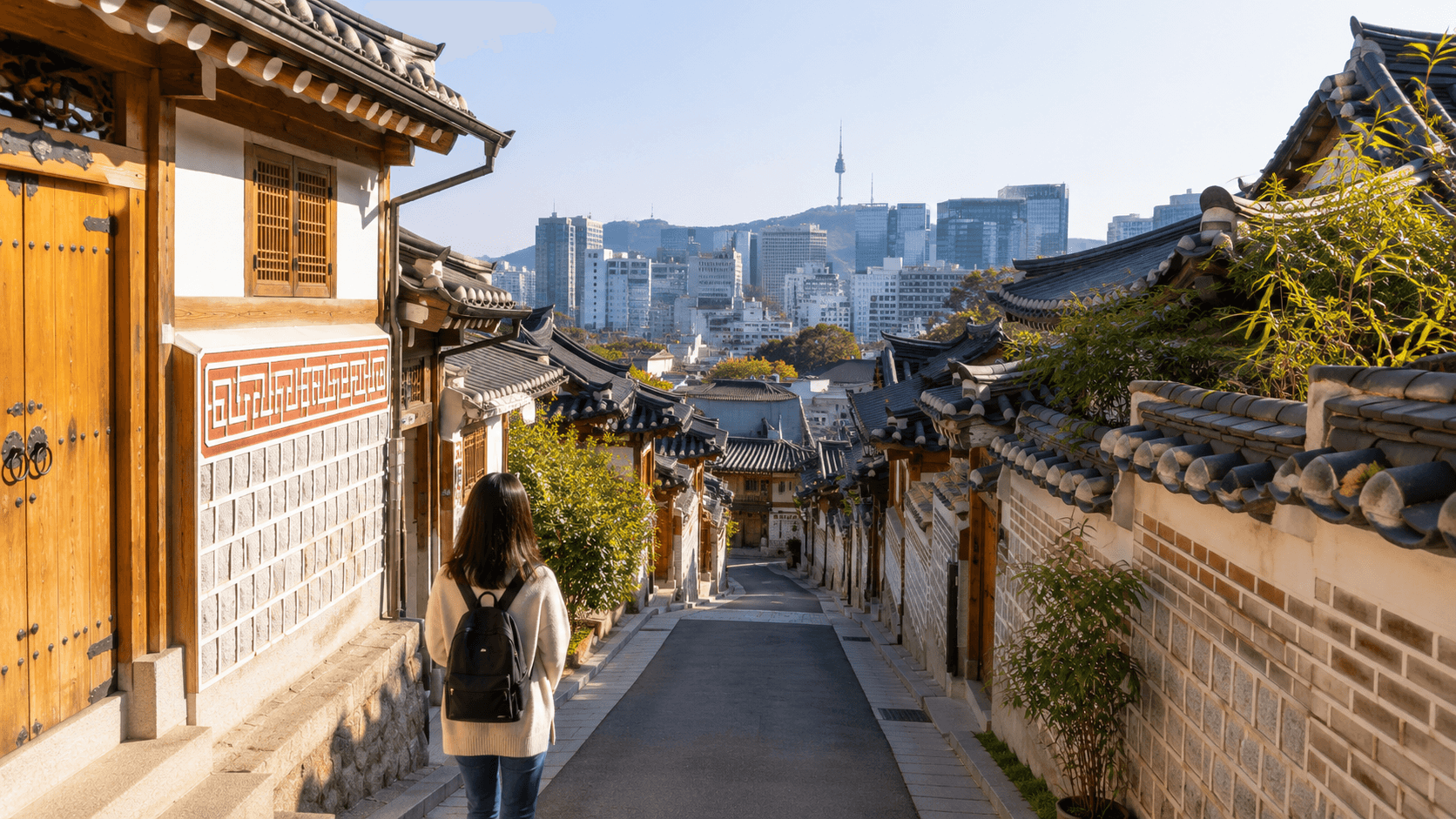
Late morning: walk through Insadong and Ikseon-dong
After breakfast, walk through Insadong and the smaller lanes of Ikseon-dong. This is a good time for tea or a modest dessert rather than a second full meal. Look for yakgwa (약과), a fried honey-and-ginger cookie, injeolmi (인절미), rice cake coated with soybean powder, or traditional teas made with jujube, citron or omija berries.
Ikseon-dong cafés can be busiest in the afternoon and on weekends. Treat a visually popular café as an optional stop rather than a fixed appointment, especially if there is a long queue.
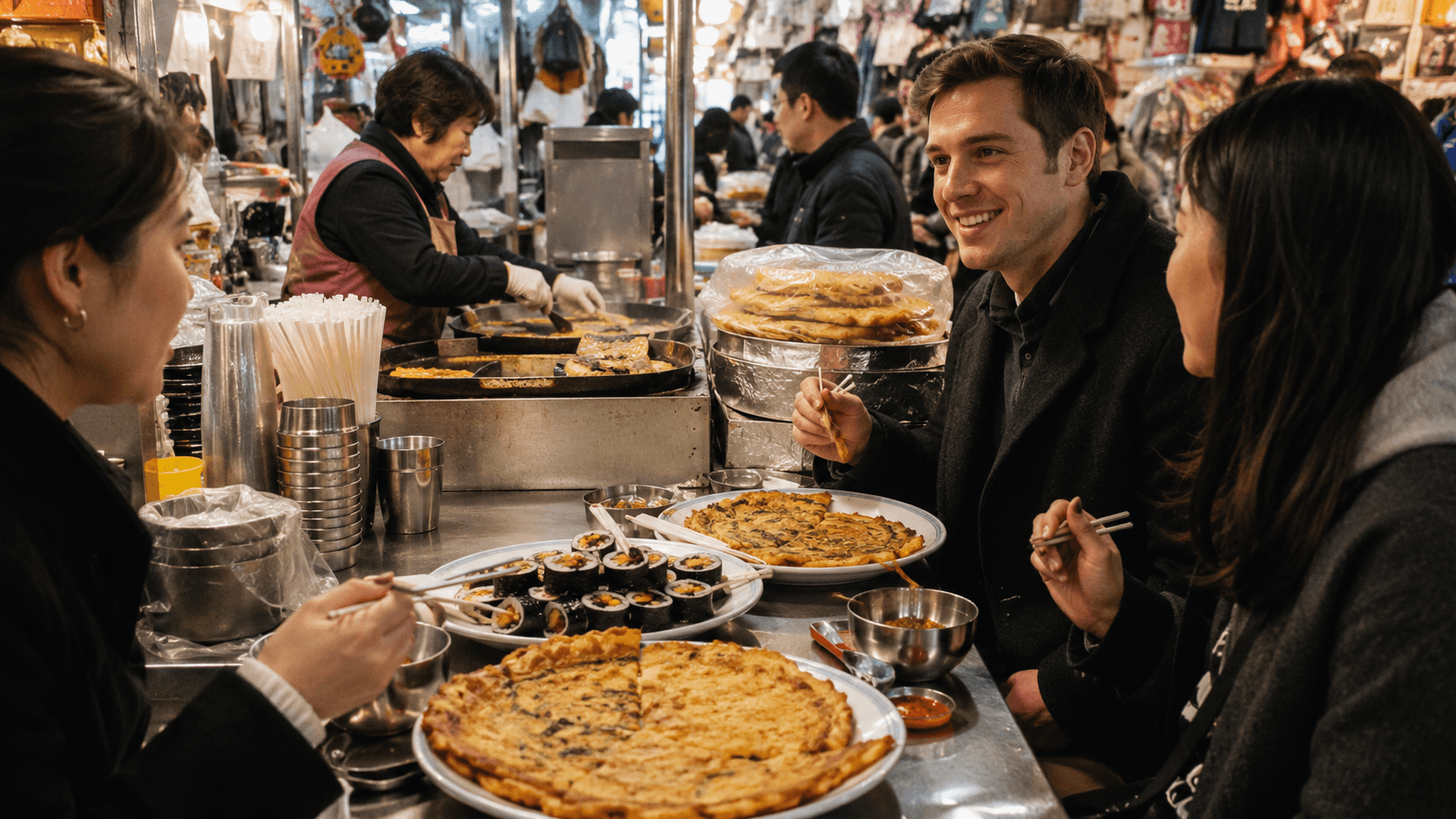
Lunch: sample selectively at Gwangjang Market
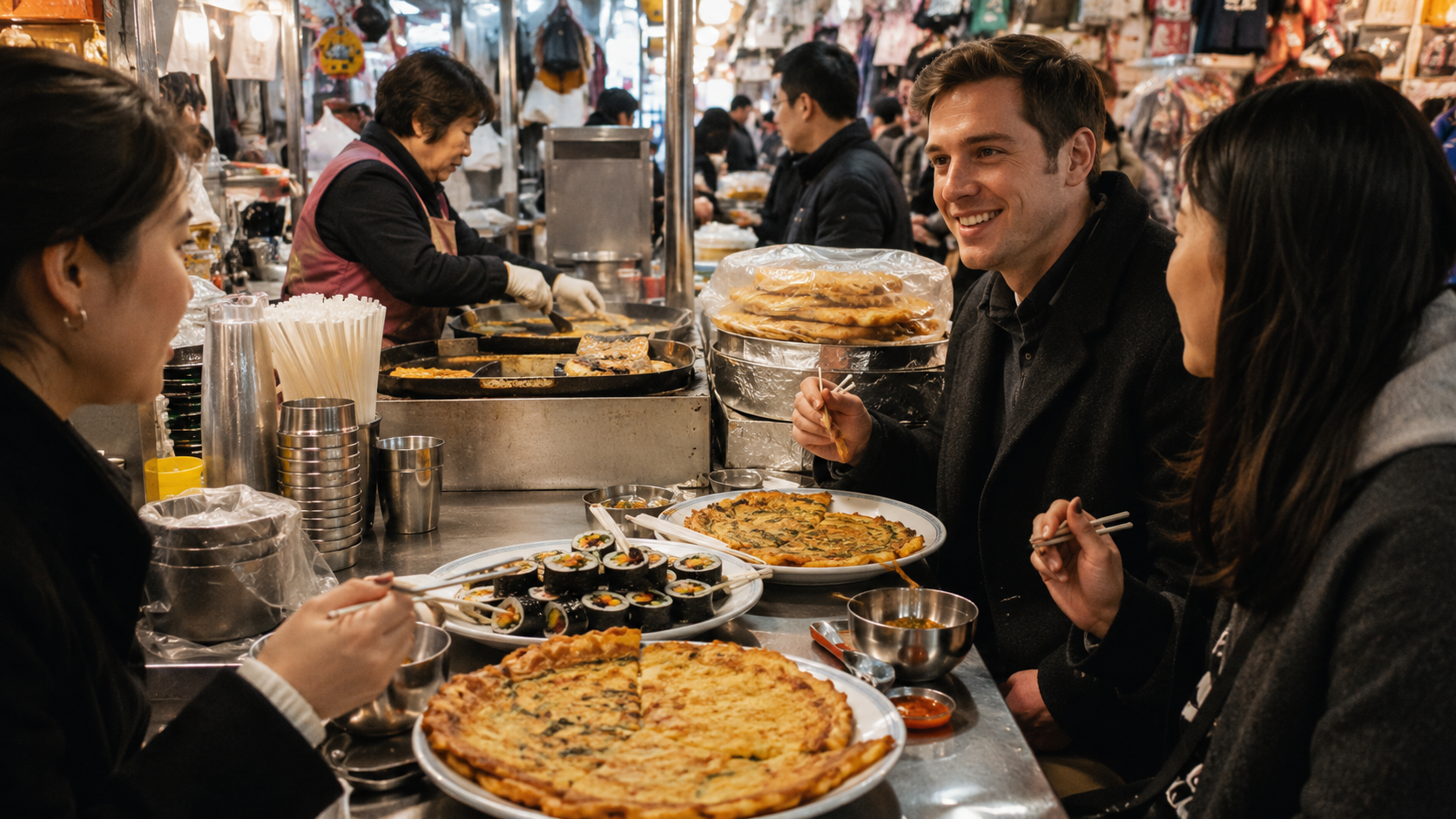
Continue east to Gwangjang Market (광장시장), reached most directly from Jongno 5-ga Station on Line 1. The market’s best-known foods include:
- Bindaetteok (빈대떡): crisp mung-bean pancake
- Mayak gimbap (마약김밥): small seaweed rice rolls served with mustard sauce
- Yukhoe (육회): seasoned raw beef
- Mandu (만두): steamed or boiled dumplings
- Tteokbokki (떡볶이): rice cakes in a sweet-spicy red sauce
- Sundae (순대): Korean blood sausage, commonly made with glass noodles and pork ingredients
Do not order everything at the first stall. One pancake can be filling, and portions are easier to manage when two people share. A practical sequence is one fried item, one rice or noodle dish and then a dessert or drink.
The official VISITKOREA listing for Gwangjang Market gives general market hours of 09:00-18:00 and food-street hours of 09:00-23:00. The regular market closes on Sundays, but the food street operates year-round. These hours were verified on June 9, 2026; individual stalls keep their own schedules.
Raw beef and raw seafood carry food-safety risks. Pregnant travelers, young children, older adults and people with weakened immune systems should seek professional medical guidance before consuming raw animal products.
Afternoon reset: Cheonggyecheon
Leave the market before you become uncomfortably full and walk along Cheonggyecheon Stream. A deliberate gap between lunch and dinner is important on a food itinerary. It also prevents every café stop from becoming another heavy meal.
Dinner: choose one specialty in Euljiro
Euljiro works well for dinner because its lanes contain long-established restaurants, grills and small bars. Select one main theme:
- Korean barbecue: pork belly, pork neck or marinated beef
- Dak-hanmari (닭한마리): a whole chicken simmered at the table with potatoes and rice cakes
- Bossam (보쌈): sliced boiled pork served with cabbage wraps and condiments
- Naengmyeon (냉면): cold buckwheat noodles, useful in hot weather
At a barbecue restaurant, check whether the menu lists a minimum first order, often expressed as two portions. Staff may cook the meat for you; if they take control of the grill, let them manage the timing. Use clean utensils for cooked meat rather than the tongs that touched it raw.
For a later drink, Euljiro Nogari Alley is associated with nogari (노가리), dried young pollack served with beer. The official Seoul tourism guide to Nogari Alley places it near Euljiro 3-ga Station, Exit 3. Evening tables can fill quickly. Alcohol is optional, and dried fish can be salty, so order water as well.
Day 2: Mangwon Market, cafés and Mapo barbecue
Brunch: graze through Mangwon Market
Take Line 6 to Mangwon Station and walk from Exit 2 to Mangwon Market (망원시장). Unlike a market visited mainly as an attraction, Mangwon still functions as a neighborhood shopping street with produce, prepared side dishes and everyday groceries.
Useful foods for a shared market brunch include:
- Dakgangjeong (닭강정): fried chicken coated in a sticky sauce
- Fried green chili peppers stuffed with meat or vegetables
- Croquettes with vegetable, japchae, cheese or curry fillings
- Hotteok (호떡): griddled dough with a sweet filling
- Gimbap, tteokbokki and fish cake
- Fresh fruit, rice cakes and traditional sweets
Mangwon Market operates approximately 10:00-21:00, with schedules varying by shop, according to the official Seoul tourism listing. The listing also notes that the market is about 351 metres from Mangwon Station Exit 2. Details were verified on June 9, 2026.
Most shops accept cards, but a small amount of cash is useful when a stall’s terminal is unavailable or does not accept an overseas card. Bring your own tissues and a small bag for rubbish; public bins can be difficult to find.
Optional picnic: Mangwon Hangang Park
In suitable weather, buy food to take to Mangwon Hangang Park. Choose items that travel well, such as chicken, gimbap, fruit or rice cakes. Soups and sauce-heavy dishes are awkward to carry and easier to eat inside the market.
Do not leave food waste in a general recycling area. Use the correct bins where provided, or take the rubbish with you until you find an appropriate disposal point.
Afternoon: coffee and dessert in Yeonnam-dong
Travel toward Yeonnam-dong for the afternoon café stop. Seoul’s specialty cafés may focus narrowly on hand-drip coffee, espresso, tea, pastries or a single dessert. Check whether the café requires each customer to order one drink; this rule is common enough that groups should look for it on the menu or counter sign.
Instead of choosing a café solely for its interior, look for a menu that adds something new to the day: Korean-grown tea, black-sesame desserts, mugwort-flavored baked goods or seasonal fruit. Remember that pat (팥), sweet red bean, and heukimja (흑임자), black sesame, can be rich even when the portion looks small.
Dinner: Korean barbecue in Mapo
Mapo is a logical dinner area because it is close to Mangwon and Yeonnam. Decide first whether you want pork or beef.
For pork, try samgyeopsal (삼겹살), pork belly, or moksal (목살), pork neck. Moksal is usually leaner and meatier. For beef, check whether the price is listed per portion and note the weight in grams. Korean beef labeled hanwoo (한우) is generally a premium choice and can be considerably more expensive than imported beef.
A typical barbecue order proceeds as follows:
- Order the required number of meat portions.
- Add rice, stew or noodles after the first round rather than immediately.
- Wrap cooked meat in lettuce or perilla leaves with garlic and ssamjang (쌈장), a seasoned soybean paste.
- Ask before ordering another full portion; side dishes and finishing rice can be more filling than expected.
Side dishes called banchan (반찬) are usually included and may be refilled, but policies vary. A polite request is preferable to assuming every dish has unlimited refills.
Day 3: noodles, dumplings and Noryangjin seafood
Late breakfast or early lunch: choose a classic noodle meal
Begin around City Hall, Jongno or Myeongdong with one of Seoul’s established noodle styles:
- Pyeongyang naengmyeon (평양냉면): buckwheat noodles in a mild, cool meat broth
- Kalguksu (칼국수): knife-cut wheat noodles, usually served in a hot broth
- Mandu-guk (만둣국): dumpling soup
- Kongguksu (콩국수): cold noodles in soybean broth, usually seasonal
Pyeongyang naengmyeon can taste restrained to diners expecting a strongly seasoned soup. Try several spoonfuls before adding vinegar or mustard. The broth and noodle aroma are intended to be subtle.
If ordering dumplings, ask what they contain. Kimchi mandu can include pork, while vegetable-looking noodle soups may be made with beef, chicken, anchovy or shellfish broth.
Afternoon: leave room for dinner
Use the afternoon for a non-food activity such as Deoksugung, the National Museum of Korea or a walk by the Han River. Avoid scheduling a full bakery tour before the seafood market. Noryangjin is easier to navigate when you know what you want and are hungry enough for a shared meal.
Dinner: buy seafood at Noryangjin Fisheries Wholesale Market
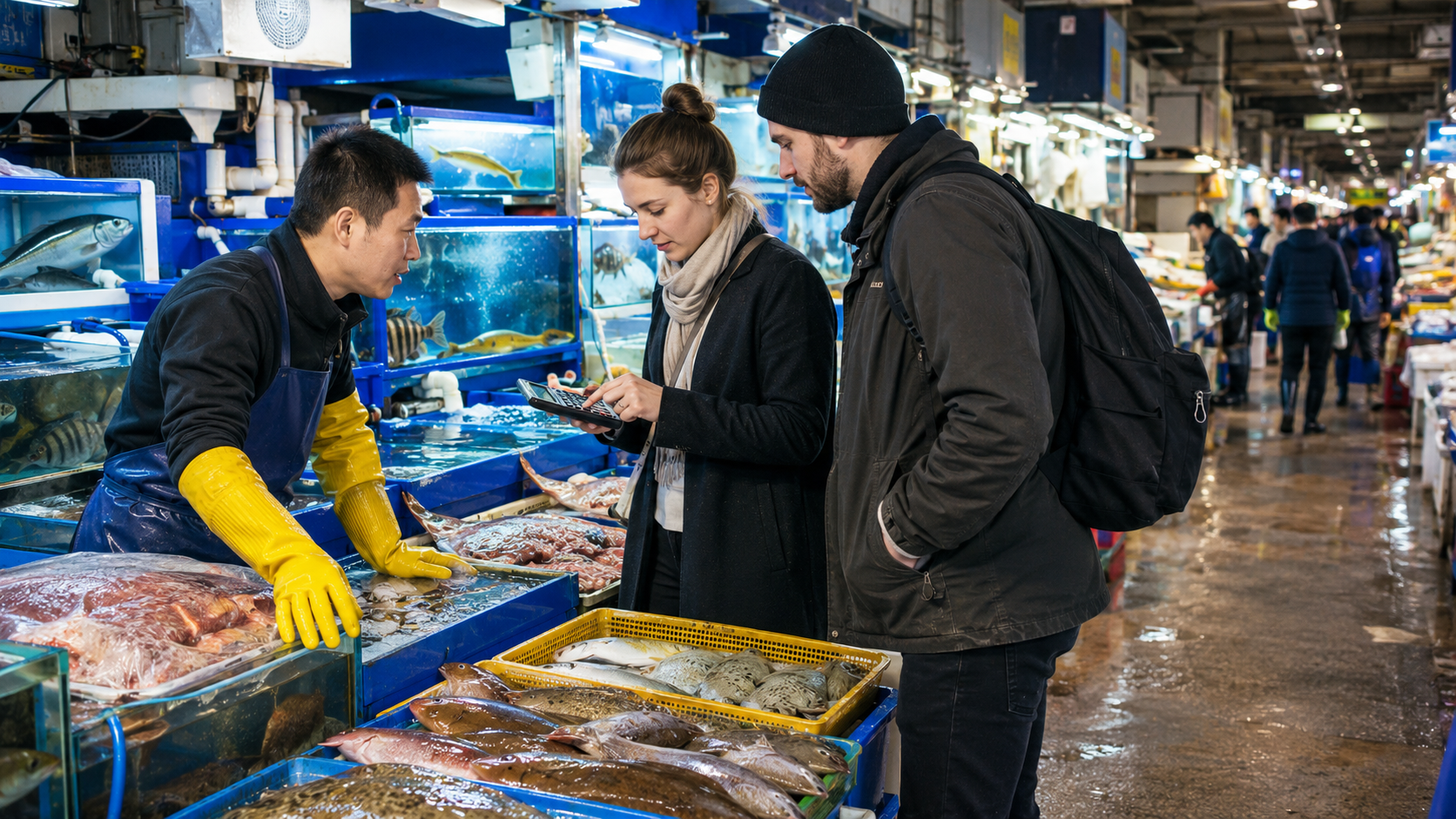
Take Line 1 or Line 9 to Noryangjin Station and follow signs for Noryangjin Fisheries Wholesale Market (노량진수산물도매시장). The standard visitor process has two transactions:
- Choose seafood from a ground-floor retailer and confirm the seafood price.
- Take it to an associated restaurant, where preparation, table settings, side dishes and cooking are charged separately.
Before agreeing, ask the seller to show the total seafood price on a calculator. Then ask what the restaurant will charge for slicing, cooking, seating and side dishes. Do not assume the price quoted for a fish includes the restaurant bill.
Useful terms include hoe (회), sliced raw fish; maeuntang (매운탕), spicy fish stew; grilled shellfish; steamed crab; and live octopus. The market’s available species and prices change with season, supply, size and weight. If a price is unclear, thank the seller and compare another stall before purchasing.
According to the official VISITKOREA market listing, the general fish section operates from 01:30 to 22:00, frozen seafood from 03:30 to 22:00, shellfish from 01:00 to 22:00, dried seafood from 23:00 to 19:00 and salted seafood from 03:00 to 19:00. The market is listed as open year-round. These section hours were verified on June 9, 2026, but individual retailers and upstairs restaurants may differ.
Dietary restrictions and allergies
Do not assume that removing visible meat makes a Korean dish vegetarian. The Korea Tourism Organization’s vegetarian dining guidance notes that meat and fish broths are widely used and that restaurants may not have separate vegetarian preparation procedures.
For strict requirements, use a restaurant that explicitly identifies itself as vegan, vegetarian, halal-certified or allergy-aware. Clearly explain every ingredient that must be excluded. A translation card is safer than relying on a single term such as “vegetarian,” which different staff members may interpret differently.
Useful phrases include:
- Jeoneun chaesikjuuija-imnida (저는 채식주의자입니다): I am vegetarian.
- Gogiwa haesanmul-eul mot meogeoyo (고기와 해산물을 못 먹어요): I cannot eat meat or seafood.
- I eumsige nuts-ga deureogayo? (이 음식에 견과류가 들어가요?): Does this contain nuts?
- Dwaejigogi eopseoyo? (돼지고기 없어요?): Is there no pork?
These phrases do not guarantee protection from cross-contact. Anyone with a serious allergy should confirm ingredients and kitchen procedures directly with the restaurant and seek professional medical advice before traveling.
Common food-itinerary mistakes
Ordering too much at markets
Market food looks small because dishes are displayed individually, but fried pancakes, rice cakes and gimbap add up quickly. Share first and reorder only if needed.
Building the route around viral restaurants
Queues, temporary closures and sold-out dishes can derail the day. Save two or three alternatives in the same neighborhood and prioritize the dish rather than one particular storefront.
Ignoring break times and last orders
Many independent restaurants close between lunch and dinner. A published closing time also does not mean orders are accepted until that minute. Check for break time and last order information on the day.
Expecting every restaurant to seat one diner
Solo dining is easy at noodle shops, soup restaurants, markets and casual counters. Barbecue, shared hotpot and large seafood meals are more difficult because minimum orders may apply. Solo travelers should choose lunch, look for counter seating or search for honbap (혼밥), meaning eating alone.
Treating side dishes as the whole meal
Banchan accompany the ordered food. Wait for the main dish before deciding that something is missing, and avoid filling your plate with every condiment before you know how the restaurant intends the dish to be eaten.
What to check before you go
- Confirm each restaurant’s same-day opening hours, break time, last order and weekly closing day.
- Check whether reservations are accepted or required.
- Save Korean names and addresses in Naver Map or Kakao Map.
- Carry a transport card, a payment card and some KRW cash.
- Ask for the complete price before buying seafood by weight.
- Prepare a Korean translation card for allergies or dietary restrictions.
- Wear clothes that can tolerate grill smoke on barbecue night.
- Avoid planning more than one heavy meal within three hours.
- Check holiday schedules during Seollal and Chuseok, when many independent businesses close.
For current travel assistance in English, Japanese, Chinese and several other languages, contact the Korea Tourism Organization’s 1330 Korea Travel Helpline by dialing 1330 within Korea or +82-2-1330 from abroad.
Your most useful next step is to save two restaurant options for each meal area, then confirm their hours on the morning of the relevant day. Keep the markets fixed as geographic anchors and let the exact restaurant choices remain flexible.
Sources
- Seoul Metropolitan Government: Modes of Transport
- Seoul Metropolitan Government: Climate Card
- VISITKOREA: Gwangjang Market
- Official Seoul Tourism Guide: Mangwon Market
- VISITKOREA: Noryangjin Fisheries Wholesale Market
- Official Seoul Tourism Guide: Euljiro Nogari Alley
- VISITKOREA: Tips for Vegetarians