South Korea’s less-publicized destinations are not necessarily empty or undiscovered. They are places that receive less attention from international travelers than Seoul, Busan, Jeju, or Gyeongju but still offer distinctive landscapes, history, food, and accessible transport. For a first trip beyond the major cities, consider Gongju and Buyeo, Suncheon, Mokpo, Yeongju, Gurye, or Upo Wetland.
Transport schedules, attraction fees, and visitor information in this guide were checked on June 11, 2026. Confirm them again before departure, particularly when traveling on weekends or public holidays.
At a glance
| Destination | Main reason to visit | Suggested stay | Most suitable for |
|---|---|---|---|
| Gongju and Buyeo | Baekje history, fortresses, and riverside scenery | 1–2 nights | History and archaeology |
| Suncheon | Protected wetlands, reed fields, and gardens | 1–2 nights | Nature and birdwatching |
| Mokpo | Port history, coastal views, and regional food | 1–2 nights | Food and urban exploration |
| Yeongju | Mountain temples and Confucian heritage | 1–2 nights | Architecture and quiet countryside |
| Gurye | Jirisan foothills, temples, and the Seomjin River | 1–2 nights | Slow travel and hiking |
| Upo Wetland | Freshwater wetland walks and wildlife observation | 1 day or 1 night | Photography and ecology |
1. Gongju and Buyeo: Korea’s Baekje capitals
Gongju (공주) and Buyeo (부여) are two small cities associated with Baekje, one of the ancient kingdoms of the Korean Peninsula. They work well as a combined trip because each preserves a different part of the kingdom’s later history.
The UNESCO-listed Baekje Historic Areas comprise eight archaeological sites in Gongju, Buyeo, and Iksan dating from 475 to 660. UNESCO identifies the sites as evidence of cultural, technological, artistic, and Buddhist exchange among ancient Korea, China, and Japan.
What to see
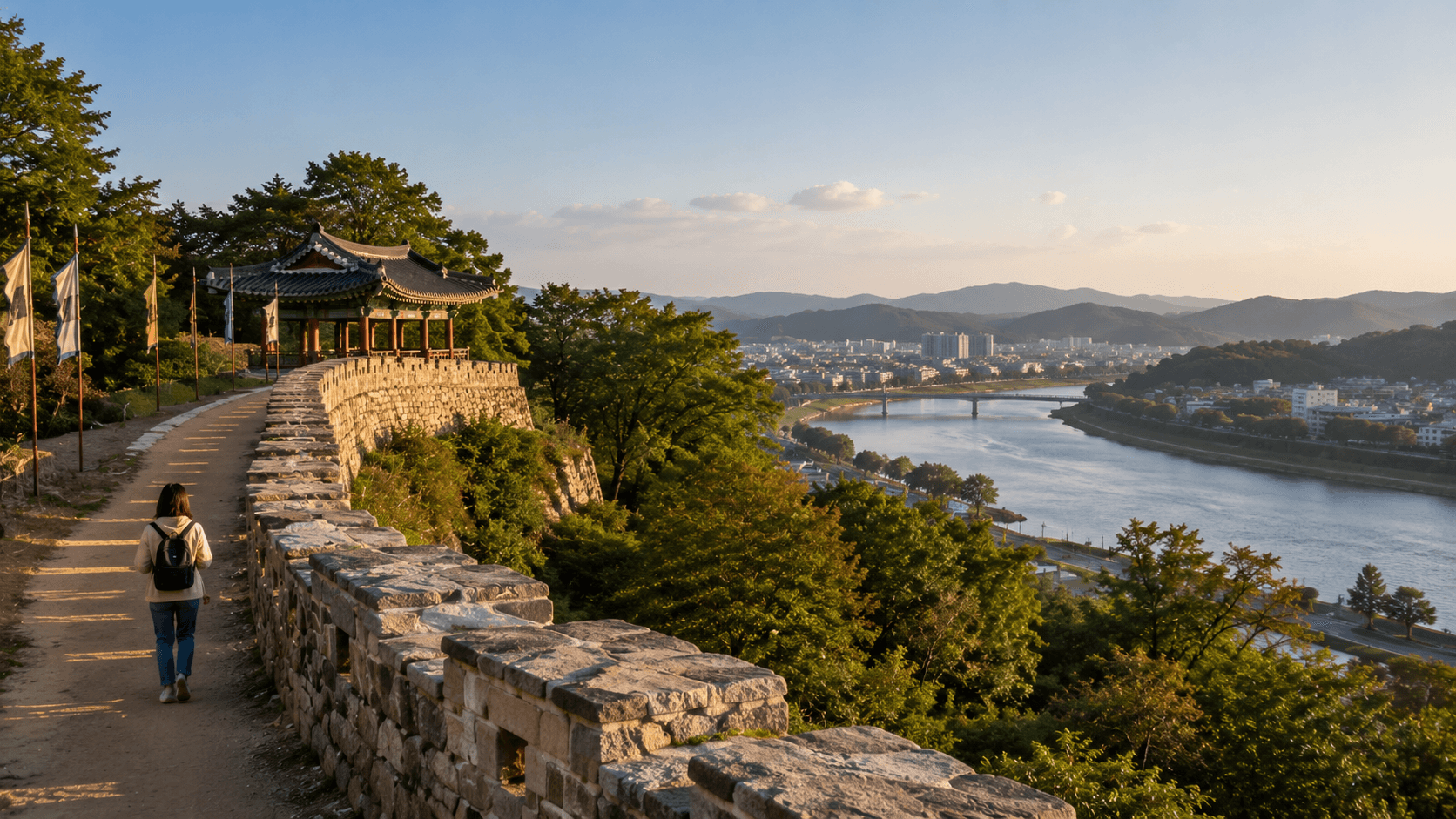
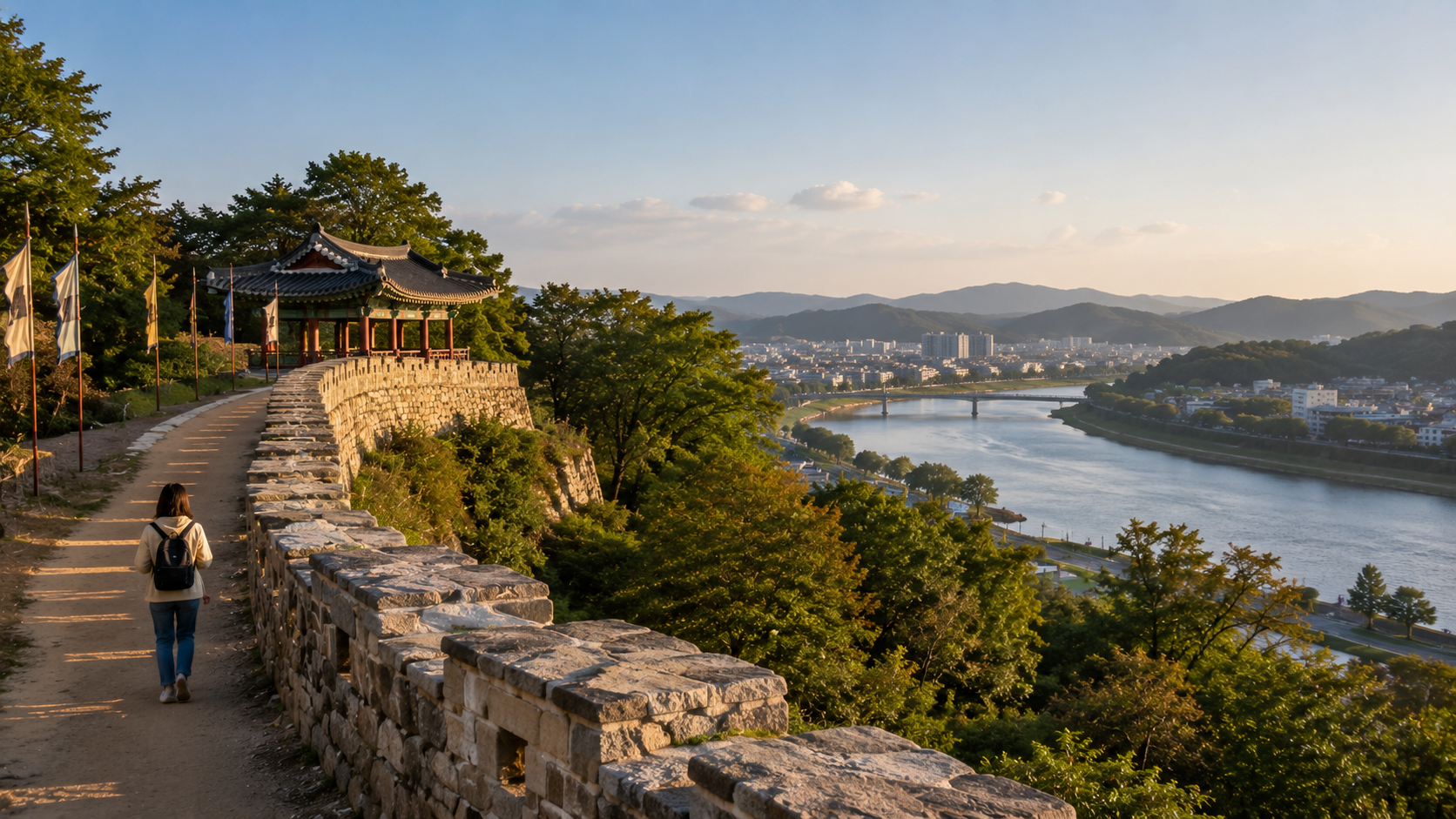
In Gongju, begin at Gongsanseong Fortress. The paths follow wooded slopes above the Geumgang River, with gates, pavilions, and sections of restored wall along the route. Allow at least two hours if you intend to walk a substantial part of the circuit.
Continue to the Royal Tombs of Songsan-ri and the nearby museum area. The original Tomb of King Muryeong is not normally entered by visitors, but exhibitions explain the tomb’s structure and excavated objects.
In Buyeo, visit Busosanseong Fortress and walk through the forest toward the river. Jeongnimsa Temple Site, with its surviving stone pagoda, is closer to the town center. The Buyeo National Museum provides essential context for both locations.
Planning the trip
A full day in each city is more comfortable than trying to cover both in one day. Local buses exist, but connections between individual heritage sites can be infrequent. Taxis are useful when several people can divide the fare.
Gongju is generally the easier day trip from Seoul because it has direct intercity or express bus connections. Buyeo has no railway station, so bus travel is usually the practical option. Check current departures through the T-money intercity bus reservation system or at the terminal. As verified on June 11, 2026, the system provides an English-language option, although not every local route is available for online booking.
Practical tip: Museums and archaeological sites often close earlier than restaurants and cafés. Visit indoor attractions first, then walk the fortress or riverfront later in the day.
2. Suncheon: wetlands rather than beaches
Suncheon (순천) is a useful base for travelers who want coastal ecology without planning a remote island trip. Its main attraction is Suncheon Bay Wetland Reserve, where raised paths pass through reed fields toward tidal flats and Yongsan Observatory.
The landscape changes with the tide, season, weather, and migration cycle. Sunset can be impressive, but visibility is never guaranteed. Winter is associated with migratory birds, while autumn brings tall, pale reed fields. Summer is green and humid, with limited shade on exposed sections.
How to visit the wetland
Allow three to four hours for the reserve if you plan to walk through the reeds and continue to the observatory. The final approach includes slopes and steps, so it is not fully accessible to all visitors. The lower boardwalk and visitor facilities are the easier options for travelers with limited mobility.
According to the official Suncheon Bay Wetland website, the standard adult admission displayed on June 11, 2026, was KRW 10,000, with lower prices for eligible youths and children. The official site also publishes opening hours, temporary closures, experience programs, and transport information. Check it on the day of your visit because access can change for ecological protection, weather, or maintenance.
Suncheon Bay National Garden is a separate major attraction. Trying to see the garden and wetland thoroughly in one afternoon is unrealistic. Use a full day, or divide them across two days.
Getting around
Suncheon has rail and intercity bus connections, but the wetland is outside the central station area. City buses are inexpensive but may have long intervals. Search the destination in Naver Map or KakaoMap using the Korean name 순천만습지, and check the last return bus before beginning the observatory walk.
Practical tip: Bring water, sun protection, and insect repellent. Stay on marked paths and avoid loud playback or approaching wildlife for photographs.
3. Mokpo: a working port with layers of modern history
Mokpo (목포) is often treated only as a transfer point for ferries to islands in southwestern Korea. It deserves more time. The compact older center combines port infrastructure, steep residential streets, colonial-period buildings, markets, and views toward Yudalsan Mountain and the surrounding islands.
The official Mokpo city tourism pages identify Yudalsan, Gatbawi, Samhakdo, the modern history area, coastal walking routes, and the marine cable car among the city’s principal attractions.
A practical one-day route
Start around Mokpo Station and walk into the old downtown area. The Mokpo Modern History Museum buildings provide context for the city’s development as a port during the late nineteenth and early twentieth centuries. Historical interpretation may be more detailed in Korean than in English, so a translation app is useful.
Continue toward Yudalsan for short walking routes and city views. The mountain is not especially high, but paths include stairs and uneven sections. Travelers who want a less strenuous outing can explore the lower sculptures, pavilions, and viewpoints rather than climbing every trail.
Later, visit Gatbawi, a pair of naturally weathered coastal rock formations reached from a waterside boardwalk. The area is flatter and easier to combine with nearby museums than Yudalsan.
Food and payment
Mokpo is known for seafood, including fermented skate, croaker, octopus, and braised fish. Fermented skate has a particularly strong aroma and flavor; do not order a large set solely because it is locally famous. Ask about portion size and price before ordering seafood sold at market price.
Cards are widely accepted in established restaurants and attractions, but carry some cash for small markets or older businesses. Solo travelers should check whether a seafood restaurant requires a two-person order.
Practical tip: Mokpo is a good overnight stop before an island ferry, but do not schedule a tight rail connection immediately after a ferry arrival. Marine services can be delayed or canceled by weather.
4. Yeongju: Buseoksa and Korea’s quieter heritage corridor
Yeongju (영주), in North Gyeongsang Province, is a strong alternative for travelers interested in traditional architecture but concerned about crowds at Korea’s most famous palace and temple sites.
Its leading attraction is Buseoksa Temple (부석사), built on a wooded slope with open views over the surrounding mountains. Buseoksa is one of the seven monasteries included in the UNESCO World Heritage property Sansa, Buddhist Mountain Monasteries in Korea. UNESCO recognizes these monasteries as living centers of Korean Buddhist practice, not simply preserved monuments.
What to combine with Buseoksa
Sosu Seowon is a historic seowon, or Neo-Confucian academy, near Seonbichon Village. The academy’s wooded setting and stream make it a pleasant contrast to the temple. It is also part of a broader regional story about scholarship and elite education during the Joseon period.
Buseoksa and Sosu Seowon are outside central Yeongju and in different directions. Public buses serve the area, but their frequency can make a same-day itinerary slow. A taxi, rental car, or carefully checked bus plan is more efficient.
Visitor etiquette
Buseoksa remains an active religious site. Speak quietly near worship halls, do not photograph people during prayer without permission, and avoid blocking doorways or ceremonial routes. Clothing does not need to be formal, but it should be suitable for a place of worship and for climbing stone stairs.
Practical tip: Stay overnight in Yeongju if arriving from Seoul after midday. Rural attractions tend to finish admissions earlier than urban museums, and buses become less frequent in the evening.
5. Gurye: temples and river landscapes below Jirisan
Gurye (구례) sits between Jirisan and the Seomjin River in South Jeolla Province. It is a practical choice for travelers who want mountain scenery but do not necessarily want a difficult summit hike.
Hwaeomsa Temple (화엄사) is the area’s principal cultural site. Its halls, stone pagodas, and mountain setting can be visited independently of a long hike. Gurye is also an access point for sections of Jirisan National Park, including routes near Nogodan, although trail access and transport vary by season.
How to plan a low-stress visit
Use Gurye-gu Station or Gurye’s bus terminal as your arrival point, but note that Gurye-gu Station is not in the town center. You will need a local bus or taxi to continue into Gurye or toward Hwaeomsa.
A simple itinerary is to visit Hwaeomsa in the morning, eat in Gurye town, and spend the afternoon along the Seomjin River or at a café overlooking the surrounding fields. More ambitious hikers should consult the Korea National Park Service for trail conditions, seasonal closures, reservation requirements, and weather alerts.
Do not rely only on a general weather forecast for a high mountain route. Conditions on Jirisan can differ substantially from those in Gurye town. Carry appropriate footwear and enough water, and turn back if the route or weather exceeds your experience.
Spring flower periods and autumn foliage weekends can be busy, so Gurye is not quiet at all times. Outside peak dates, however, it offers a slower and more rural experience than Korea’s major resort areas.
6. Upo Wetland: an early-morning nature stop
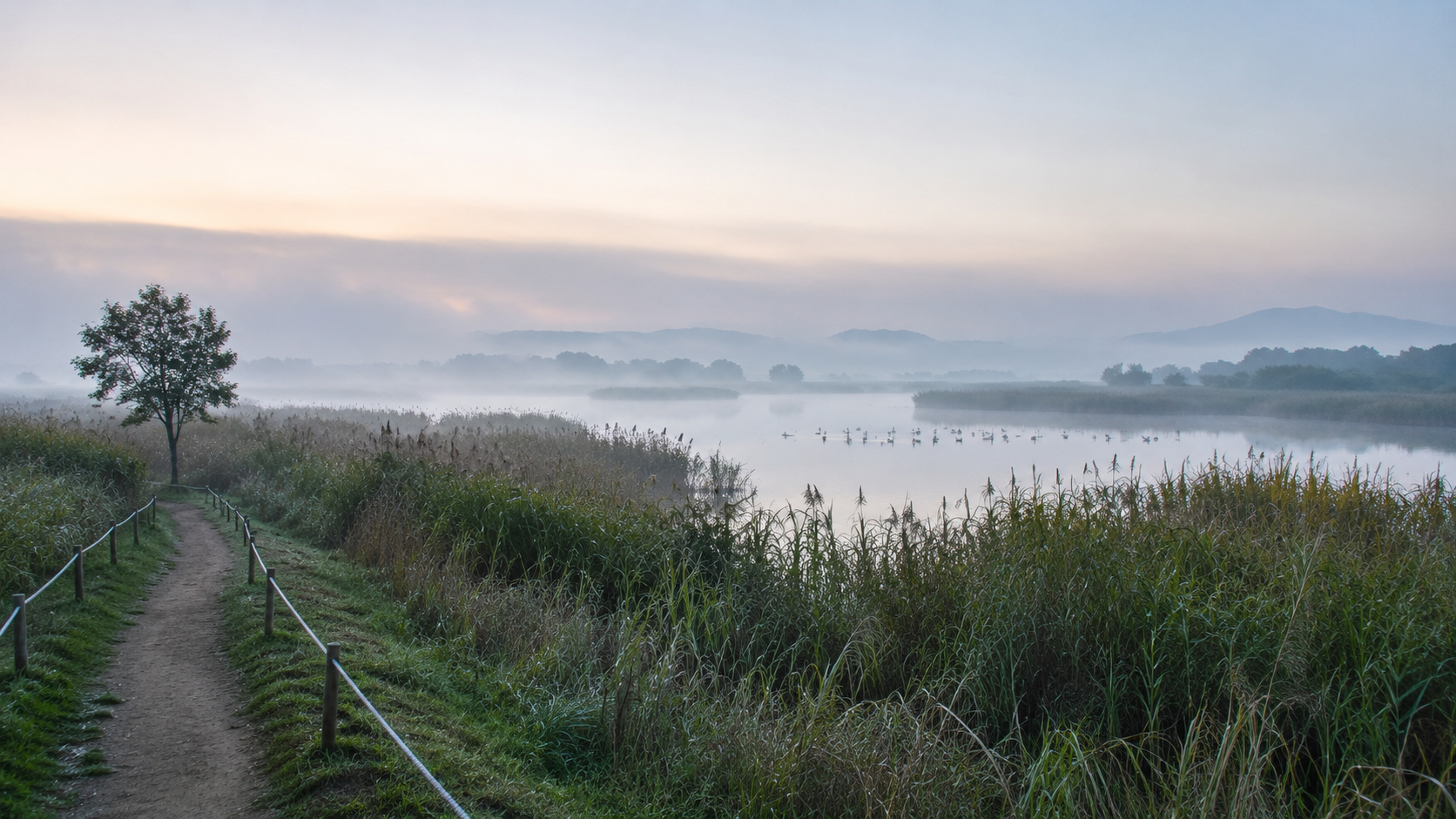
Upo Wetland (우포늪) in Changnyeong County is a protected freshwater wetland with walking and cycling routes, observation points, and an ecological center. It is more suitable for patient observation than for visitors expecting a large number of conventional attractions.
The wetland changes throughout the year. Mist, migratory birds, lotus leaves, farmland, and open water each become prominent in different seasons. Wildlife sightings are never guaranteed, and a quiet morning is usually more rewarding than a rushed midday stop.
Access and practical limitations
Upo is considerably easier by car. Public transport generally requires reaching Changnyeong first and then using a local bus or taxi. Confirm the return connection before setting out; rural taxi availability and bus frequency should not be assumed.
Check the Changnyeong County Upo Wetland site for current visitor notices. Opening arrangements for indoor facilities may differ from access to outdoor paths. As of the June 11, 2026 verification, reliable English-language publication of all current hours and program details could not be confirmed, so they are intentionally not listed here.
Bring binoculars if you have them, keep a respectful distance from wildlife, and avoid leaving the marked route. Parts of the path can be exposed, muddy, or affected by rain.
How to choose the right destination
Choose Gongju and Buyeo if you want archaeology and ancient political history. Select Suncheon for an accessible nature-focused trip with established visitor facilities. Mokpo works well for travelers who prefer food, street exploration, and modern history.
Yeongju is the strongest option for traditional architecture in a mountain setting. Gurye suits travelers who want to combine a temple with gentle countryside travel or a properly planned hike. Upo is the most specialized choice and rewards visitors who enjoy wetlands, birds, and slow observation.
For a first regional trip, avoid combining places simply because they appear close on a map. Mountain roads, indirect rail lines, and infrequent rural buses can turn a short distance into a long transfer.
What to check before you go
- Search attractions using their Hangul names in Naver Map or KakaoMap; Google Maps may provide limited routing detail in South Korea.
- Confirm the final bus or train of the day, not only the outbound service.
- Check attraction closure days. Monday closures are common but not universal.
- Reserve intercity transport early for Friday evenings, Sundays, and public holidays.
- Verify mountain trail closures and weather alerts through the Korea National Park Service.
- Carry a physical payment card and some KRW cash for rural buses, markets, and small businesses.
- Allow extra time when transferring from a railway station to a town center; several regional stations are outside the places they serve.
- Check accessibility directly with the attraction. Historic fortresses, temples, observatories, and mountain paths often include steep slopes or stairs.
- Contact the Korea Travel Hotline 1330 for multilingual tourism assistance when current local information is difficult to confirm.
Sources
- UNESCO World Heritage Centre: Baekje Historic Areas
- UNESCO World Heritage Centre: Sansa, Buddhist Mountain Monasteries in Korea
- Suncheon Bay Wetland official website
- Mokpo City English tourism information
- Changnyeong County Upo Wetland website
- T-money intercity bus reservation system
- Korea National Park Service
- VISITKOREA official travel information
Begin by choosing one destination that matches your main interest, then check its final transport connection and closure day before reserving accommodation.