South Korea has 17 properties on the UNESCO World Heritage List: 15 cultural and two natural. As verified on June 11, 2026, the newest inscription is the Petroglyphs along the Bangucheon Stream, added in 2025. Some properties are single attractions, while others contain several temples, tombs, academies, wetlands, or archaeological sites spread across different provinces.
This guide covers World Heritage properties in the Republic of Korea, or South Korea. It does not include UNESCO sites in North Korea or other UNESCO programs such as Intangible Cultural Heritage, Memory of the World, biosphere reserves, and global geoparks.
At a glance
- Total properties: 17
- Cultural properties: 15
- Natural properties: 2
- Easiest from Seoul: Changdeokgung, Jongmyo, Hwaseong Fortress, Namhansanseong, and selected Joseon royal tombs
- Strongest historical base: Gyeongju
- Main natural heritage destination: Jeju Island
- Newest inscription: Petroglyphs along the Bangucheon Stream in Ulsan, inscribed in 2025
- Important planning point: Several inscriptions are serial properties containing multiple locations. Visiting one component does not mean you have seen the entire property.
The count and inscription dates were checked against the UNESCO World Heritage Centre's Republic of Korea list on June 11, 2026.
All 17 UNESCO World Heritage properties in South Korea
| Property | Main location | Inscribed | What you will see |
|---|---|---|---|
| Seokguram Grotto and Bulguksa Temple | Gyeongju, North Gyeongsang | 1995 | An eighth-century Buddhist grotto and major temple complex |
| Haeinsa Temple Janggyeong Panjeon | Hapcheon, South Gyeongsang | 1995 | Historic buildings preserving the Tripitaka Koreana woodblocks |
| Jongmyo Shrine | Seoul | 1995 | A royal Confucian ancestral shrine of the Joseon dynasty |
| Changdeokgung Palace Complex | Seoul | 1997 | A Joseon palace adapted to its natural terrain and gardens |
| Hwaseong Fortress | Suwon, Gyeonggi | 1997 | An extensive late eighteenth-century city fortress |
| Gyeongju Historic Areas | Gyeongju, North Gyeongsang | 2000 | Silla tombs, temple remains, sculpture, pagodas, and palace sites |
| Gochang, Hwasun and Ganghwa Dolmen Sites | Incheon, North Jeolla, South Jeolla | 2000 | Prehistoric megalithic burial monuments in three regions |
| Jeju Volcanic Island and Lava Tubes | Jeju | 2007 | Hallasan, a lava-tube system, and Seongsan Ilchulbong |
| Royal Tombs of the Joseon Dynasty | Seoul, Gyeonggi, and Gangwon | 2009 | A serial property of landscaped royal burial grounds |
| Historic Villages of Korea: Hahoe and Yangdong | Andong and Gyeongju | 2010 | Two inhabited clan villages from the Joseon period |
| Namhansanseong | Gwangju, Gyeonggi | 2014 | A mountain fortress and emergency royal capital |
| Baekje Historic Areas | Gongju, Buyeo, and Iksan | 2015 | Fortresses, royal tombs, palace remains, and temple sites |
| Sansa, Buddhist Mountain Monasteries in Korea | Seven locations | 2018 | Living Buddhist monasteries founded between the seventh and ninth centuries |
| Seowon, Korean Neo-Confucian Academies | Nine locations | 2019 | Rural academies combining education, ritual, and landscape |
| Getbol, Korean Tidal Flats | South Chungcheong, North Jeolla, and South Jeolla | 2021 | Ecologically important tidal-flat systems and migratory-bird habitat |
| Gaya Tumuli | Seven locations in southern Korea | 2023 | Burial-mound groups associated with the Gaya confederacy |
| Petroglyphs along the Bangucheon Stream | Ulsan | 2025 | Prehistoric rock art, later engravings, and inscriptions |
The most practical sites for a first visit
Seoul: Changdeokgung and Jongmyo Shrine
Changdeokgung Palace is the most accessible introduction to Korea's royal architecture. Rather than imposing a completely symmetrical plan on the land, its buildings and gardens follow the terrain. The rear garden is a major part of the experience, but access rules and tour arrangements can differ from general palace admission.
Jongmyo Shrine is nearby and offers a quieter, more ceremonial setting. Its long halls contain spirit-tablet chambers for Joseon kings and queens. The restrained architecture makes more sense when understood as a space for royal ancestral rites rather than a residential palace.
Allow at least half a day for both. Check the official palace and shrine notices before visiting because closure days, guided-entry policies, restoration work, and garden reservations can change.
Suwon: Hwaseong Fortress
Hwaseong Fortress surrounds part of central Suwon, south of Seoul. Built under King Jeongjo in the late eighteenth century, it combines defensive, administrative, and commercial functions.
The walls are extensive, so decide whether you want a short visit around Paldalmun and the palace area or a longer walk covering gates, command posts, and elevated sections. Wear shoes with traction: some approaches include steep slopes and stone steps. Suwon is realistic as a day trip from Seoul, but walking the main circuit takes considerably longer than photographing one gate.
Gyeongju: Korea's largest heritage cluster
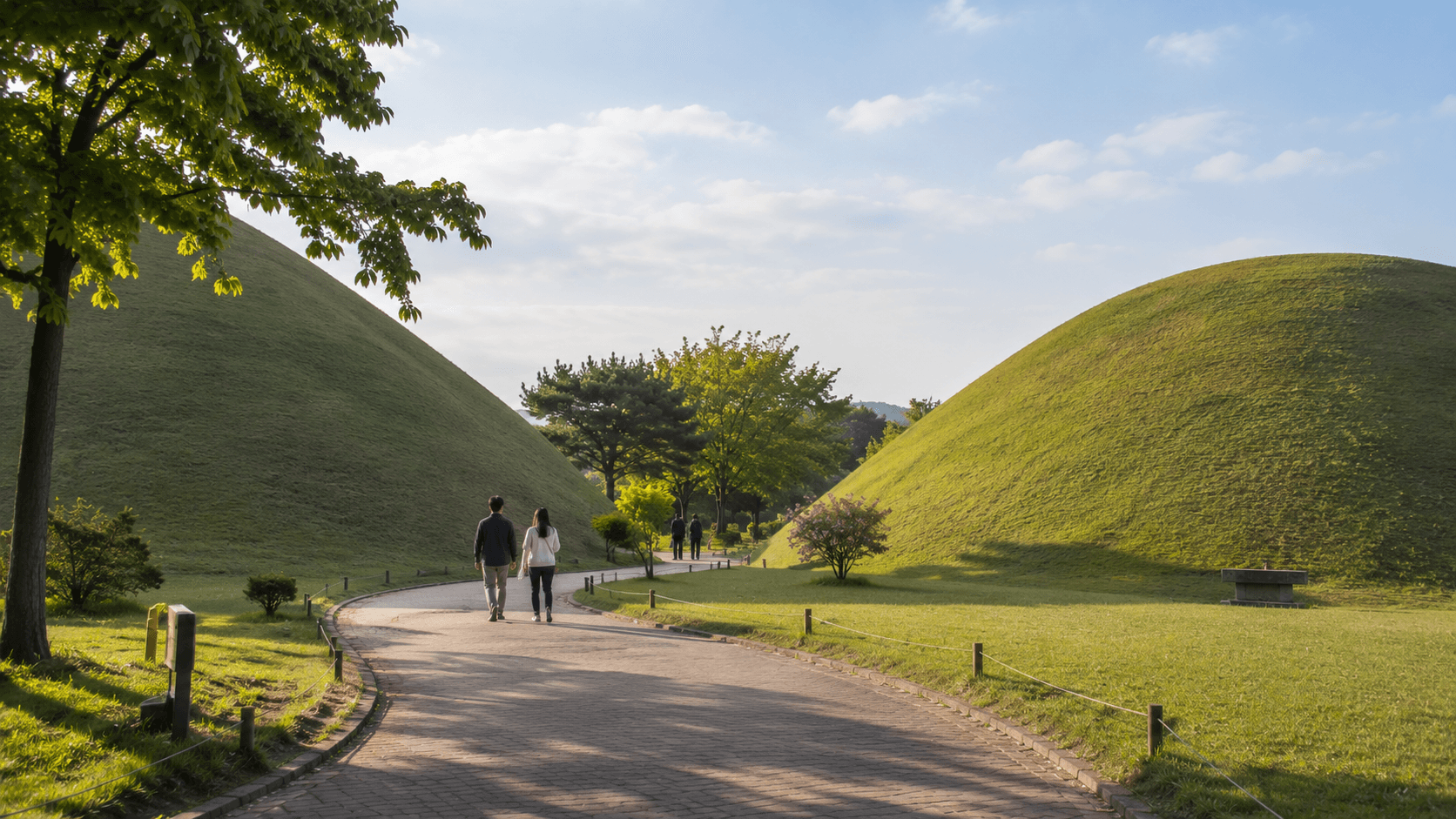
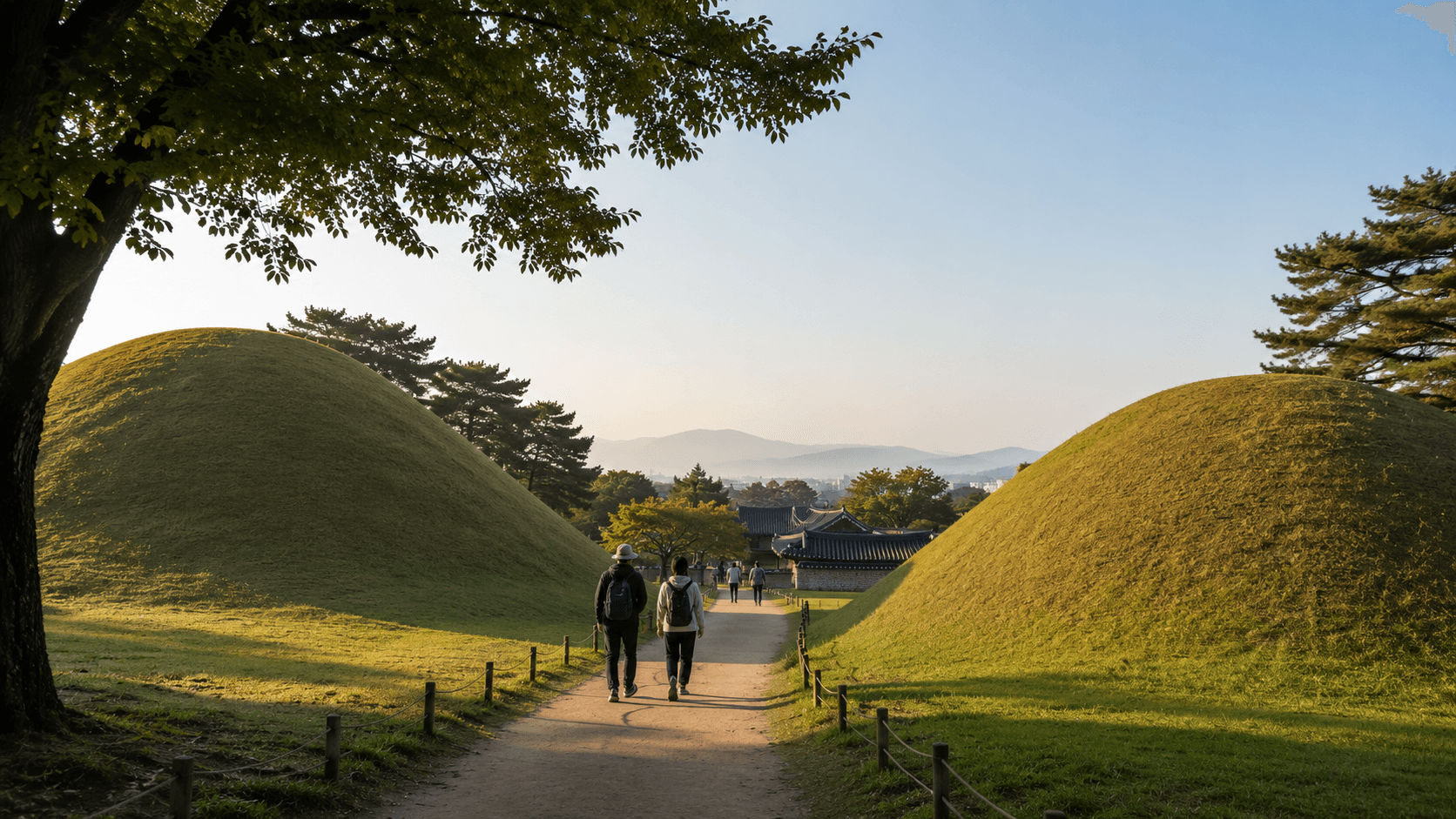
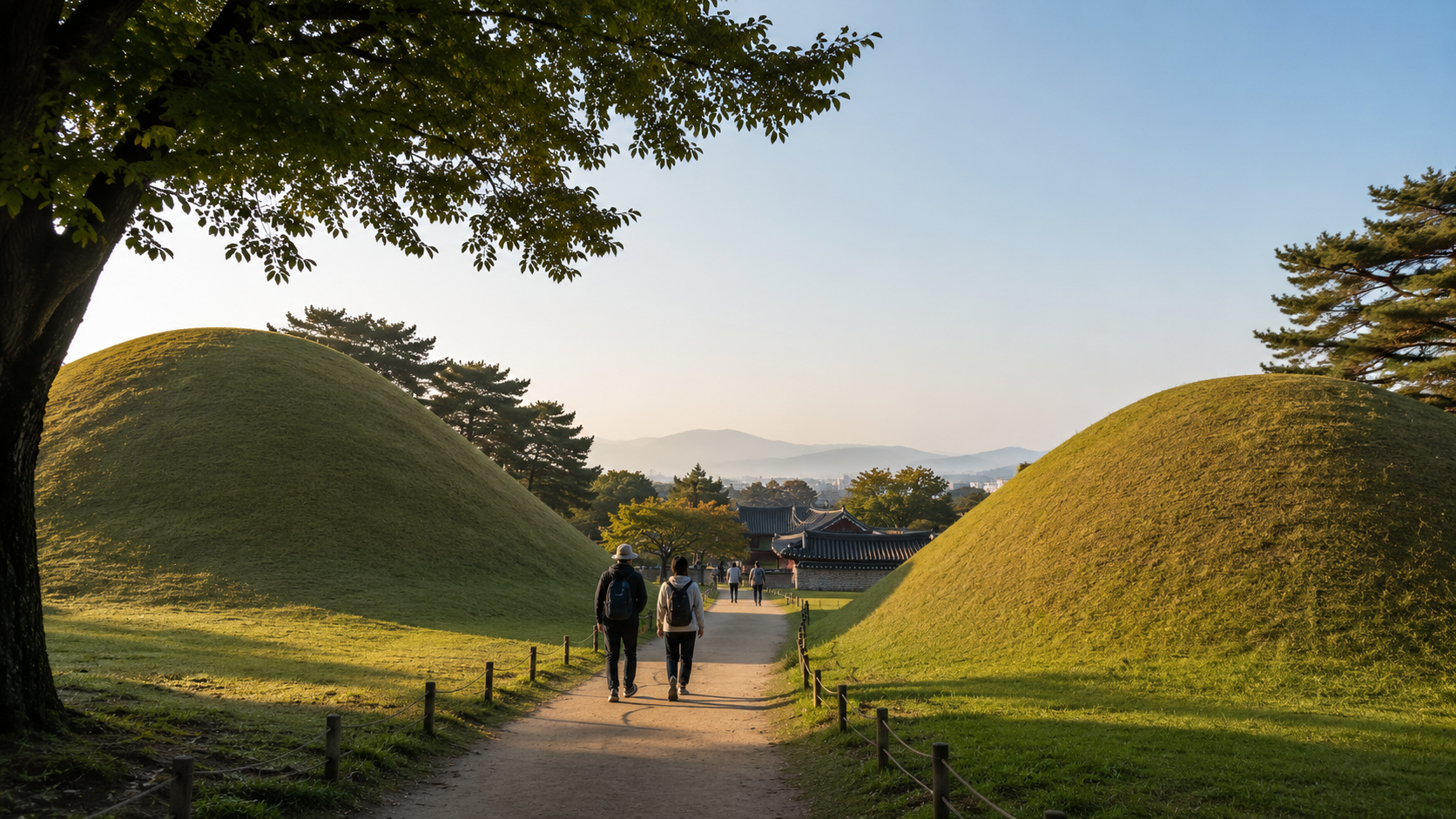
Gyeongju is the most efficient destination for travelers who want several UNESCO experiences in one region. The Gyeongju Historic Areas include multiple zones rather than a single fenced attraction. Major places include royal burial mounds, Cheomseongdae, palace and temple remains, Buddhist sculpture, and the Namsan area.
Outside the city center, Bulguksa Temple and Seokguram Grotto form a separate World Heritage property. Their shared inscription reflects the religious and artistic program created during the Unified Silla period. Seokguram is uphill from Bulguksa, and the final approach requires walking. The interior is protected, so visitors should expect controlled viewing rather than unrestricted access around the sculpture.
Yangdong, one half of the Historic Villages of Korea, is also in the Gyeongju area. A two-night stay gives substantially more flexibility than attempting everything as a rushed day trip.
Sites that explain Korea's ancient kingdoms
Baekje Historic Areas
The Baekje Historic Areas are distributed among Gongju, Buyeo, and Iksan. Together they represent the later Baekje kingdom and its cultural connections across East Asia.
Gongju contains Gongsanseong Fortress and the royal tombs at Songsan-ri. Buyeo has palace and fortress remains, temple sites, royal tombs, and sections of the old city wall. Iksan contains the archaeological site at Wanggung-ri and the large Mireuksa temple site.
Although the three cities are sometimes presented as one heritage route, covering all components requires several days or a carefully arranged vehicle itinerary. For a single day, concentrate on either Gongju or Buyeo.
Gaya Tumuli
The Gaya Tumuli comprise seven burial-mound groups associated with different polities of the Gaya confederacy. The components are spread across southern Korea, including areas around Gimhae, Goryeong, Haman, Changnyeong, and Namwon.
These sites are most rewarding when paired with a local museum, where excavated armor, jewelry, pottery, and burial objects provide context for the grassy mounds outside. Do not plan to cover all seven components in one short trip.
Dolmen sites
The Gochang, Hwasun and Ganghwa Dolmen Sites preserve concentrations of prehistoric stone burial monuments. They are three geographically separate components, not one attraction.
Ganghwa is the most convenient component for travelers based in the Seoul region. Gochang and Hwasun fit better into a southwestern Korea itinerary. Public transport may bring you to the relevant county, but the monuments themselves can be dispersed, making local buses, taxis, or a car more practical.
Bangucheon Stream petroglyphs
The Petroglyphs along the Bangucheon Stream in Ulsan became South Korea's newest World Heritage property in 2025. The inscription includes rock-art panels with prehistoric animal and hunting imagery, as well as engravings and inscriptions from later periods.
Visibility can be affected by distance, light, weather, water conditions, and conservation controls. Check current access information locally instead of assuming that visitors can approach the rock face closely.
Living religious and educational heritage
Haeinsa and the Tripitaka Koreana
Haeinsa Temple Janggyeong Panjeon is known for the depositories that preserve the Tripitaka Koreana, a major collection of Buddhist texts carved on woodblocks. UNESCO recognition applies particularly to the historic storage buildings and their relationship to the collection.
Haeinsa remains an active temple in a mountain setting. Visitors can see the depository exterior and view parts of the collection through openings, but should not expect museum-style close access to the woodblocks. Reaching the temple generally takes more effort than visiting an urban monument, so check the final bus connection and return options in advance.
Sansa mountain monasteries
Sansa, Buddhist Mountain Monasteries in Korea consists of seven temples: Tongdosa, Buseoksa, Bongjeongsa, Beopjusa, Magoksa, Seonamsa, and Daeheungsa. They remain religious communities, not reconstructed historical displays.
Choose a temple that fits your route rather than trying to collect all seven. Tongdosa works well with a Busan or Ulsan itinerary, while Bongjeongsa can be combined with Andong. Temple buildings may restrict photography or entry during ceremonies. Dress respectfully, keep voices low, and never photograph worshippers closely without permission.
Seowon academies
The Seowon, Korean Neo-Confucian Academies property contains nine academies in different parts of the country. Seowon were private institutions devoted to learning, scholarship, ritual, and the commemoration of respected teachers.
Their architecture is deliberately modest and integrated into rural landscapes. They are better suited to slow visits than checklist tourism. Dosan Seowon near Andong and Sosu Seowon near Yeongju are practical choices for travelers already exploring northern North Gyeongsang Province.
Natural World Heritage
Jeju Volcanic Island and Lava Tubes
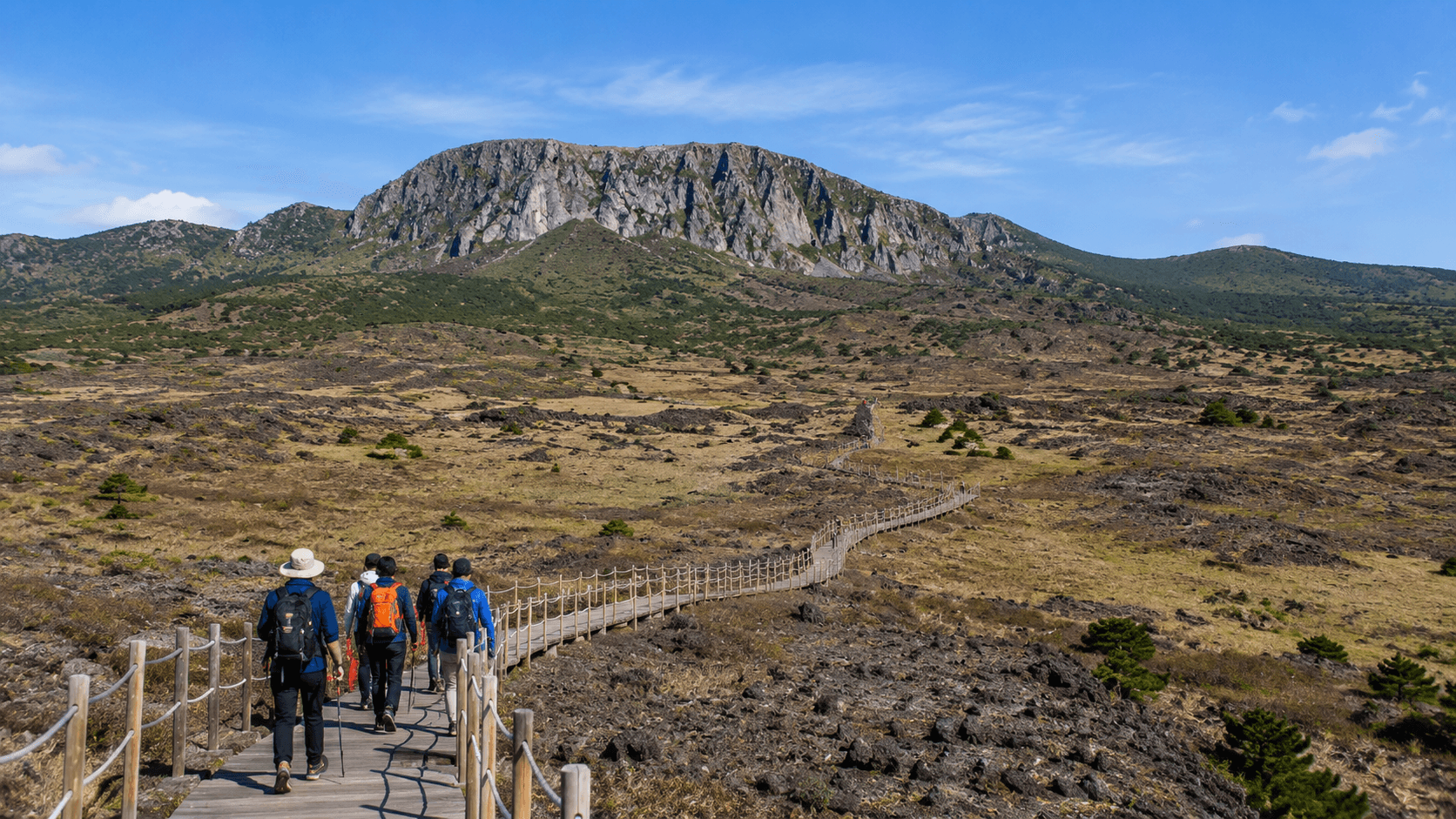
Jeju Volcanic Island and Lava Tubes has three principal components: Hallasan Natural Reserve, the Geomunoreum Lava Tube System, and Seongsan Ilchulbong Tuff Cone. They are in different parts of Jeju and should not be treated as one stop.
Hallasan hiking routes may require advance reservations, have seasonal turnaround times, or close because of weather. Access to individual lava tubes can also change because of conservation work or safety inspections. Verify each component separately through Jeju's official visitor and heritage channels immediately before travel.
Seongsan Ilchulbong is the simplest component for a short visit, but its summit route includes stairs. Travelers with limited mobility can still view the tuff cone from the surrounding area without climbing.
Getbol tidal flats
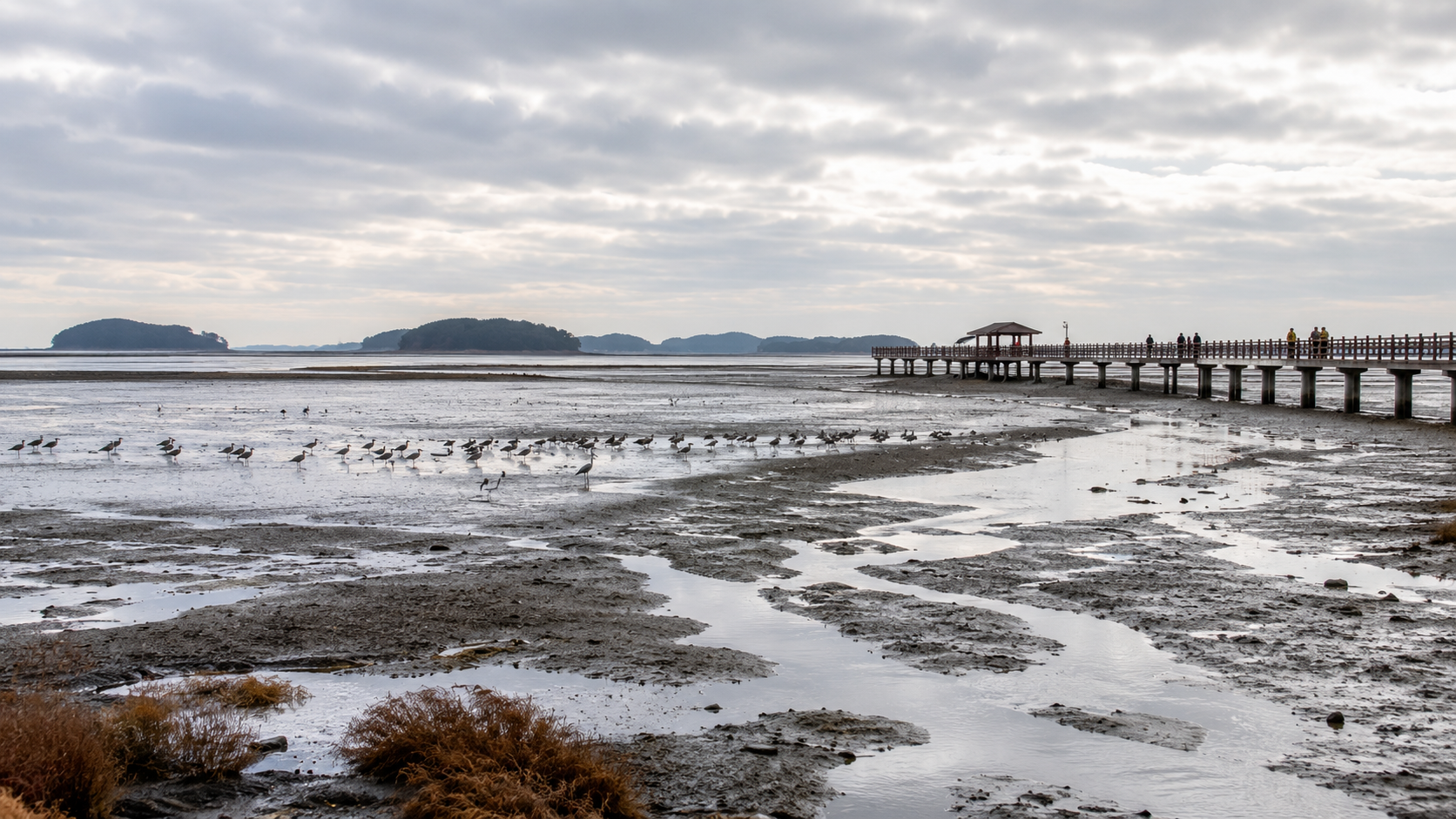
Getbol, Korean Tidal Flats protects four tidal-flat components: Seocheon, Gochang, Shinan, and Boseong-Suncheon. These are living intertidal ecosystems rather than conventional monuments.
Conditions depend on tides, seasons, weather, and conservation restrictions. A mudflat may be underwater when you arrive, and sensitive areas may not permit casual entry. Use an authorized observation point, guided ecology program, or visitor center. Consult local tide information and never walk far onto an unfamiliar flat without guidance.
How to plan a heritage-focused trip
A short Seoul-based trip
For two or three days, combine Changdeokgung, Jongmyo, and one excursion to Hwaseong Fortress or Namhansanseong. A selected Joseon royal tomb can be added if its location and opening schedule fit your route.
Namhansanseong involves mountain terrain and is more weather-dependent than central Seoul sites. The Royal Tombs of the Joseon Dynasty are distributed across numerous locations, so search for a specific tomb complex rather than navigating to the generic property name.
One week for history
Use Seoul and Gyeongju as the main bases. Spend two or three days in Seoul, travel to Gyeongju for at least two nights, and use the remaining time for Suwon, Andong, or one mountain temple.
A longer regional route
For ten days or more, group sites geographically:
- Seoul and Gyeonggi: Changdeokgung, Jongmyo, royal tombs, Hwaseong, and Namhansanseong.
- North Gyeongsang: Gyeongju, Yangdong, Hahoe, selected seowon, and Bongjeongsa.
- Southeast: Ulsan petroglyphs, Tongdosa, and selected Gaya tumuli.
- Southwest: Baekje sites, dolmens, Getbol components, and Daeheungsa or Seonamsa.
- Jeju: Hallasan, Seongsan Ilchulbong, and currently accessible volcanic components.
Common mistakes
- Do not assume every place carrying a UNESCO label is a World Heritage property. Korea also has UNESCO-listed traditions, documents, geoparks, and biosphere reserves.
- Do not navigate only by the English inscription name. Serial properties often contain several distant components.
- Do not rely on a single opening-hours listing for an entire property. Each temple, tomb, wetland, or archaeological park may have its own rules.
- Do not expect unrestricted access to fragile interiors, rock art, woodblocks, lava caves, burial areas, or ecological zones.
- Do not underestimate rural transport. The final connection may run much less frequently than intercity trains or buses.
- Do not schedule mountain and coastal sites tightly on days with severe heat, heavy rain, snow, strong wind, or poor visibility.
Accessibility and visitor facilities
Accessibility varies considerably. Central palaces and developed archaeological parks usually provide more paved routes and visitor facilities than mountain temples, fortress walls, caves, and tidal flats. Even accessible sites may contain thresholds, gravel, slopes, uneven stone, or stairs.
Travelers who need step-free routes should contact the individual management office before visiting. Ask specifically about the route from the entrance or parking area, accessible toilets, wheelchair loans, shuttle availability, and whether the principal viewing area can be reached without stairs.
What to check before you go
Because operating details change, verify the following on the official website for the specific component you plan to visit:
- Opening hours and weekly closure day
- Admission price and accepted payment methods
- Advance reservations or timed-entry requirements
- Last admission, final shuttle, bus, or return connection
- Restoration work and temporary closures
- Weather, trail, cave, tide, or wildfire restrictions
- Availability of English interpretation or guided tours
- Rules for photography, tripods, food, pets, and drones
- Luggage storage and parking
- Step-free access and accessible toilets
Fares, hours, and reservation rules were intentionally not generalized here because they differ by component and may change. Check them again shortly before travel, even when an older blog or map listing appears confident.
FAQ
Can I visit every Korean UNESCO World Heritage site in one trip?
It is possible only with substantial time and regional travel. The 17 inscriptions include dozens of separate components, some on islands or in rural mountain areas. A first trip is better organized around two or three geographic clusters.
Which city has the highest concentration of sites for visitors?
Gyeongju offers the strongest concentration in a compact region, including the Gyeongju Historic Areas, Bulguksa and Seokguram, and nearby Yangdong Village. Seoul has fewer inscriptions within the city but provides easier public transport and access to additional sites in Gyeonggi Province.
Are UNESCO sites free to enter?
There is no single policy. Some landscapes and archaeological areas are free, while palaces, temples, villages, museums, gardens, or protected attractions may charge admission. Confirm the current fee for each component.
Is a UNESCO site pass available for all of South Korea?
No nationwide pass covers all 17 properties and their separate components. Local combination tickets or regional passes may exist, but their conditions should be checked with the issuing authority.
Where should I start?
For a first visit, begin with Changdeokgung in Seoul or the central heritage area in Gyeongju. Then use the UNESCO Republic of Korea property list to identify one additional site that fits your route rather than making a long detour solely for the UNESCO label.
Sources
- UNESCO World Heritage properties in the Republic of Korea
- UNESCO World Heritage selection criteria
- Korea Heritage Service National Heritage Portal
- Jeju Volcanic Island and Lava Tubes
- Getbol, Korean Tidal Flats
- Gaya Tumuli
- Petroglyphs along the Bangucheon Stream
World Heritage status and the national property count were verified on June 11, 2026. Before setting out, open the UNESCO record for your chosen property, identify its exact component, and then confirm same-day access with the relevant Korean site operator.