Korea offers far more than character merchandise and sheet masks. Useful purchases range from regional food and well-designed stationery to contemporary ceramics, traditional paper goods, skincare, clothing, and compact household items. The right choice depends on your luggage space, the recipient, and your home country's customs rules.
This guide focuses on products that are recognizably Korean, practical to carry, and reasonably easy to assess before buying. Shopping information and departure rules were verified on June 11, 2026.
At a glance
| What to buy | Good for | Check before paying |
|---|---|---|
| Packaged snacks and tea | Colleagues, friends, shared gifts | Expiry date, allergens, import rules |
| Skincare and cosmetics | Personal use, beauty fans | Skin type, shade, ingredients, liquid limits |
| Stationery and lifestyle goods | Students, small gifts | Country of manufacture, refill compatibility |
| Hanji and fabric crafts | Cultural gifts, home decor | Material, maker, care instructions |
| Ceramics and tableware | Home use, special gifts | Cracks, food safety, protective packing |
| Fashion and accessories | Personal shopping | Korean sizing, returns, tax-refund eligibility |
| Music and character goods | Fans and collectors | Official licensing, album version, luggage space |
Korean food that travels well
Packaged snacks
Supermarkets and convenience stores are useful for affordable gifts because ingredients, expiry dates, and sealed packaging are usually easy to inspect. Popular options include flavored almonds, biscuits, seaweed snacks, rice crackers, gummies, and limited-edition versions of familiar products.
Choose individually wrapped packages when buying for an office or class. Large outer bags can contain surprisingly little food, so check the weight rather than judging by package size.
Look for an allergen panel if the recipient has dietary restrictions. Common ingredients include milk, wheat, soy, peanuts, sesame, shellfish, and gelatin. An English label may be attached to imported or export-oriented products, but it is not guaranteed on every item sold domestically.
Gim, tea, and drink mixes
Roasted and seasoned seaweed, called gim (김), is light but bulky. Flat packets are easier to pack than rigid gift boxes. Oil-seasoned varieties may become rancid if stored in heat, so keep them away from direct sunlight.
Korean-grown green tea, barley tea, corn tea, citron tea, and omija tea are practical alternatives to sweets. Omija (오미자), often translated as five-flavor berry, is sold as dried fruit, tea bags, syrup, or concentrate. Liquid concentrates are heavy and must follow airline security rules.
Instant coffee sticks and powdered latte mixes are also easy to divide among several recipients. Check whether a product contains sugar or powdered creamer before buying in bulk.
Gochujang, sauces, and kimchi
Gochujang (고추장), a fermented red chili paste, can be a useful purchase for someone who cooks Korean food. Small sealed tubs or tubes are easier to carry than glass containers. Ready-made marinades, soup bases, and flavored salts are other compact options.
Gochujang and kimchi count as liquids or gels for airport security purposes. At Incheon International Airport, containers over 100 milliliters cannot normally be carried through international-flight security unless they qualify under the duty-free liquid rules. They may be placed in checked baggage, subject to airline and destination-country regulations. See the airport's restricted-items guidance.
Food import laws are set by your destination, not by Korea. Meat products, fresh fruit, seeds, plants, and some fermented or agricultural products may require declaration or may be prohibited. Check your destination's official customs and agriculture websites before buying food as a souvenir.
Korean skincare and cosmetics
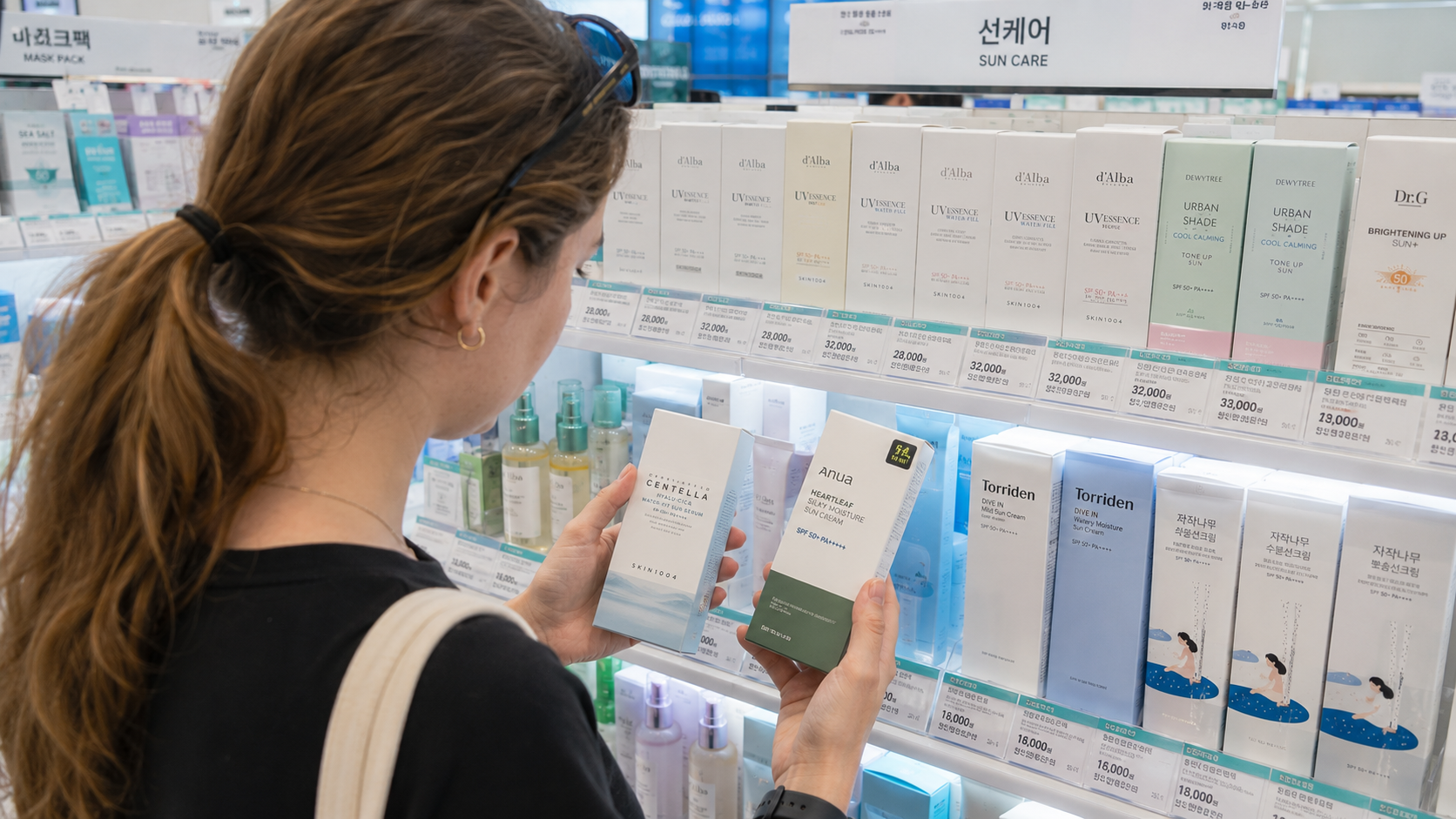
Korean beauty shops range from inexpensive chain stores to department-store counters and specialist boutiques. Instead of buying whatever is trending, concentrate on products you understand and can realistically use.
Good travel purchases include sunscreen, cleansers, lip products, cushion foundations, hand creams, pimple patches, and sheet masks. Multipacks are convenient, but a single product is less wasteful when you do not know whether the formula suits your skin.
What to check on the label
- Product name and intended use
- Ingredient list and known allergens
- Expiry date or manufacturing information
- Period after opening, where shown
- Shade number and undertone for makeup
- Volume, especially for carry-on luggage
- Whether refills fit products sold in your country
Do not assume that a product labeled "brightening," "soothing," or "dermatologist tested" will treat a medical condition. Anyone with eczema, severe allergies, or another skin condition should seek appropriate medical advice rather than relying on retail claims.
Foundation shades can differ substantially between brands. Test the shade where permitted and inspect it in natural light. Return policies for opened cosmetics are usually restrictive, and tourist purchases may be difficult to exchange after departure.
Stationery, books, and everyday design
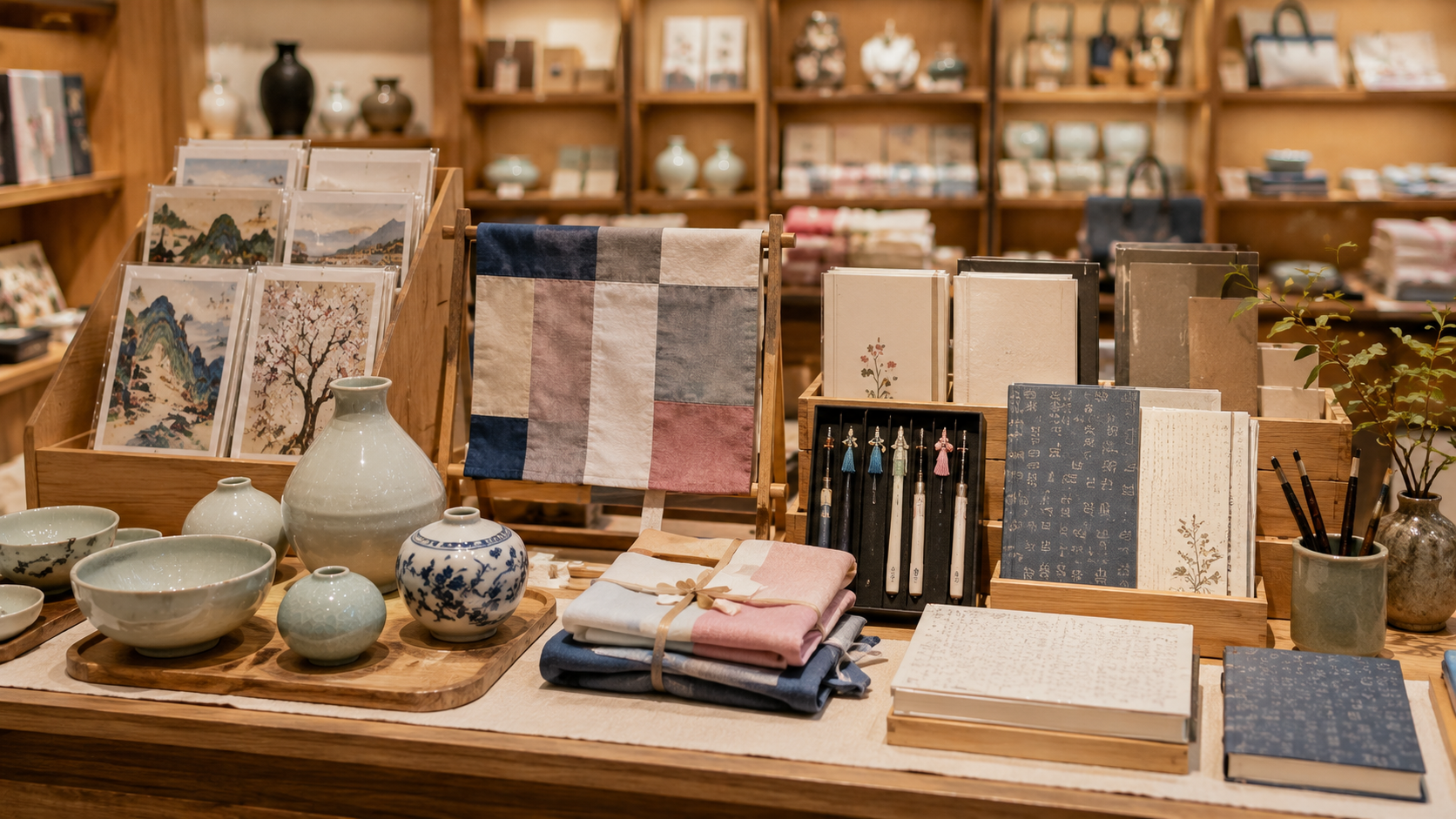
Korean stationery is an easy category for students and travelers with limited luggage space. Consider notebooks, planners, stickers, stamps, pens, pencil cases, bookmarks, and letter sets. Museum and gallery shops often carry designs based on Korean art, architecture, Hangul, and historical objects.
For a more distinctive gift, look for products using Hangul typography or motifs clearly connected to a place you visited. Check the manufacturing label if Korean production matters to you; a Korean brand or design does not necessarily mean the item was made in Korea.
Books can be worthwhile even if you do not read Korean. Photography books, illustration collections, cookbooks with English translations, and bilingual books about art or architecture can provide more context than a generic souvenir. Confirm the language before buying because an English title on the cover does not guarantee that the full text is in English.
Traditional crafts without the souvenir-shop guesswork
Hanji paper goods
Hanji (한지) is traditional Korean paper, historically made using fibers from the paper mulberry tree. Modern shops sell plain sheets as well as lamps, boxes, fans, notebooks, cards, and small decorative objects.
Ask what part of the product is actually hanji and whether it was handmade. The term can be applied broadly in retail settings, and two products that look similar may differ greatly in material and workmanship. Flat stationery and small boxes are easier to transport than lampshades.
Bojagi and fabric goods
Bojagi (보자기) means a Korean wrapping cloth. Traditional and contemporary versions are used for gift wrapping, storage, table settings, and decoration. A reusable cotton wrapping cloth is practical, while fine silk or hand-stitched patchwork is more appropriate as a special gift.
Confirm the fiber content and washing method. Some decorative pieces should be hand-washed or kept away from prolonged sunlight. If the item is described as handmade, ask whether that applies to the sewing, dyeing, fabric production, or only the final assembly.
Ceramics, lacquerware, and metal goods
Small cups, bowls, spoon rests, incense holders, and vases are more manageable than large jars. Korean ceramic traditions include celadon, white porcelain, and buncheong-style stoneware, while contemporary makers may use those influences without reproducing a historical form.
Before paying, inspect ceramics under good light. Look at the rim, base, handle joints, and glaze. Minor glaze variation may be intentional, but a crack that continues through the body is a different issue. Ask whether tableware is food-safe and suitable for a microwave or dishwasher rather than making assumptions from its appearance.
For lacquerware, including mother-of-pearl inlay known as najeonchilgi (나전칠기), examine the edges and hinges as well as the decorative surface. Very inexpensive pieces may be printed or made with synthetic materials. That is not necessarily a problem, but the price and description should match the object.
Fashion, accessories, and eyewear
Seoul and other large cities have everything from underground shopping centers to independent labels and luxury department stores. Clothing can be a good purchase when the design, fabric, or fit is difficult to find at home, but Korean sizing requires attention.
Do not rely only on labels such as small, medium, or "free size." Compare garment measurements with an item you own. Check shoulder width, chest, waist, rise, inseam, and sleeve length. Some stores do not provide fitting rooms for certain garments, and discounted items may be final sale.
For glasses or prescription lenses, ask for a written breakdown of the frame, lens type, coating, prescription, completion time, and warranty. Prescription eyewear is a health-related purchase; confirm requirements with a qualified optician and obtain a copy of your prescription.
Shoes can also run differently from your usual size. Korea commonly displays footwear sizes in millimeters, such as 240 or 270. Try both shoes and walk briefly where the store permits.
K-pop, webtoon, and character merchandise
Albums, light sticks, photo cards, plush toys, collaboration goods, and webtoon merchandise are widely available, but collectors should check the exact version before paying. Albums may have multiple covers, inclusions, platform editions, or retailer-specific benefits.
For official merchandise, use the artist's official store, an authorized retailer, a venue sales desk, or a clearly identified pop-up shop. Counterfeit goods can have poor quality and may create customs problems. The Korea Customs Service departure guidance specifically warns against counterfeit products.
Light sticks and electronic merchandise require extra planning. Check whether batteries are included, what type is required, and whether the product can be tested. Spare lithium batteries and power banks belong in carry-on baggage and are subject to aviation limits; verify the latest conditions with your airline.
Where different types of shopping make sense
Traditional markets
Markets are useful for food, kitchenware, textiles, and inexpensive everyday goods. Carry some cash even if many vendors display card terminals. Ask the price before accepting prepared food or custom work, and confirm the quantity when buying dried ingredients by weight.
Market hours vary by building, section, vendor, and holiday. A market may be technically open while many individual stalls are closed, so check the market's official page or call ahead for a specific shop.
Supermarkets and convenience stores
These are the simplest places to compare packaged food because prices and labels are visible. Larger supermarkets generally offer more gift sets and regional products, while convenience stores are better for small quantities and last-minute snacks.
Department stores and shopping malls
Department stores are useful when you want established brands, clear receipts, customer service, and tax-refund support. They may also have basement food halls with carefully packaged gifts. Confirm operating hours on the store's official website because closing days and holiday schedules can change.
Museum and cultural-site shops
Museum shops are strong options for compact, design-led gifts based on Korean history and art. You may find stationery, jewelry, textiles, replicas, and household objects with better explanatory material than a general souvenir shop. Product availability changes frequently, so treat online catalogs as a preview rather than a guarantee.
Paying and claiming a tourist tax refund
International credit cards work at many established retailers, but acceptance is not universal and individual foreign cards can fail. Keep another payment method available. Dynamic currency conversion, when offered, displays a charge in your home currency; compare the rate and fees before accepting it.
Tax-refund shopping and airport duty-free shopping are not the same system. At a participating tax-refund store, ask whether your purchase qualifies before paying and present your passport when required. Keep the sales certificate or refund document, receipt, passport, and goods together.
According to the Korea Customs Service tax-refund instructions, refundable goods may need to be shown as unopened and unused when departure verification is required. Eligible goods must leave Korea within three months of purchase. Airport kiosks can process some departure confirmations, but customs inspection may still be requested.
Rules, transaction limits, participating stores, refund methods, and airport procedures can change. These details were verified on June 11, 2026; check the official customs guidance again shortly before departure.
Packing your purchases
- Put ceramics in their original box and ask the shop to wrap empty spaces.
- Carry particularly valuable or irreplaceable items in cabin baggage when aviation rules allow.
- Seal sauces and cosmetics in separate leak-resistant bags.
- Do not put power banks or loose lithium batteries in checked baggage.
- Photograph receipts and keep originals until you have cleared customs at home.
- Check your airline's weight and size limits before buying large food boxes or homeware.
- Keep tax-refund goods accessible until any required customs inspection is complete.
For international departures from Incheon, ordinary liquids, gels, and sprays in carry-on baggage must generally be in containers of no more than 100 milliliters and placed in one transparent one-liter resealable bag per passenger. Properly sealed duty-free liquids have separate conditions. The airport advises passengers to confirm details with the relevant airline or agency; see its official restricted-items page. Rules were verified on June 11, 2026.
Common shopping mistakes
- Buying large multipacks before trying one item
- Assuming every Korean-branded product is made in Korea
- Purchasing cosmetics without checking shade, ingredients, or volume
- Forgetting that kimchi and chili paste are treated as liquids or gels at security
- Expecting a tax refund from a store that does not participate
- Using or opening goods that may need inspection for a refund
- Buying fragile ceramics without checking the base and rim
- Ignoring destination-country restrictions on food, plants, medicines, and animal products
- Leaving all shopping until the airport, where selection and prices may differ from city stores
What to check before you go
- Make a short list based on recipients, luggage space, and budget.
- Check your destination country's customs and agricultural import rules.
- Confirm your airline's baggage, battery, and liquid policies.
- Leave room in your checked bag for sealed food and large cosmetics.
- Carry your passport if you plan to request a tourist tax refund.
- Check official opening hours for any market, museum shop, or department store you specifically want to visit.
- At the shop, confirm return conditions, tax-refund eligibility, and how fragile goods will be packed.
A practical first step is to visit a supermarket and a museum shop early in your trip. This establishes realistic prices, shows what will fit in your luggage, and prevents rushed purchases on your final day.