South Korea is straightforward to travel around once you understand a few local systems. Before departure, confirm whether you need a visa, K-ETA, or e-Arrival Card; arrange mobile data; and plan how you will pay for public transportation. After arrival, Korea-focused navigation apps, a rechargeable transportation card, and a small amount of cash will solve most everyday problems.
At a glance
- Entry: Check visa and K-ETA rules for your passport, even if you have previously visited Korea.
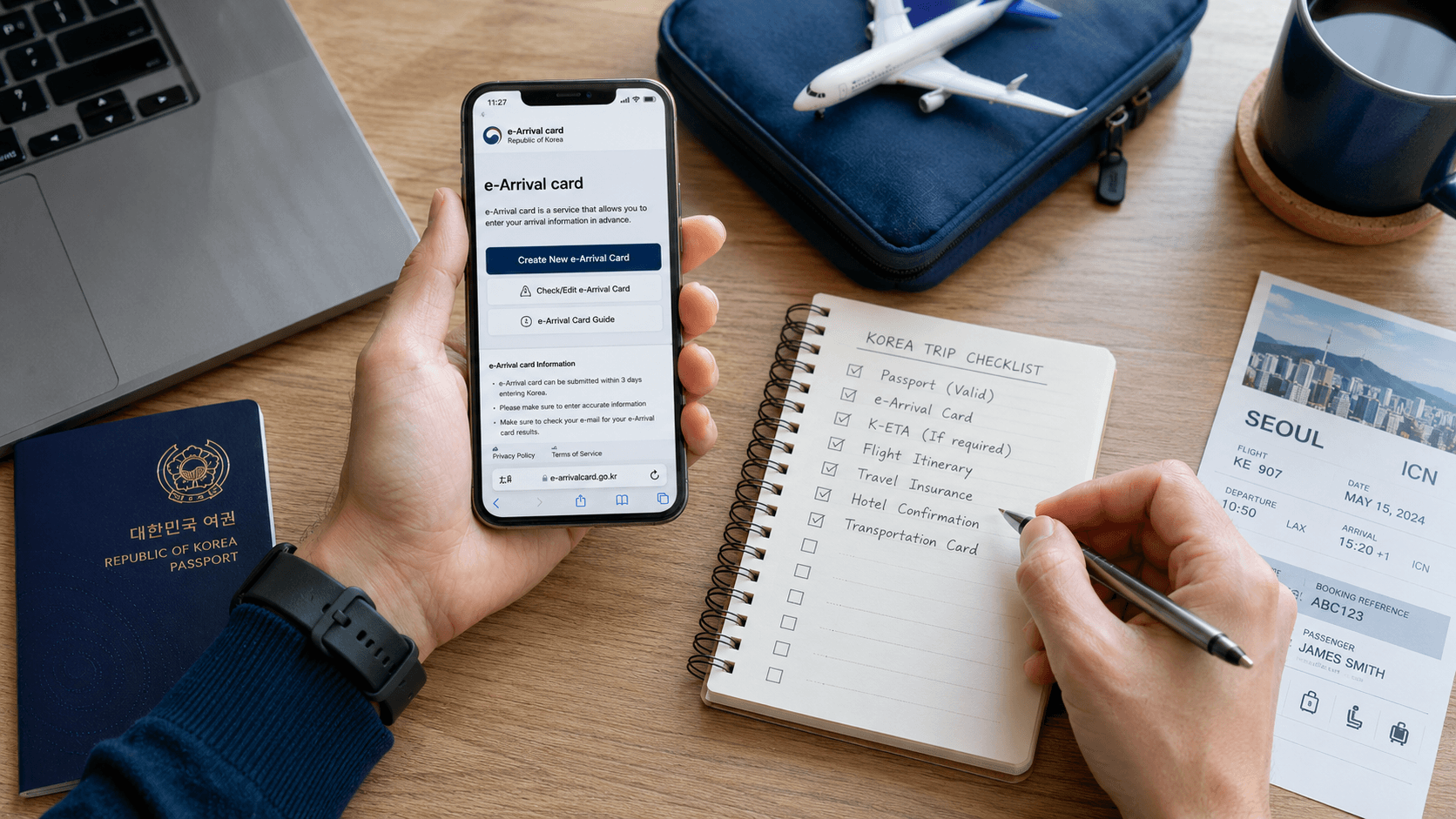
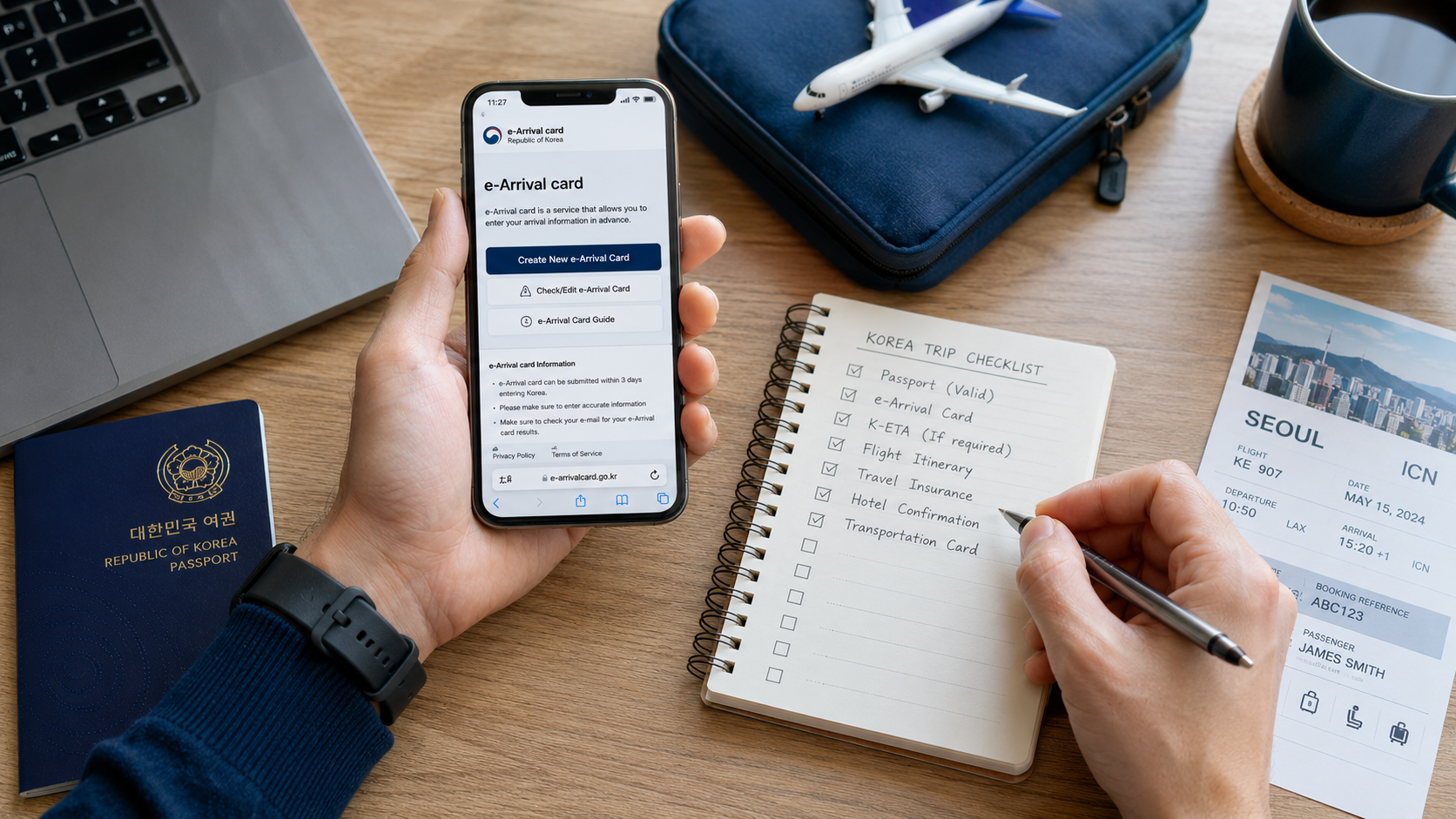
- Arrival form: Travelers who are not exempt may submit Korea's free e-Arrival Card within three days before arrival.
- Money: International cards work in many places, but carry some KRW for transportation-card reloads, markets, and small businesses.
- Transportation: Buy a rechargeable Tmoney or EZL card for buses and subways.
- Navigation: Install Naver Map or KakaoMap and save destinations in Hangul when possible.
- Internet: Arrange an eSIM, SIM card, roaming plan, or portable Wi-Fi before relying on public Wi-Fi.
- Emergencies: Call 112 for police and 119 for fire or medical emergencies.
- Electricity: Korea uses 220 volts, 60 hertz, with two-round-pin outlets.
1. Check your entry requirements before booking
Entry permission depends on your nationality, passport type, reason for travel, and intended stay. Do not assume that a rule applying to a friend or to a previous trip also applies to you.
Start with the official Korea Visa Portal and the website of the Korean embassy or consulate responsible for your country. A visa, visa exemption, or K-ETA does not guarantee admission; the final decision is made during immigration inspection.
K-ETA rules in 2026
K-ETA, the Korea Electronic Travel Authorization, normally applies to eligible visa-free visitors. However, Korea has extended its temporary exemption for designated countries and regions through December 31, 2026, Korea Standard Time. The exemption is not universal, so check your passport through the official K-ETA website.
Travelers covered by the exemption may still apply voluntarily if they want K-ETA benefits, including exemption from submitting an arrival card. The official application fee is KRW 10,000, and the K-ETA authority advises allowing up to 72 hours for assessment. Use only the government website or official K-ETA app; commercial intermediaries can charge substantially more.
These K-ETA details were verified on June 9, 2026 using the official temporary-exemption notice.
The e-Arrival Card
Foreign visitors who must submit an arrival card can complete the free official Korea e-Arrival Card online within three days before arrival. You will need your passport, flight or vessel information, accommodation address, contact details, and travel information.
Travelers with a valid K-ETA, registered foreign residents, and certain other exempt groups do not need an arrival card. If you are unsure, use the eligibility navigator on the official site. The service is free; a website asking for payment details is not the official service.
As of May 6, 2026, submission includes an email verification-code step. This process was verified on June 9, 2026.
2. Understand customs rules
Declare restricted or dutiable goods honestly. Food products, plants, meat, animal products, medicines, commercial goods, and large amounts of currency may require inspection or documentation.
Travelers carrying more than the equivalent of USD 10,000 in foreign currency, Korean currency, or specified payment instruments must report it to customs. This threshold was verified on June 9, 2026 through the Korea Customs Service foreign-currency guidance.
Prescription-drug rules require particular care. A medicine legally prescribed abroad may be controlled in Korea. Ask the Korean embassy or the relevant Korean authority well before departure, especially for narcotic, psychotropic, stimulant, or cannabis-derived medication. Keep medicines in original packaging and carry the prescription or a physician's letter, but do not treat those documents as automatic import permission.
3. Arrange mobile data before you need directions
Reliable data is more useful than making conventional phone calls. You may need it for navigation, translation, accommodation messages, restaurant waiting systems, and transport information.
Common options include:
- An eSIM activated before departure
- A physical tourist SIM collected at an airport
- International roaming from your home carrier
- A portable Wi-Fi router for a group
Check whether your phone is unlocked and supports the required SIM or eSIM. Airport telecom counters can be convenient, but confirm their operating hours if your flight arrives very early or late. Free Wi-Fi is available in numerous public and commercial locations, but it should not be your only plan outside major urban areas.
The Korea Tourism Organization lists airport connectivity options in its electricity and communications guide.
4. Use Korea-focused navigation apps
Install Naver Map or KakaoMap before arrival. They generally provide useful Korean public-transport routes, exit numbers, bus-stop information, and local place listings. Keep your normal map app as a backup rather than depending on one service.
Search results improve when you have the destination's Korean name or street address. Save the Hangul address for your hotel and major destinations in a note or screenshot. This is particularly useful when showing a destination to a taxi driver.
Also install a translation app with Korean language support and download its offline package. Camera translation can help with menus, ticket machines, warning notices, and appliance controls, although automated translations can be inaccurate.
5. Carry both a payment card and some KRW
Credit and debit cards are accepted at many hotels, restaurants, cafés, convenience stores, and shops. Nevertheless, a foreign card can fail because of the issuing bank, terminal configuration, offline payment requirements, or fraud controls.
Bring at least two cards from different networks if possible, and notify your bank of overseas travel when required. Keep some Korean won for:
- Reloading a basic transportation card
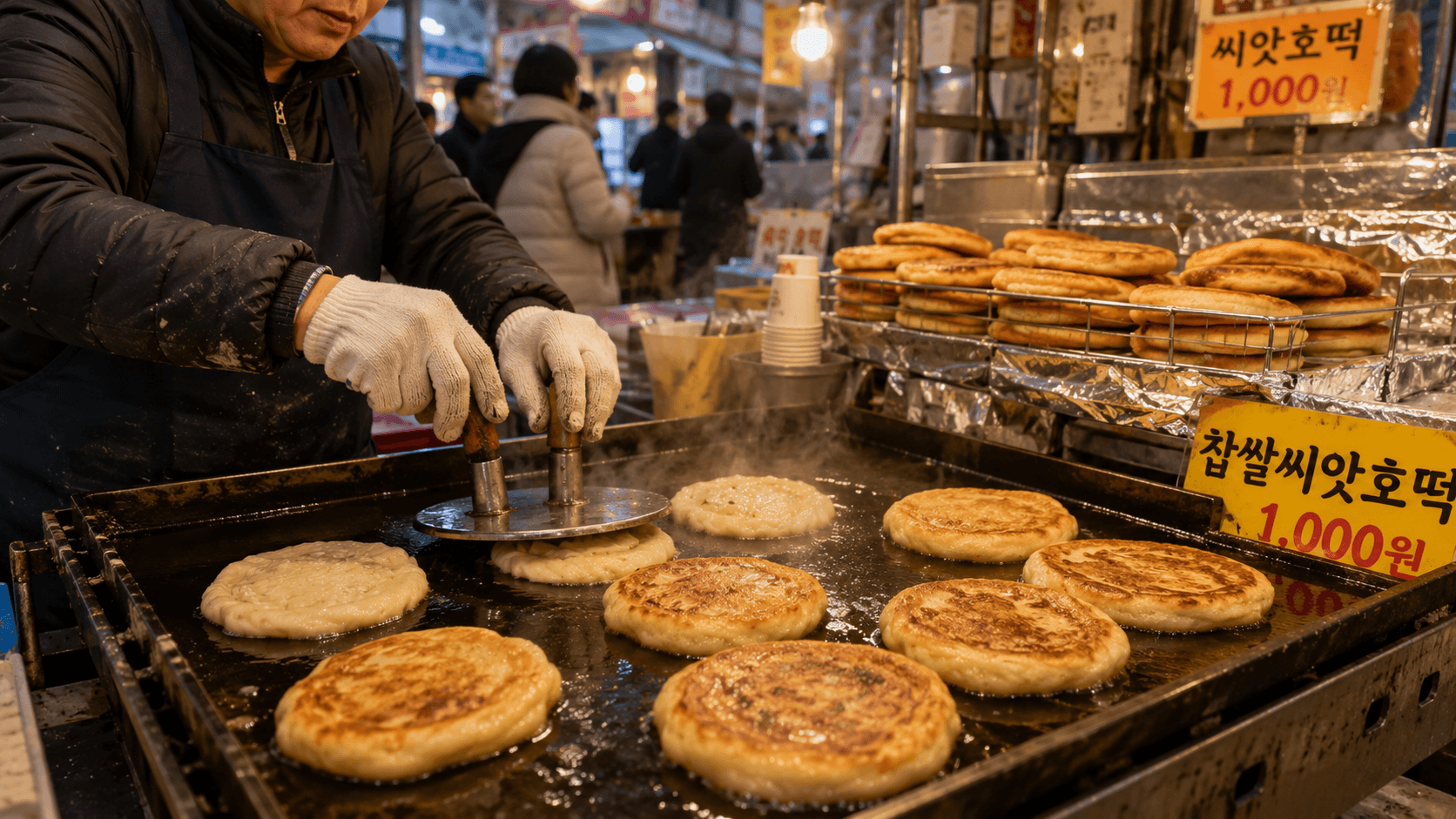
- Traditional markets and street stalls
- Small restaurants or rural businesses
- Coin lockers, older machines, or cash-only services
- Emergencies if a foreign card is declined
ATMs marked for global or foreign cards are the safer choice, but fees and withdrawal limits depend on both the Korean operator and your bank. Complete currency conversion in KRW rather than accepting an unfamiliar home-currency conversion without checking the rate.
Tipping is generally neither required nor expected in ordinary Korean restaurants, taxis, or salons, according to the Korea Tourism Organization's restaurant guidance. A hotel or tour product may have its own service policy, so follow any clearly stated terms.
6. Buy a transportation card
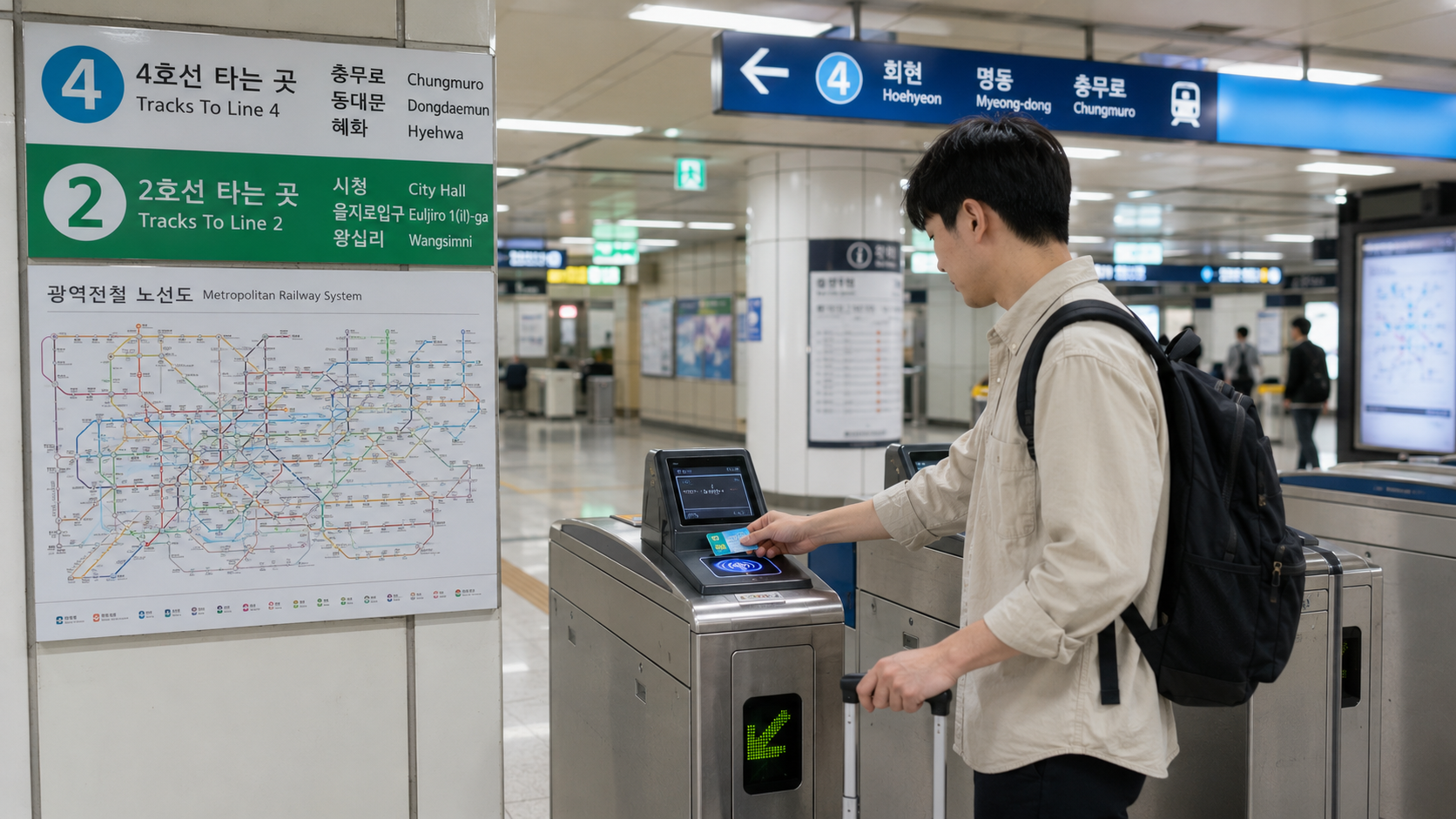
A rechargeable Tmoney or EZL card is the simplest option for most visitors using city buses and subways. Cards are sold at many convenience stores and transport locations. Tap when entering and leaving the subway; on buses, tap both when boarding and when getting off. The exit tap is important for calculating fares and recognizing eligible transfers.
Carry small KRW notes because basic transportation-card reloads are often easiest with cash. Do not load an unnecessarily large balance, especially near the end of your trip, because refund locations and conditions vary.
Korea also has tourist passes and Seoul-specific unlimited-use products, but their coverage can exclude particular services or stations. Compare your actual itinerary instead of assuming an unlimited pass is automatically cheaper. Current card types and service areas can be checked in the Korea Tourism Organization's transportation-card guide. Product information was checked on June 9, 2026, but prices and coverage should be reconfirmed immediately before purchase.
Airport transportation requires advance planning
Incheon International Airport is outside central Seoul. Airport Railroad services, buses, and taxis serve different neighborhoods and operating hours. The most convenient option depends on your terminal, accommodation location, luggage, arrival time, and the number of people traveling together.
Do not plan around the final train or bus without checking the date-specific timetable. Late-night arrivals may require a night bus, taxi, nearby hotel, or prearranged transfer. Use the Incheon International Airport transportation pages and the relevant operator's website shortly before travel.
At the airport, use official taxi stands. Incheon Airport specifically warns passengers about unauthorized solicitation and recommends boarding at designated ranks.
7. Expect compact rooms and specific accommodation rules
Hotel-room size varies, but lower-priced rooms in major cities can have limited luggage space. Check the stated floor area, bed dimensions, window type, elevator access, and bathroom arrangement rather than relying only on wide-angle photographs.
Confirm these details before booking:
- Check-in deadline and late-arrival procedure
- Whether reception operates overnight
- Luggage storage before check-in or after checkout
- Private versus shared bathroom
- Air-conditioning or heating availability by season
- Laundry facilities
- Elevator access and entrance steps
- Whether shoes must be removed indoors
Some traditional accommodation uses ondol (온돌), Korea's heated-floor system, with bedding placed on the floor. This can be culturally interesting but may not suit travelers who have difficulty standing up from floor level.
Korean addresses can refer to buildings within large complexes. Save the property's Korean name, phone number, full address, and a photo of the entrance.
8. Dining may work differently from home
Restaurants increasingly use kiosks, tablet ordering, QR menus, waiting-list systems, or table call buttons. Some interfaces require Korean phone numbers or locally issued cards. If a system does not work, politely ask staff rather than repeatedly attempting payment.
Useful words include:
- Mul (물): Water
- Maeun geo (매운 거): Spicy food
- An maepge (안 맵게): Not spicy, although the kitchen may not always be able to change the dish
- Gyesanseo (계산서): Bill or check
- Hwajangsil (화장실): Toilet
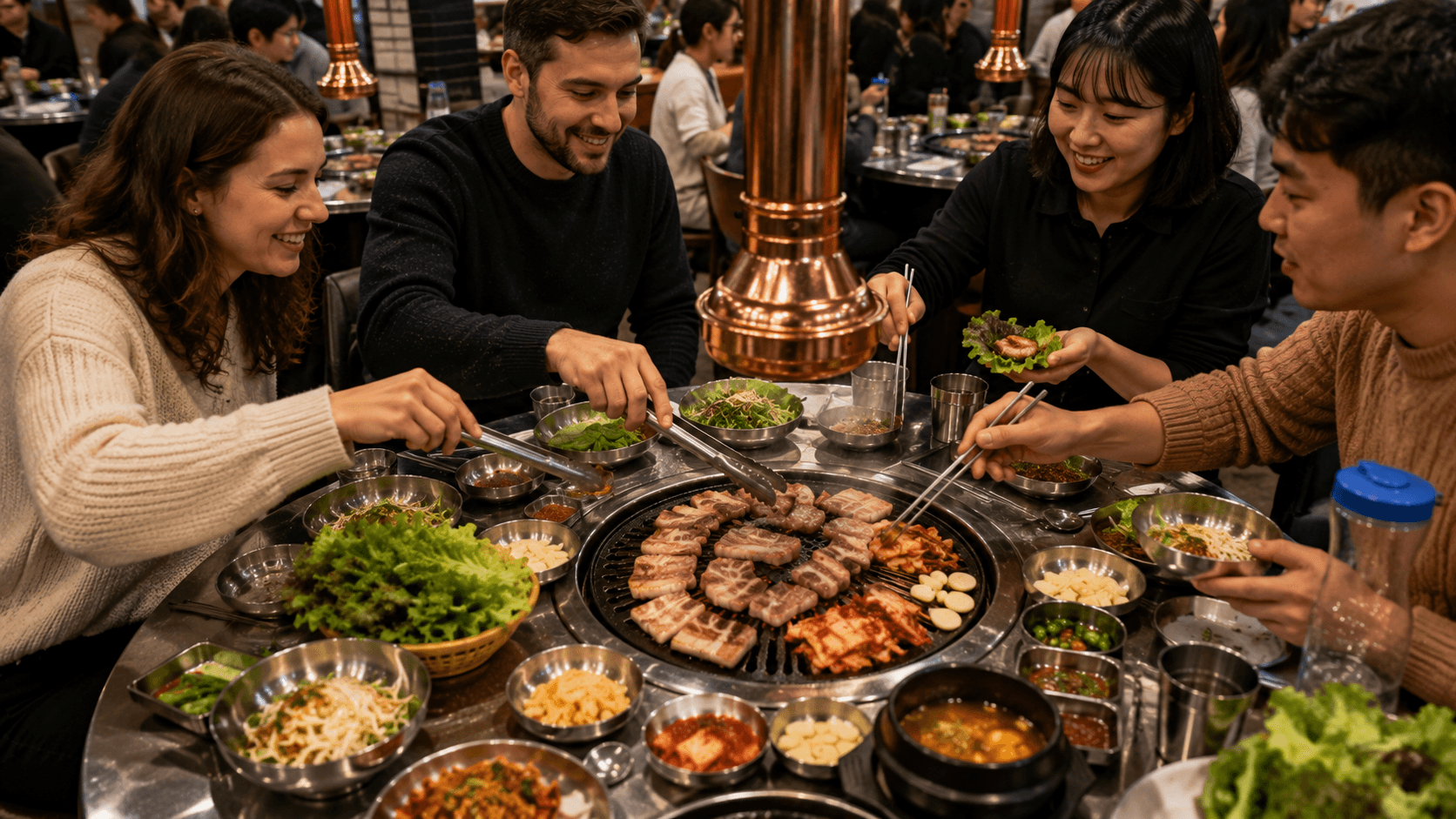
Side dishes, called banchan (반찬), are commonly shared. At barbecue restaurants, staff may cook the meat or expect customers to do it; follow the restaurant's setup. Water and some side dishes may be self-service.
Travelers with severe allergies, religious restrictions, or strict diets should carry a clearly translated card listing prohibited ingredients. Broths, sauces, kimchi, and garnishes can contain ingredients that are not obvious. Translation reduces risk but cannot guarantee a contamination-free kitchen.
9. Follow everyday public etiquette
Korea does not require visitors to know every social convention, but a few habits prevent misunderstandings:
- Keep phone calls and videos quiet on public transportation.
- Queue where floor markings indicate a line.
- Let passengers leave trains and elevators before entering.
- Avoid occupying priority seats when someone needs them.
- Remove shoes when the interior layout or host indicates it.
- Ask before photographing individuals, ceremonies, military facilities, or private businesses.
- Use designated smoking areas; smoking restrictions apply in many public places.
- Carry your rubbish until you find the correct bin, and separate waste when signs require it.
On escalators, follow posted instructions and local passenger flow rather than assuming one side is always intended for walking.
10. Prepare for weather and walking
Korea has four distinct seasons. Summer can be hot, humid, and rainy, while winter can be dry and cold. Spring and autumn temperatures can change considerably between daytime and evening. Check the Korea Meteorological Administration forecast immediately before packing.
Comfortable walking shoes matter. Subway transfers, station exits, palace grounds, hillside neighborhoods, and traditional streets can involve stairs or uneven surfaces. Travelers with reduced mobility should check station elevator locations and accessible entrances in advance; the closest numbered exit may not be the accessible one.
Air-quality conditions can change daily. Use an official forecast or trusted weather service rather than planning around seasonal assumptions. During periods of poor air quality, follow Korean public-health guidance, particularly if you have respiratory or cardiovascular conditions.
11. Know the emergency numbers
The main emergency numbers are:
| Situation | Number |
|---|---|
| Police | 112 |
| Fire or medical emergency | 119 |
| Korea Travel Helpline | 1330 |
| Infectious-disease information | 1339 |
These numbers were verified on June 9, 2026 through the Korea Tourism Organization's emergency information page. In an emergency, state your location first. If you cannot pronounce the address, show or read the Korean address from your map app.
Travel insurance is strongly advisable. Confirm whether your policy covers pre-existing conditions, outdoor activities, rental vehicles, trip disruption, and direct billing. Medical treatment may require payment or a deposit before reimbursement by your insurer.
Save your embassy's contact details and keep digital copies of your passport, insurance certificate, prescriptions, and booking information. Store copies separately from the originals.
12. Bring the correct electrical adapter
Korea uses 220 volts at 60 hertz and outlets with two round holes. This was verified on June 9, 2026 through the Korea Tourism Organization electricity guide.
A plug adapter changes only the plug shape. It does not convert voltage. Check the input label on hair tools, chargers, and medical devices. Electronics marked for an input such as 100–240V generally need only a compatible plug adapter, while a single-voltage appliance may require a converter or may be unsafe to use.
What to check before you go
- Confirm visa, visa-free, and K-ETA eligibility for your exact passport.
- Submit the free e-Arrival Card if required.
- Check customs permission for medicines, food, plants, and restricted items.
- Save your accommodation's Korean address and phone number.
- Install navigation, translation, airline, and weather apps.
- Arrange an eSIM, SIM, roaming plan, or portable Wi-Fi.
- Carry at least two payment methods plus some KRW.
- Check your airport terminal and transport timetable.
- Review luggage rules for every domestic flight, train, or bus booking.
- Pack a two-round-pin adapter and verify device voltage.
- Save 112, 119, 1330, your insurer, and your embassy.
- Recheck weather, closures, reservations, and last admission times immediately before each outing.
Your most useful next step is to check your passport on the official visa and K-ETA sites, then save your first accommodation in a Korea-focused map app before booking airport transportation.
Sources
- Korea Electronic Travel Authorization
- K-ETA temporary-exemption extension notice
- Korea Electronic Arrival Card
- Korea Visa Portal
- Korea Customs Service foreign-currency guidance
- Korea Tourism Organization transportation-card guide
- Incheon International Airport transportation information
- Korea Tourism Organization emergency information
- Korea Tourism Organization electricity and communications guide