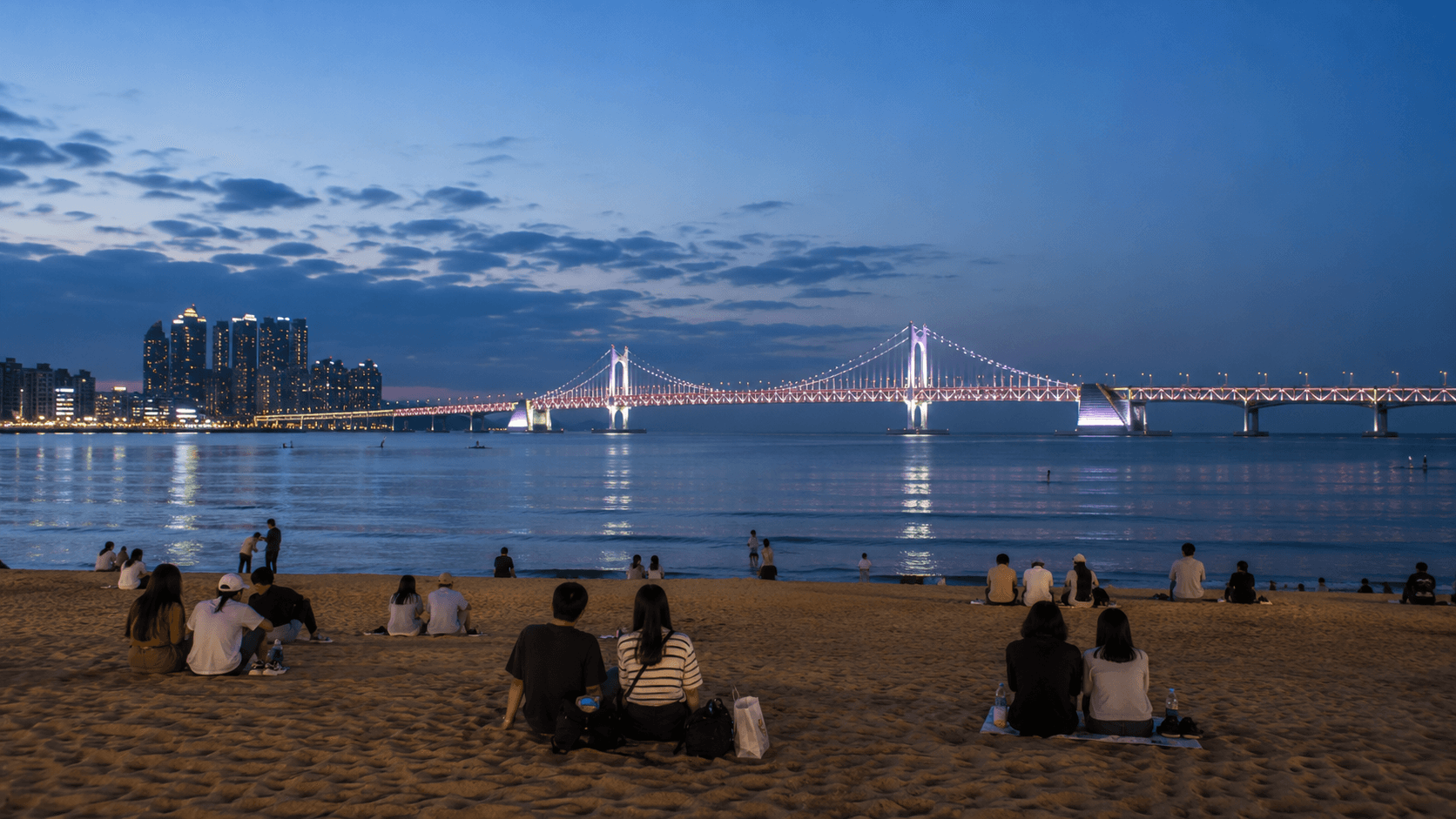
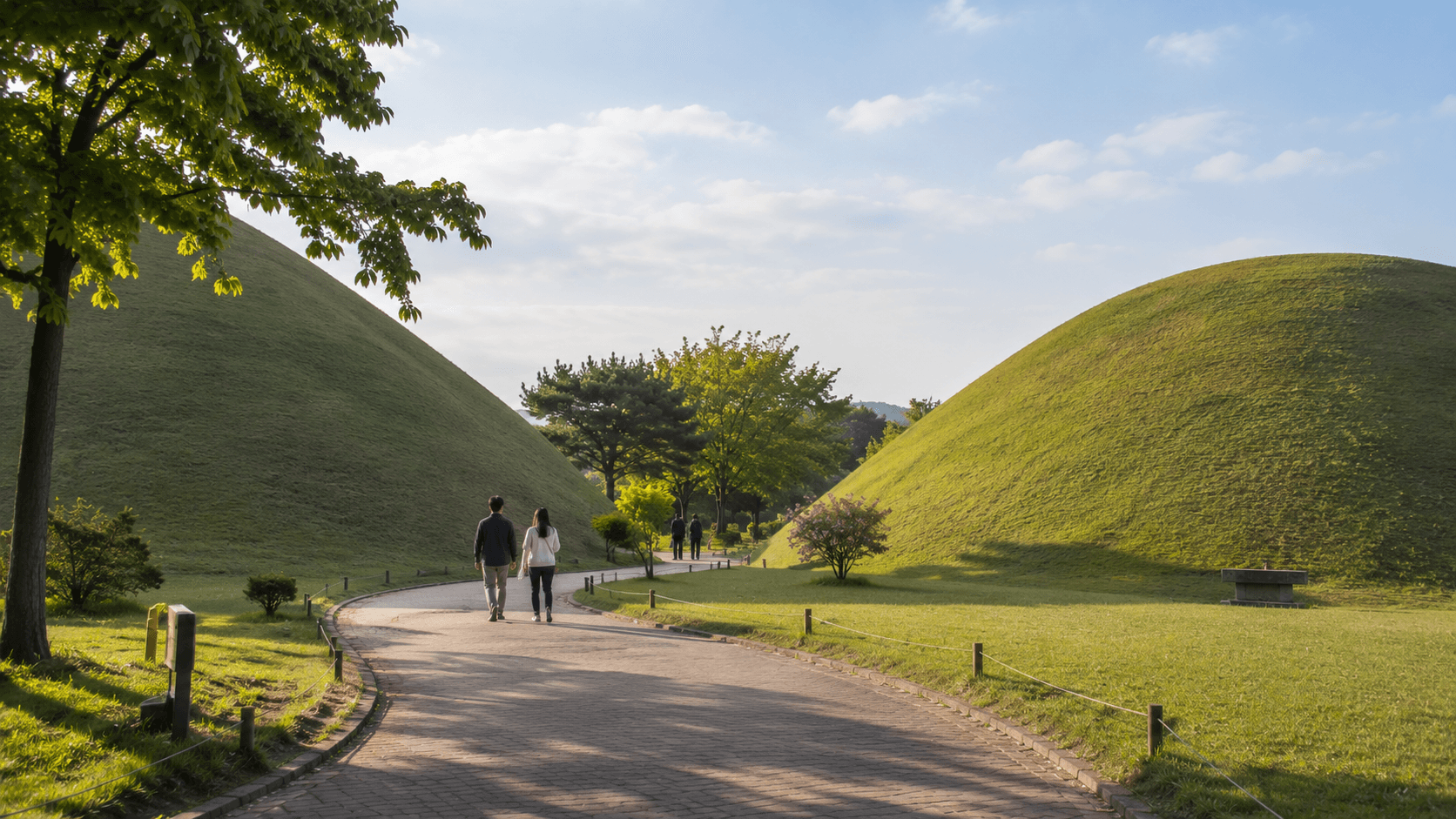
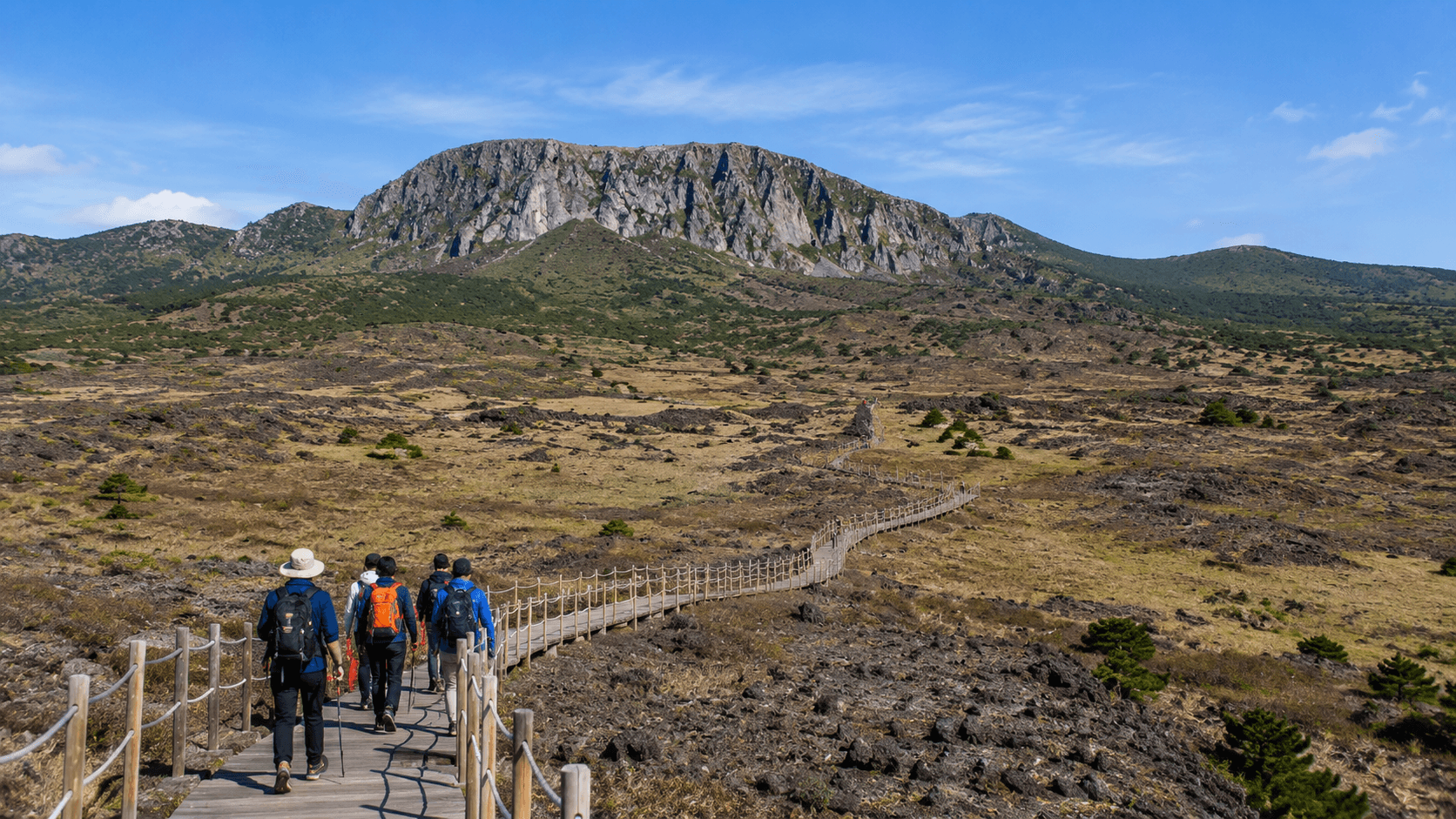
Jeju is too large and spread out for one neighborhood to suit every trip. For a short visit without a car, stay in Jeju City or downtown Seogwipo. For resorts and family facilities, choose Jungmun. Stay in Seongsan for an early start at Seongsan Ilchulbong and Udo, or choose Aewol, Hallim, Hamdeok, or the southwest coast when coastal scenery matters more than transport convenience.
Quick answer
| Area | Best for | Main limitation |
|---|---|---|
| Jeju City | Short trips, airport access, buses, late arrivals | Urban rather than resort-like |
| Downtown Seogwipo | Waterfalls, markets, southern coast, car-free stays | Long transfer from the airport |
| Jungmun | Resorts, families, accessible facilities | Less local street life; higher resort prices |
| Seongsan | Sunrise Peak, Udo, eastern Jeju | Far from western attractions and the airport |
| Hamdeok | Beach stays with useful local services | Cross-island journeys take time |
| Aewol | Cafes, sunsets, short coastal breaks | Traffic and dispersed accommodation |
| Hallim and Hyeopjae | Beaches and western Jeju | Less convenient without a car |
| Southwest coast | Quiet scenery, Sanbangsan, Olle walking | Limited evening transport and dining |
The safest first-time choice: Jeju City for two nights or less; Jeju City plus Seogwipo for four nights or more.
Understand Jeju's geography first
Hallasan Mountain occupies the island's center, so journeys often follow coastal roads or cross one of a limited number of mountain routes. A place that looks close on a map can require a lengthy bus journey with a transfer.
Jeju is administratively divided between Jeju City in the north and Seogwipo City in the south. These names cover much larger territories than their downtown districts. A listing marked simply as “Jeju City” could be in Aewol, Hallim, Hamdeok, or another outlying community. Always inspect the exact pin and nearest bus stop before booking.
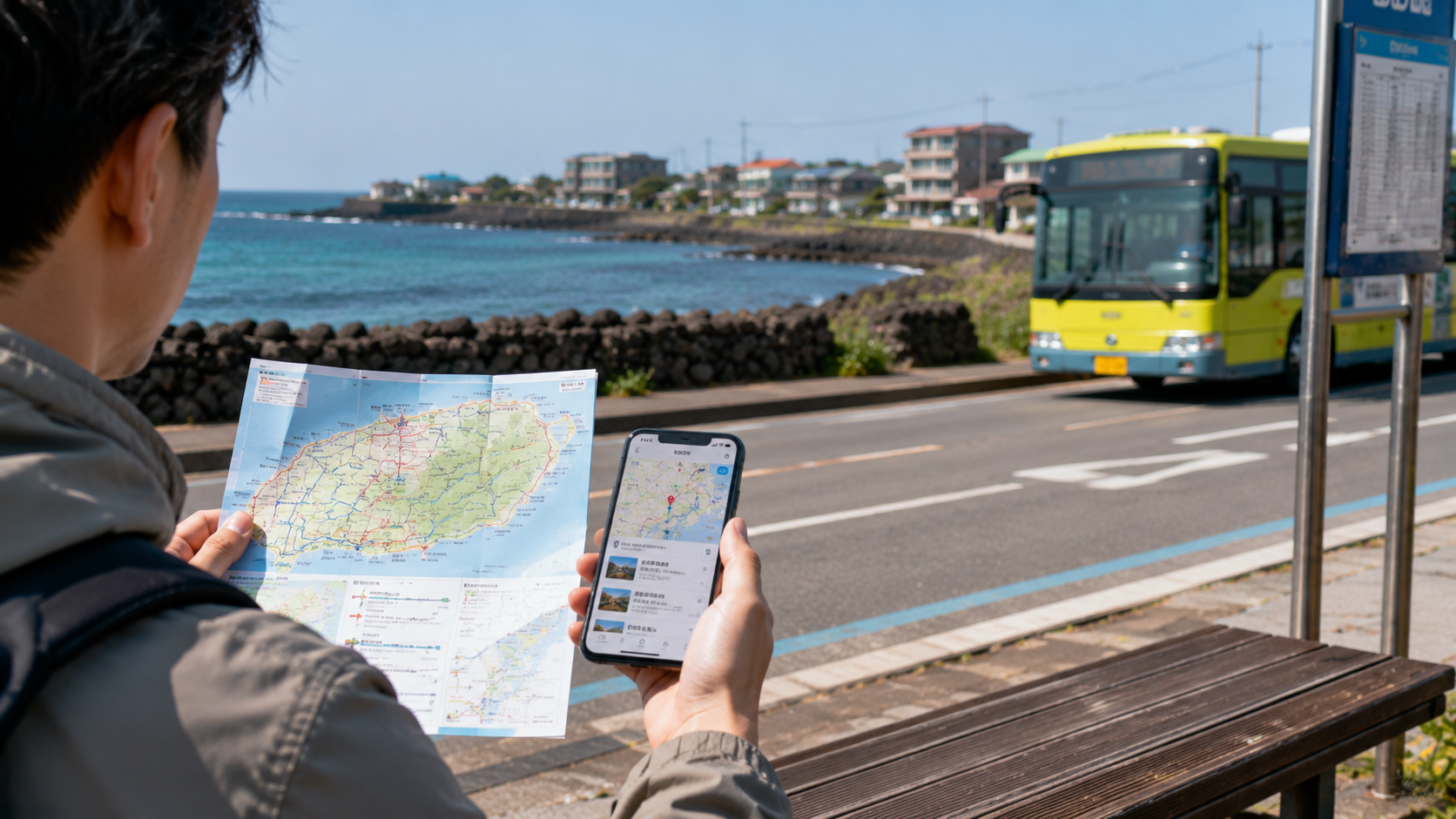
The official Visit Jeju English map is useful for seeing how the main towns and attractions are distributed.
Jeju City: best for convenience and short trips
Jeju City is the practical base for travelers arriving late, departing early, staying only one or two nights, or relying heavily on buses. Jeju International Airport is on the northern edge of the urban area, and the city has the island's widest selection of restaurants, shops, transport connections, and everyday services.
Which part of Jeju City?
Yeondong and Nohyeong, often collectively called Shin Jeju or New Jeju, offer modern hotels, restaurants, shopping, and relatively easy airport access. This is usually the simplest district for a first night.
Old Jeju, around Dongmun Traditional Market, Jungang-ro, and Tapdong, suits travelers who prefer markets, older streets, waterfront walks, and access to Jeju Port. Check the walking distance carefully: properties described as near Dongmun Market may still be separated from it by steep or busy roads.
Jeju City is less suitable if every day of your itinerary is focused on Seogwipo, Jungmun, or the far eastern coast. Repeated cross-island journeys can consume a substantial part of the trip.
Downtown Seogwipo: best all-round base in southern Jeju
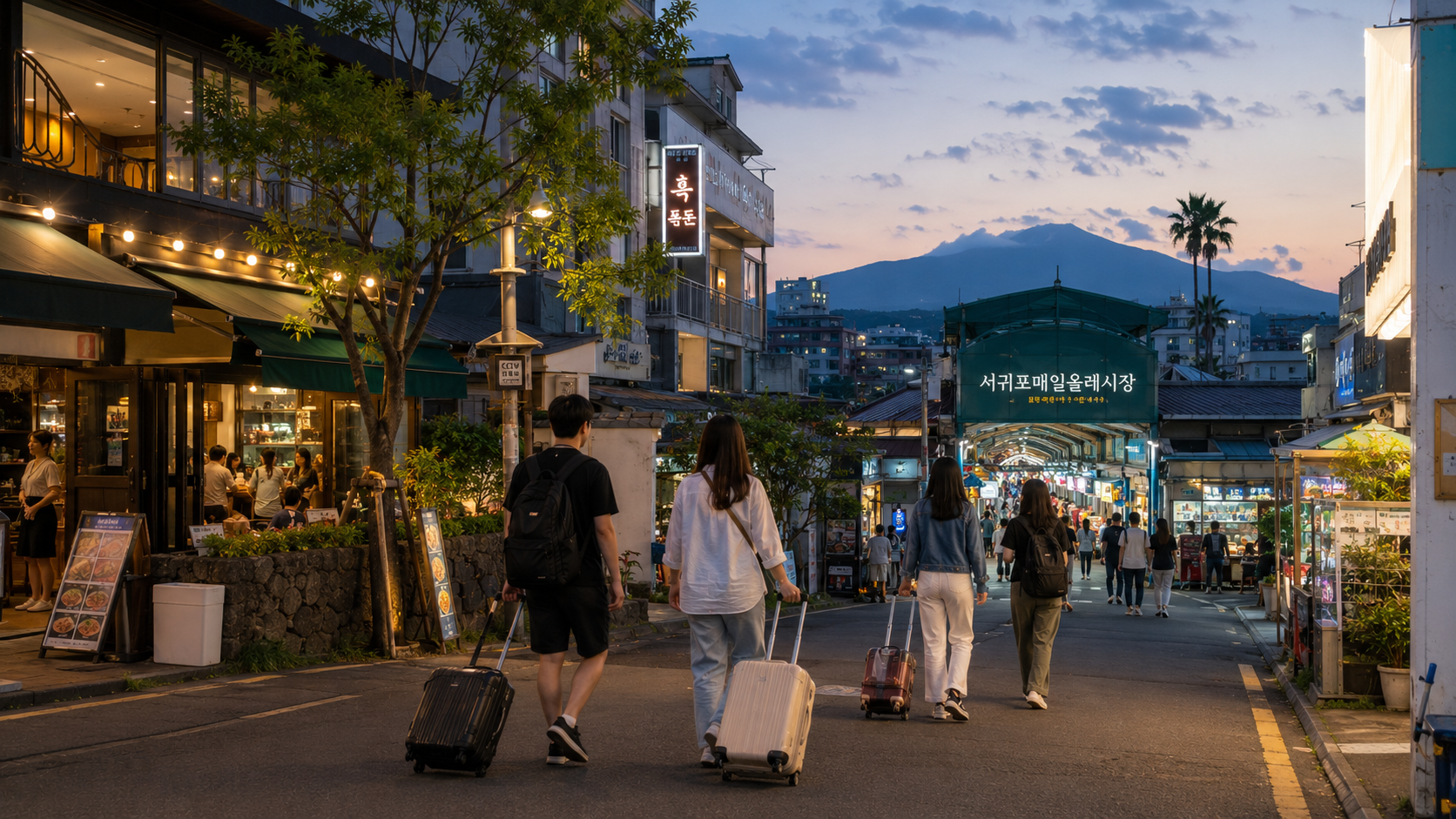
Downtown Seogwipo combines local restaurants, a traditional market, urban bus connections, and access to the southern coast. It is a strong choice for travelers visiting Cheonjiyeon Waterfall, Jeongbang Waterfall, Oedolgae, Soesokkak, or sections of the Jeju Olle Trail.
Look near Seogwipo Maeil Olle Market, Lee Jung-seop Street, or a useful bus corridor. The area around the market is convenient for evening meals, while accommodation closer to the coast may offer views but involve slopes. Jeju's volcanic terrain makes a short map distance potentially awkward with luggage or a wheelchair.
Downtown Seogwipo is different from Jungmun. They are separate districts, and a hotel described broadly as being in Seogwipo City may be far from central Seogwipo.
The airport's official Route 600 limousine bus serves Jungmun and continues through several southern stops toward Seogwipo. As verified on June 11, 2026, the Jeju Airport public-transport page listed airport departures from 6:00 a.m. to 10:40 p.m., with intervals of approximately 16 to 40 minutes. Timetables can change, so check the official page again shortly before travel.
Jungmun: best for resorts and families
Jungmun Tourism Complex on the southwest side of Seogwipo contains large hotels and resorts near attractions such as Jungmun Saekdal Beach, Cheonjeyeon Waterfalls, and the International Convention Center Jeju.
Choose Jungmun when you want substantial on-site facilities, sea views, organized breakfasts, pools, or family-oriented services. Larger properties are also more likely than small guesthouses to have lifts, staffed reception desks, luggage storage, and accessible rooms, although none of these should be assumed without confirmation.
The disadvantage is that the complex is spread out. A hotel may be close to another property on the map but separated by slopes, large grounds, or roads. Restaurants outside the resorts can require a bus, taxi, or considerable walk.
Route 600 links the airport with numerous Jungmun hotels. The official route and hotel stops should still be checked against your property's exact name because similarly named hotels and branches can cause confusion.
Seongsan: best for eastern Jeju and Udo
Stay in Seongsan when your priorities include Seongsan Ilchulbong, Gwangchigi Beach, Udo, or the eastern Jeju Olle routes. Sleeping locally makes an early visit to Seongsan Ilchulbong much easier and reduces the risk of missing a ferry connection during a Udo day trip.
Accommodation is distributed around Seongsan village, the Ilchulbong entrance, and the ports. Before booking, identify whether you need Seongsan Port or Jongdal Port, then check current ferry operations directly. Sailings can be affected by weather, and schedules should not be treated as fixed.
Seongsan is not an efficient base for Hyeopjae, Aewol, Jungmun, or other western destinations. The official airport taxi estimates, accessed on June 11, 2026, indicated approximately 100 minutes and KRW 45,000 by standard taxi from the airport to Seongsan-eup. These are estimates, not guaranteed fares; the meter, traffic, weather, and exact destination determine the actual cost.
Hamdeok: best beach base without complete isolation
Hamdeok on the northeast coast works well for visitors who want to stay near the sea while retaining access to restaurants, cafes, convenience stores, and buses. It is more practical than an isolated rural pension, especially for travelers who do not intend to drive.
Search around Hamdeok Seoubong Beach (함덕해수욕장), then check whether the property is actually walkable from the beach and a useful bus stop. Some listings use the Hamdeok name for accommodation farther inland.
Hamdeok is convenient for northeastern Jeju, including Jocheon, Gimnyeong, and parts of Gujwa. It is less efficient for repeated visits to Seogwipo or the southwest coast.
Aewol: best for coastal cafes and sunsets
Aewol lies west of Jeju City and is associated with coastal roads, cafes, sea views, and sunset stays. It can work well for couples, repeat visitors, and travelers planning a slower itinerary rather than a checklist of island-wide attractions.
The label “Aewol” covers a large district. A property may be near Aewol Handam Coastal Trail, beside a small village, or well inland. Confirm the exact location rather than choosing by district name alone.
Aewol's popularity can bring road congestion, particularly around well-known cafe areas and on weekends. Parking availability matters if you have a rental car. Without one, prioritize accommodation near a bus stop and restaurants that remain open in the evening.
The airport's published taxi estimate to Aewol-eup was approximately 55 minutes and KRW 25,000 for a standard taxi when checked on June 11, 2026. Actual time and fare depend heavily on where in the district you are staying.
Hallim and Hyeopjae: best for western beaches
Hallim and Hyeopjae suit travelers who want western Jeju's beaches, sunsets, and access to nearby attractions rather than nightlife or airport convenience. Hyeopjae Beach and the neighboring Geumneung area have accommodation ranging from small hotels to pensions and holiday rentals.
This area is easier with a car. Bus travel is possible, but connections between scattered attractions may require waiting or returning to a main road. In summer, check whether a property provides parking and whether beach equipment, showers, or laundry facilities are available.
Do not assume that “ocean view” means direct beach access. A coastal road, another building, or agricultural land may stand between the room and the shore.
Southwest Jeju: best for quiet scenery and walking
The coast around Andeok, Sanbangsan, Sagye, and Moseulpo is appropriate for quiet stays, photography, coastal walks, and western sections of the Jeju Olle Trail. The landscape feels less urban than Jeju City or central Seogwipo.
This is a good area for travelers who have a car or who are deliberately planning a walking-based stay. It is a poor choice for visitors expecting frequent late buses, extensive shopping, or a broad range of restaurants within walking distance.
Check restaurant closing days and arrange dinner before returning to an isolated property. Small businesses in rural Jeju may close earlier or take irregular rest days.
Should you split your stay?
Splitting accommodation is worthwhile when it removes repeated cross-island journeys. It is less useful when you have only two or three nights and would lose time checking out, moving luggage, and checking in again.
Practical combinations
- Three nights: Stay in Jeju City for convenience, or choose Seogwipo if the south is your clear priority.
- Four or five nights: Divide the trip between Jeju City and Seogwipo.
- Five to seven nights: Use Jeju City or Aewol for the west and north, then Seogwipo or Jungmun for the south. Add Seongsan only if eastern Jeju is a major focus.
- Olle walking trip: Book near the start or finish of each selected route rather than maintaining one distant base. Confirm the latest route information with the Jeju Olle Foundation.
Choosing an accommodation type
A Korean pension (펜션) is generally a holiday property, often with apartment-style rooms, kitchens, barbecue areas, or family facilities. It is unrelated to a retirement pension. Standards vary widely, and reception may not be staffed continuously.
Guesthouses can be economical and social, but may have shared bathrooms, curfews, age restrictions, or fixed check-in periods. Some use dormitory layouts; others offer private rooms.
Hotels and resorts are usually easier for late arrivals, luggage storage, elevators, and staffed assistance. Nevertheless, verify individual facilities instead of relying on the category name.
For longer stays, a room with laundry access and a proper kitchen may be more useful than an ocean view. Confirm whether cooking is permitted: a room advertised with a kitchenette may provide only a sink, microwave, and refrigerator.
Booking checklist
Before paying, check:
- The property's exact map pin, not only the district name
- Walking distance to the nearest useful bus stop
- Final check-in time and arrangements for late arrival
- Lift access and steps between the road, lobby, and room
- Parking availability and whether advance registration is required
- Bed type; Korean-style rooms may use floor bedding called yo (요)
- Private versus shared bathroom
- Air conditioning and heating arrangements
- Laundry facilities for stays longer than a few days
- Luggage storage before check-in or after checkout
- Cancellation terms during typhoon season or other severe weather
- Whether breakfast, pools, and barbecue facilities are seasonal or separately charged
- Whether the property's Korean name and phone number are available for taxi drivers
Card payment is common at established hotels, but small guesthouses or independently arranged stays may have different deposit requirements. Keep the booking confirmation and payment conditions in writing. Never transfer money outside a booking platform unless you have independently confirmed the property and understand the cancellation terms.
Accessibility and luggage
Jeju's slopes, curbs, rural roads, and spread-out attractions require extra planning for travelers with limited mobility. Ask the property for specific measurements or photographs when necessary. “Accessible” can refer to the entrance while the bathroom, breakfast room, pool, or route from the car park remains difficult.
Visit Jeju maintains an accessible tourism information section, but facilities and operating conditions should be confirmed directly with each venue and hotel.
Traveling with large luggage is easiest when the hotel is near the airport bus route or when transfers are arranged in advance. Local buses may be crowded and are not designed around large suitcases. A taxi can be more practical for a group, but long cross-island trips are expensive.
What to check before you go
- Plot every planned attraction on a map before selecting a base.
- Check routes in Naver Map or KakaoMap, which generally provide more useful local navigation than relying solely on an international map service.
- Recheck the official Jeju bus information system shortly before each long journey.
- Confirm your hotel's Korean name, address, telephone number, and final check-in time.
- Review weather forecasts before changing regions or attempting a mountain, ferry, or coastal itinerary.
- If hiking Hallasan, check current trail controls and reservation requirements on the official Hallasan National Park website.
- Download the official Jeju map and save key addresses offline in case mobile data is unreliable.
For trip-planning assistance, the Visit Jeju website lists the Jeju Tourist Information Center at 064-740-6000. Its current homepage also links English-language online assistance. Verify service hours before relying on the telephone line.
Sources
- Visit Jeju official tourism website
- Official Visit Jeju English map
- Jeju International Airport public transportation
- Jeju International Airport taxi estimates
- Jeju official bus information system
- Hallasan National Park
Transport details and estimates in this guide were verified on June 11, 2026. Recheck them before departure, especially for late arrivals, ferries, mountain access, and airport transfers.