Korea’s most distinctive winter festivals fall into three groups: ice-fishing events on frozen rivers, snow festivals in the mountains of Gangwon Province, and urban light festivals that are easier to visit from Seoul. January is generally the main month for ice fishing, while snow events may continue into February and city illuminations often begin in December.
As of June 11, 2026, schedules for the 2026–27 winter season have not been announced on the official festival websites covered below. The dates in this guide refer to the most recently confirmed editions and should be used for orientation only, not for booking future travel.
At a glance
| Festival | Area | Main attraction | Typical timing | Suitable for |
|---|---|---|---|---|
| Hwacheon Sancheoneo Ice Festival | Hwacheon, Gangwon Province | Ice fishing and frozen-river activities | January | A large, activity-focused day trip or overnight stay |
| Pyeongchang Trout Festival | Jinbu, Pyeongchang | Trout fishing, winter rides and food | January to early February | Travelers using the KTX and families |
| Daegwallyeong Snow Festival | Daegwallyeong, Pyeongchang | Snow sculptures and snow play | January or February | Snow scenery without fishing |
| Taebaeksan Snow Festival | Taebaek, Gangwon Province | Snow displays and mountain atmosphere | Usually late January or February | Travelers combining a festival with hiking or regional sightseeing |
| Seoul Lantern Festival | Central Seoul | Lanterns and light installations | Usually December | Visitors wanting an easy evening event |
Exact programs, admission charges, operating hours and transport arrangements change each year. Natural-ice activities may also be restricted or moved when temperatures are too high.
1. Hwacheon Sancheoneo Ice Festival
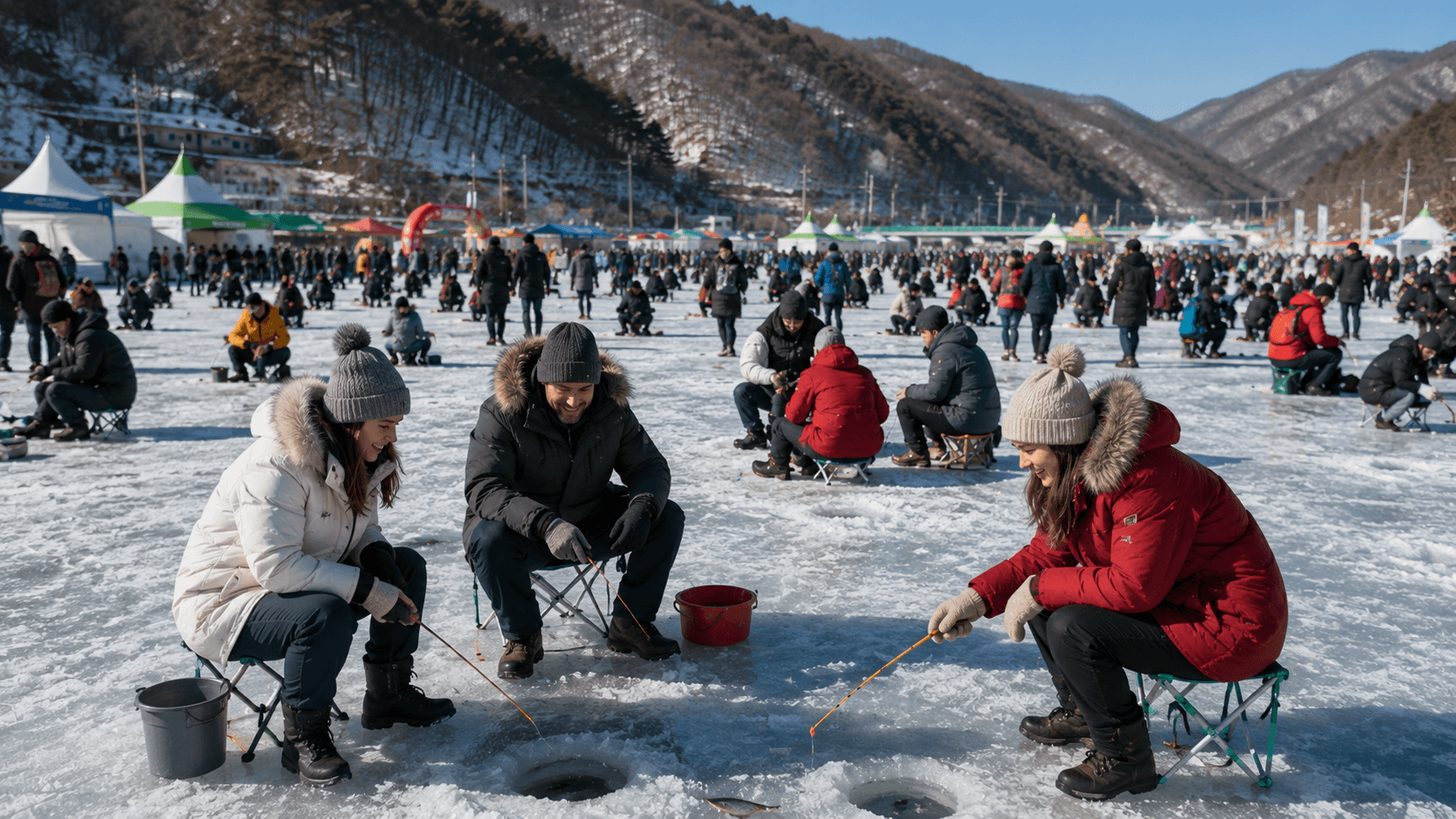
The Hwacheon Sancheoneo Ice Festival, or 화천산천어축제, is built around catching sancheoneo, a type of mountain trout, through holes cut into a frozen stream. The main festival area is in Hwacheon-eup, a small county town in Gangwon Province.
The event normally includes several fishing formats. Standard ice fishing takes place in an open section of the frozen river, while reserved zones may provide a more controlled entry system. Other activities can include sledding, ice or snow play, displays and indoor fishing when conditions permit. Programs are not identical every year.
The festival’s scale makes it visually impressive, but it also means long queues and crowded fishing areas on weekends. Visit on a weekday if fishing is your priority. Arriving near opening time gives you more time to understand the ticket system, rent or buy equipment and find an available fishing hole.
Check the official Hwacheon Sancheoneo Ice Festival website for the next confirmed dates, reservations and weather-related notices. No 2026–27 schedule was published there when checked on June 11, 2026.
Getting to Hwacheon
Hwacheon does not have a railway station. Independent travelers usually take an intercity bus, often through Chuncheon, and continue to Hwacheon by local or intercity bus. Special tour buses may be offered from Seoul during the festival, but they should not be assumed to operate every season.
Public transport is possible, but a day trip requires careful attention to the last return bus. Staying one night in Hwacheon or Chuncheon provides more flexibility, particularly during bad weather.
What to expect from ice fishing
Catching a fish is not guaranteed. Staff may be available to demonstrate basic technique, but English assistance can vary. Short lifting movements are generally used to attract the fish rather than leaving the line completely still.
Ask where caught fish can be prepared. Past editions have operated cooking or food-service areas, but preparation methods, charges and catch limits can change. Do not assume you can release fish or carry them onto public transport without suitable packaging.
2. Pyeongchang Trout Festival
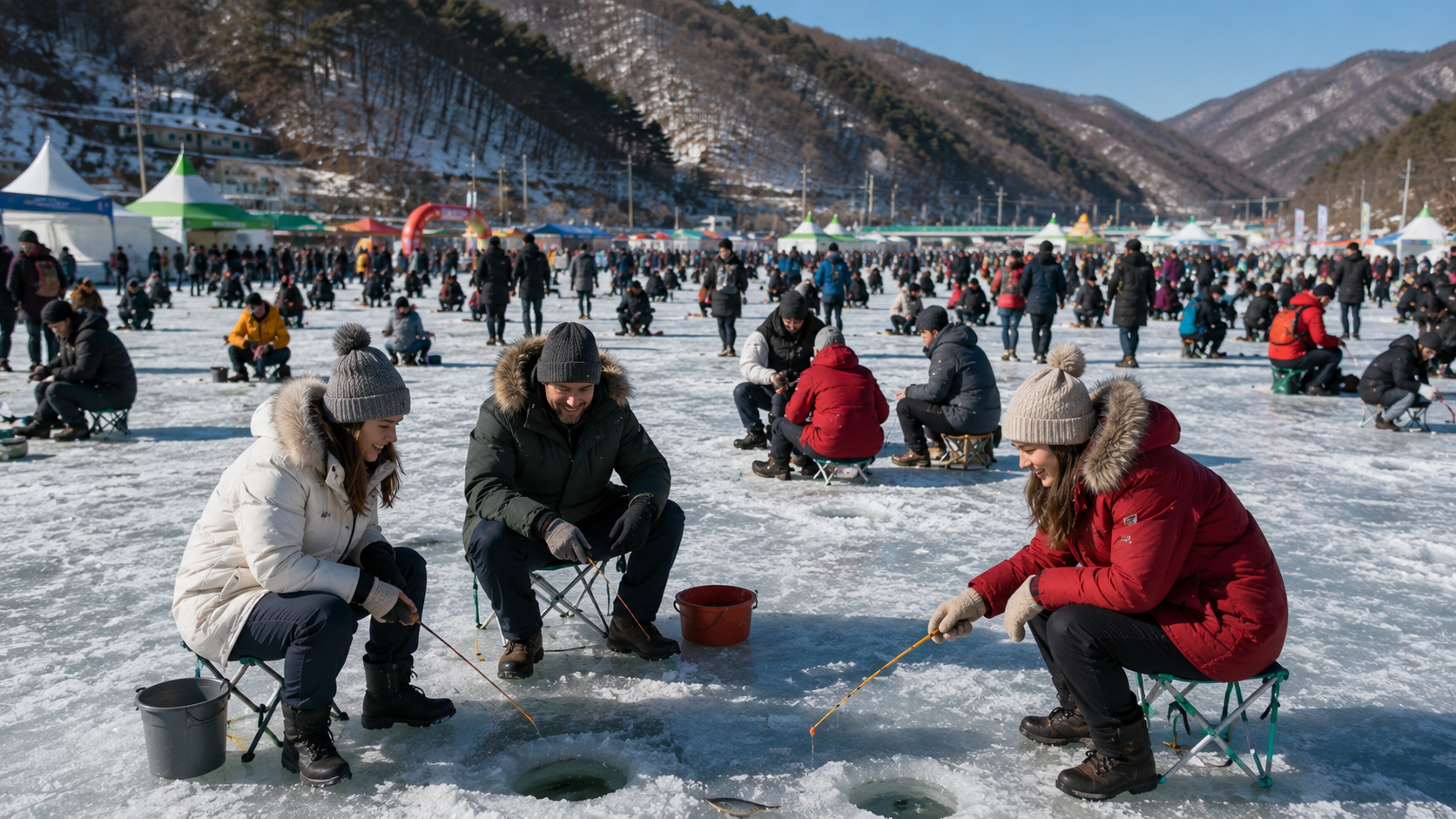
The Pyeongchang Trout Festival, or 평창송어축제, takes place around the Odaecheon stream in Jinbu, Pyeongchang County. It combines trout fishing with winter play facilities and food areas.
The official organizer confirmed that the 2026 edition ran from January 9 to February 9, 2026, closing at 2 p.m. on its final day. Regular operating hours were 9 a.m. to 5 p.m., with ticket sales ending at 4 p.m. These details were verified on June 11, 2026 and apply only to that completed edition.
The festival website listed tent fishing, open ice fishing, indoor fishing, bare-hand trout catching and winter rides. It also stated that only tent fishing could be reserved online; other tickets were sold on site. Foreign visitors needing reservation assistance were directed to contact the organizer by telephone. Check the official Pyeongchang Trout Festival website for the next season’s rules and prices.
Why this festival is relatively convenient
Jinbu has a KTX station on the Gangneung Line, making it more accessible from Seoul than many rural winter festivals. The festival address listed by the organizer is 3562 Gyeonggang-ro, Jinbu-myeon, Pyeongchang-gun, Gangwon State.
Do not assume that a shuttle will be waiting for every train. Confirm the current connection from Jinbu Station before departure and allow time for a taxi if necessary. Reserve long-distance rail tickets early for weekends and public holidays through the official KORAIL website.
Tickets and non-fishing companions
For the 2026 edition, the organizer stated that everyone entering the tent and general fishing zones needed a ticket, except eligible preschool children accompanied by a guardian. This means a friend who only wants to watch may still need to pay for entry. Check the next edition’s age definitions and spectator rules before purchasing.
Warm tents may sound more comfortable, but they can require advance booking and may sell out. Open ice fishing offers greater flexibility but provides less shelter from wind.
3. Daegwallyeong Snow Festival
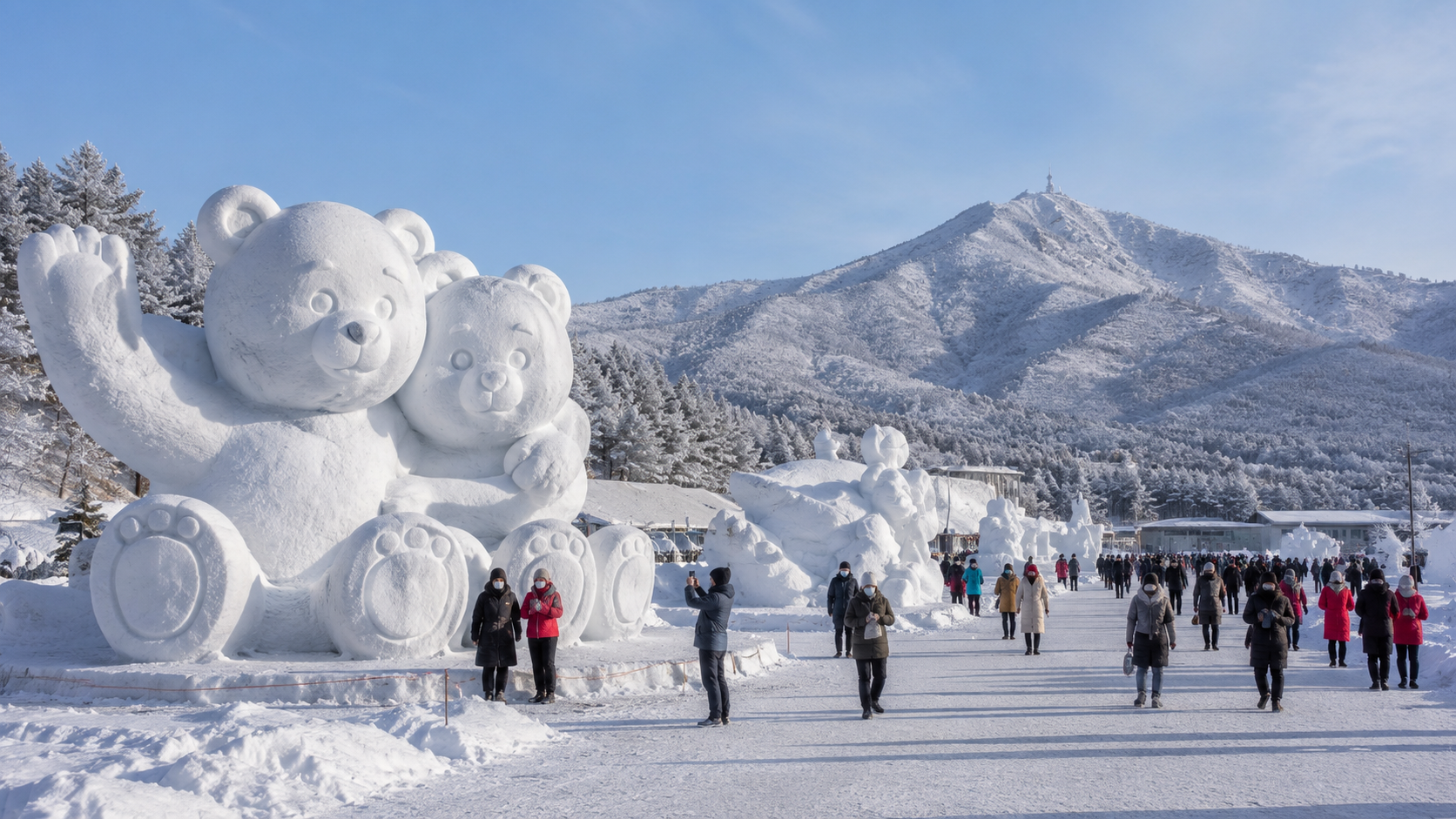
The Daegwallyeong Snow Festival, or 대관령눈꽃축제, is a better choice for visitors interested in snow structures and winter play rather than fishing. It is held in Daegwallyeong-myeon, a highland area of Pyeongchang known for colder and windier conditions than Seoul.
The official website confirms that the most recent edition ran from February 13 to 22, 2026. It advertised snow displays and seasonal play activities, although a notice stated that the event closed early on its final day for on-site safety management. This illustrates why visitors should check same-day announcements rather than relying only on the original poster.
The listed festival address is 135-9 Daegwallyeong-ro, Daegwallyeong-myeon, Pyeongchang-gun. Consult the official Daegwallyeong Snow Festival website for future dates, admission prices and closure notices.
Hoenggye, the main settlement in Daegwallyeong, can be reached by intercity bus. Travelers arriving by KTX generally need a bus or taxi connection from Jinbu Station. Combining the festival with a nearby ranch or ski resort is practical only after checking local transport; attractions that appear close on a map may still require a substantial drive.
4. Taebaeksan Snow Festival
The Taebaeksan Snow Festival, known in Korean as 태백산 눈축제, is associated with Taebaek city and the Danggol area near Taebaeksan National Park. Its appeal is the combination of snow displays, a mountain setting and access to regional attractions such as the Taebaek Coal Museum.
Future dates and operating details could not be reliably confirmed as of June 11, 2026, so no schedule is stated here. Check Taebaek City’s official tourism portal and the festival notices released closer to winter.
Taebaek is considerably farther from Seoul than Pyeongchang. Rail and bus services are available, but a same-day visit can involve many hours in transit. An overnight stay is usually more realistic, particularly if you plan to enter the national park.
Festival attendance and winter hiking should be treated as separate decisions. Snowy mountain trails may require traction devices and appropriate hiking equipment even when the festival area itself is easy to walk around. Check notices from the Korea National Park Service before attempting a trail, and turn back if weather or surface conditions exceed your experience.
5. Seoul Lantern Festival
Travelers who do not want to arrange a rural excursion can choose the Seoul Lantern Festival, or 서울빛초롱축제. This winter event uses lanterns, illuminated sculptures, projections and other light installations in central Seoul. Recent editions have included sections around Cheonggyecheon stream, with the associated Gwanghwamun Market nearby.
The official site still displayed information for the 2025 edition when checked on June 11, 2026. It described installations inspired by traditional Korean objects and Seoul’s history, alongside contemporary lighting and seasonal displays. Dates for winter 2026 had not been announced.
Entry arrangements can vary by zone and activity, although walking through the main outdoor light displays has generally been straightforward. Check the official Seoul Lantern Festival website for dates, illumination hours, accessible routes and any paid programs.
Central Seoul is the easiest festival location in this guide to reach by subway. Gwanghwamun, Jonggak and City Hall stations can all be useful depending on that year’s route. Start at one end of the display rather than entering at the busiest central point. The stream-level path can become congested, and stairs may create difficulties for wheelchairs, strollers and large luggage. Use street-level pavements and elevators where necessary.
How to choose the right festival
Choose Hwacheon if the large frozen-river experience is the main reason for your trip. It requires the most transport planning but offers the strongest ice-festival atmosphere.
Choose Pyeongchang Trout Festival if you want fishing with easier access from a KTX station. It is also a practical choice for groups wanting both fishing and winter rides.
Choose Daegwallyeong if snow sculptures and snow play matter more than catching fish. Expect strong wind and plan the local connection carefully.
Choose Taebaek for a slower regional trip that combines a snow event with mountain or mining-history attractions. Allow at least one night.
Choose Seoul Lantern Festival if you have limited time, do not own serious winter clothing or prefer an evening activity that can fit around sightseeing.
Clothing and equipment
A standard padded coat is not enough for several hours standing on ice. Wear layers that can be adjusted indoors and outdoors.
- Thermal base layer and insulating middle layer
- Wind-resistant outer coat
- Warm hat covering the ears
- Insulated gloves, plus a spare pair if fishing
- Thick socks and waterproof footwear
- Shoes with a strongly textured sole
- Disposable heat packs, called hot packs or 핫팩 in Korean shops
- Sunscreen and sunglasses for bright snow
- Small waterproof bag for electronics and documents
Avoid smooth fashion boots. Metal traction devices may be useful on untreated paths, but remove them before entering buses, trains and indoor floors.
Payment, food and language
Major ticket counters commonly accept Korean payment cards, but temporary stalls and small regional businesses may have more limited systems. Carry a physical card and some KRW cash. Foreign mobile wallets should not be your only payment method.
Food areas may sell grilled fish, fish dishes, soups and common festival snacks. Visitors with allergies or dietary restrictions should bring a Korean translation explaining the ingredients they must avoid. Fish-preparation zones may use shared equipment.
Useful Korean terms include:
- 매표소: ticket office
- 현장 발권: on-site ticketing
- 예약: reservation
- 얼음낚시: ice fishing
- 운영 중단: operation suspended
- 매진: sold out
- 폐장: closing or closed for the day
- 셔틀버스: shuttle bus
Accessibility and traveling with children
Festival sites built on snow, ice or temporary ground can be difficult for wheelchair users and visitors with limited mobility. Even when the entrance is accessible, individual activity zones may involve steep ramps, uneven surfaces or narrow temporary pathways. Contact the organizer before booking and ask specifically about accessible toilets, parking, step-free routes and whether a companion ticket is required.
Children should be supervised closely around fishing holes, sledding lanes and icy riverbanks. Check age, height and footwear restrictions for each activity. A child who becomes cold may need to leave much sooner than an adult, so identify indoor warming areas when you arrive.
What to check before you go
Complete this checklist within 24 hours of departure:
- Confirm that the festival is open that day.
- Check whether natural-ice activities are operating.
- Verify opening hours and the final ticket-sale time.
- Confirm whether your chosen activity requires a reservation.
- Check the cancellation and refund deadline.
- Reserve intercity trains or buses in both directions.
- Identify the last practical return service.
- Check the local bus, shuttle or taxi connection.
- Read weather warnings and expected wind chill.
- Confirm luggage storage if traveling with suitcases.
- Check accessibility and child-entry rules directly with the organizer.
- Carry a physical payment card, KRW cash and a charged phone.
Do not travel solely from an old blog post, social-media video or previous year’s poster. Winter programs can be delayed, shortened or suspended because of unsafe ice, heavy snow, wind or unusually warm weather.
FAQ
When is the main winter festival season in Korea?
January is the most reliable month for major ice-fishing events. Snow and light festivals may run from December through February, but each organizer sets its own dates.
Can I visit an ice festival as a day trip from Seoul?
Yes, particularly Pyeongchang or an organized Hwacheon excursion. Independent travelers must confirm the return transport before leaving Seoul. An overnight stay is safer for Taebaek and useful for Hwacheon.
Do I need to speak Korean?
Not necessarily, but English support is inconsistent outside major tourist centers. Save the festival name, destination address and return station in Hangul. A translation app with downloaded Korean language data is useful.
Will snow be guaranteed?
No. Gangwon’s highland areas are colder than Seoul, but natural snowfall and river ice vary each year. Some events use manufactured snow or modify their programs when conditions are poor.
Sources
- Hwacheon Sancheoneo Ice Festival official website
- Pyeongchang Trout Festival official website
- Daegwallyeong Snow Festival official website
- Taebaek City official tourism portal
- Seoul Lantern Festival official website
- KORAIL official booking website
- Korea National Park Service
For a 2026–27 trip, begin by checking the appropriate official festival website in November or December 2026, then book transport only after that season’s dates and operating rules have been published.